
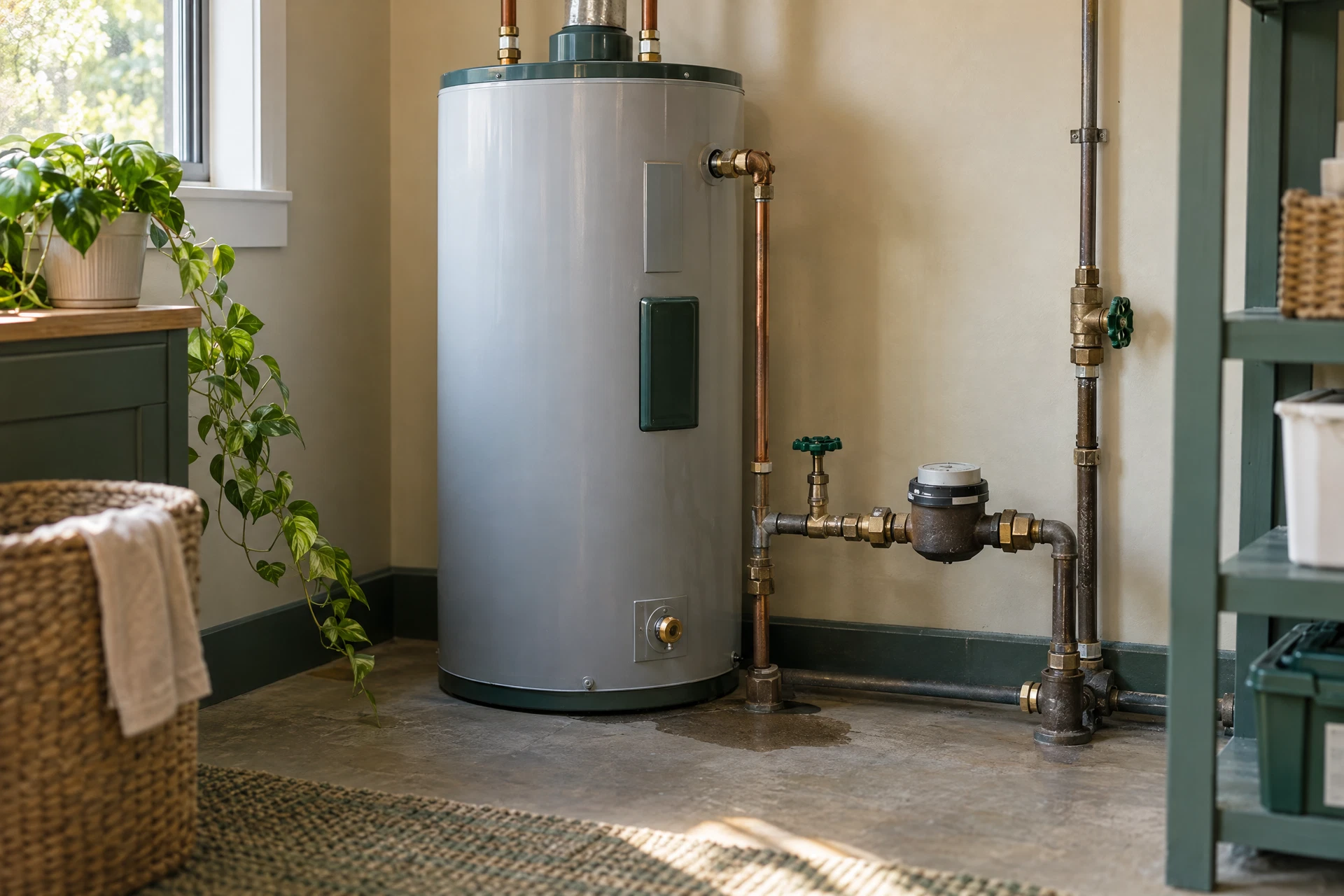
A dripping faucet is easy to notice, but plumbing trouble can also hide behind a wall, beneath a fixture, or inside a water heater. For homeowners throughout Columbia County, a few simple checks can help you spot a problem sooner and decide when it is time to call Northwest Plumbing Services. Here are three common questions about leaks and hot water, with practical guidance for protecting your home without guessing at the repair.
How serious can a water leak be?
Even a small, ongoing leak can waste water and gradually damage flooring, cabinets, walls, or nearby plumbing components. Moisture that stays out of sight may also leave staining or create conditions where mold can grow. A higher-than-usual water bill, damp spots, dripping sounds, or a fixture that never quite stops running are all reasons to investigate. When the source is uncertain, review our Plumbing Leak Detection guidance.
If water is actively spreading, shut off the nearest fixture valve or the home’s main water supply if you can do so safely. Then contact the office for advice and a repair appointment. Do not open a wet electrical area or remove a wall to chase a leak yourself.
What is a simple way to check for a hidden leak?
Start with a quiet period when nobody is using water. Turn off faucets and appliances that use water, note the reading on your water meter, and check it again after several hours. Movement during that no-use window can point to water leaving the system somewhere in the home or underground.
This check is a useful clue, not a diagnosis. Toilets, supply lines, water heaters, and buried water lines can all behave differently, and a meter reading can be difficult to interpret. If the reading changes or you notice wet areas, share what you observed with a plumbing professional so the next inspection is more focused.
- Record the meter reading and the time of both checks.
- Confirm that toilets, ice makers, washing machines, and other water-using equipment are idle.
- Never ignore a leak near wiring, outlets, or a water heater; keep clear and request guidance.
Why is my hot water weak or short-lived?
A tank water heater can deliver less hot water when sediment collects near the heating area, a dip tube is damaged, or a thermostat and other working parts begin to fail. Age, household demand, and a system that needs service can also affect recovery. Tankless units have their own maintenance and flow considerations, so the right answer depends on the equipment in your home.
You can note whether the problem affects every tap or only one, how quickly the temperature drops, and whether the heater shows a warning or leak. Avoid adjusting gas or electrical components unless a qualified professional directs you. Northwest Plumbing Services can discuss repair, replacement, tank, or tankless water-heater options after an inspection.
A practical next step
Write down the symptoms, when they began, and any meter change or visible moisture. Then call Northwest Plumbing Services at (503) 366-1323 or email office@nwplumbingservices.com to discuss the situation. The family-owned company has served the area since 1991 and can help with plumbing repairs, water lines, fixtures, and water heaters in Oregon. For a pipe condition that needs attention, review our Pipe Repair guidance.
Questions about this topic
Should I wait to see if a suspected leak gets worse?
No. A quiet leak can still damage a home and waste water. If you see active water, shut off a nearby valve or the main supply when safe, and contact Northwest Plumbing Services for guidance.
Can I test for a hidden leak without opening a wall?
Yes. With all water use stopped, compare your meter reading after several hours. A change is a useful warning sign, but a professional inspection is needed to locate and diagnose the source.
Why does my water heater run out of hot water quickly?
Possible causes include sediment, a damaged dip tube, or a failing thermostat or other component. Note the symptoms and have a professional inspect the specific tank or tankless system before deciding on repair or replacement.