A slow or blocked sink drain is especially frustrating when you are trying to keep an Oregon home moving through a rainy regional day. A bottle of liquid drain cleaner can look like the fastest, least expensive answer, but it may create a bigger plumbing problem. These products can damage some piping, expose people and pets to harsh chemicals, and fail to reach the cause of a recurring blockage. Before pouring one into a kitchen, bathroom, or laundry drain, consider these three practical reasons to choose a safer first step and get the right diagnosis when the clog does not clear.
1. Harsh chemicals can damage piping
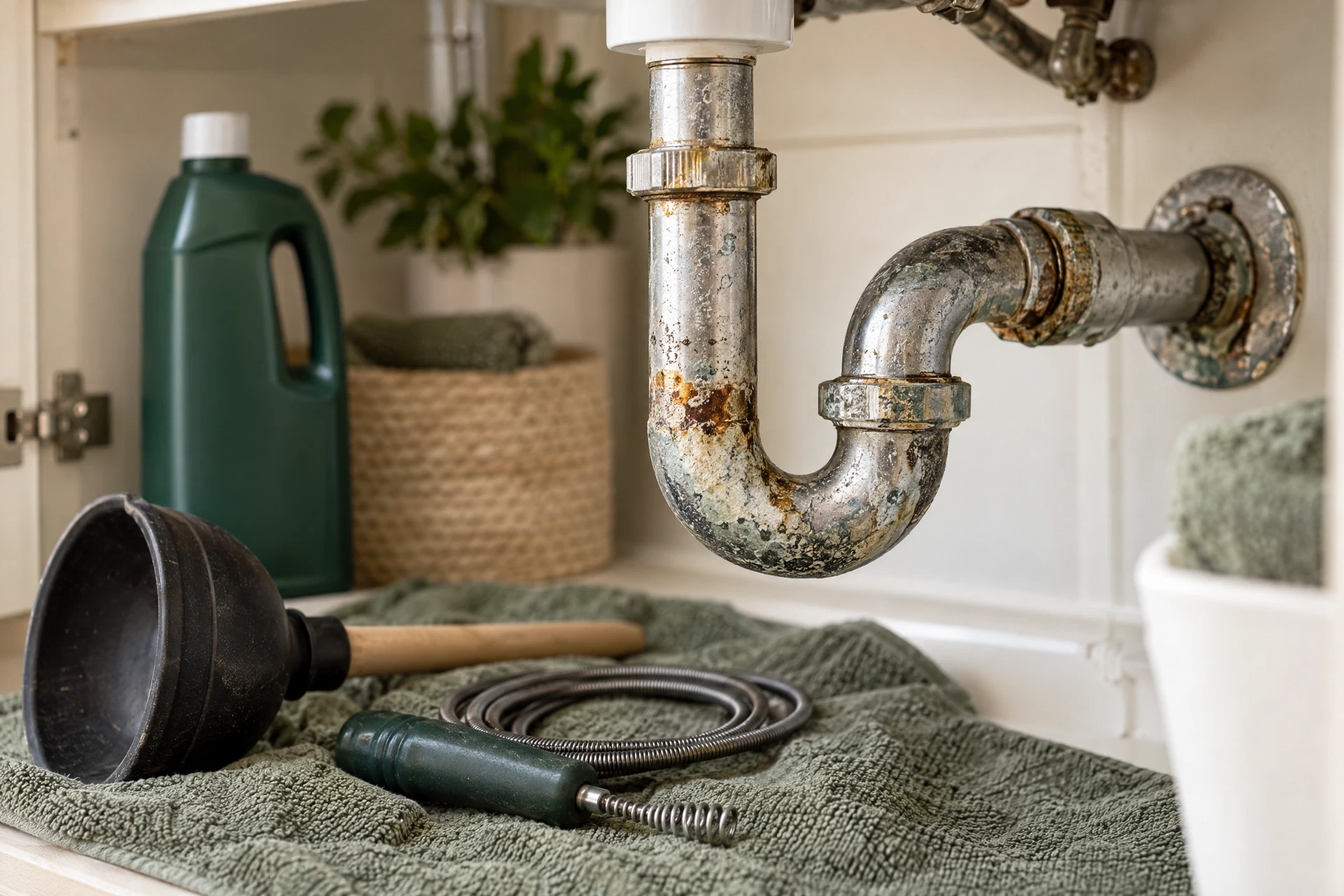
Many liquid drain openers rely on highly caustic or oxidizing ingredients that generate heat as they react with a clog. That reaction may soften hair or grease, but it can also stress older, delicate, or already-compromised plumbing. Plastic components may deform, while metal parts can corrode or weaken over time. A temporary opening is not a good trade if it leaves a leak hidden under a sink or inside a wall. For recurring drain symptoms, review our Drain Cleaning guidance before choosing a next step.
Repeated use is especially poor troubleshooting. If water keeps backing up, the underlying issue may be buildup farther along the line, a damaged section, or a developing drain-line problem rather than a clog that needs more chemical.
- Do not assume a drain that opens briefly is fully cleared.
- Persistent slow drainage deserves diagnosis instead of repeated applications.
2. They can be dangerous around people and pets
Drain opener residue and fumes can irritate the eyes, skin, nose, and throat. A splash can cause a chemical burn, and poor ventilation can make a small bathroom uncomfortable or unsafe. The risk does not disappear just because the liquid went down the drain; someone working on that line later may encounter the remaining product.
Never mix drain cleaner with bleach, another cleaner, or a different drain product. If you have already used a chemical, tell the plumber exactly what was used and when, and follow the product label's emergency instructions for any exposure.
- Keep products secured away from children and animals.
- Use ventilation and protective steps required by the label; avoid handling an unknown spill.
3. A bottle may not fix the real blockage
A simple hair or grease obstruction is only one possibility. A clog can also involve a deeper buildup, a damaged water or drain line, or a backup that affects more than one fixture. Chemicals cannot inspect the line or repair a broken pipe, so the same symptom may return after a short-lived improvement.
For a minor, isolated slowdown, a properly used plunger may be a reasonable first try. A hand drain snake can help in some accessible fixtures, but stop if you meet unusual resistance or risk damaging a fixture. Do not keep escalating force or chemicals when the cause is unclear.
- Multiple slow drains, gurgling, foul odors, or wastewater returning are signs to seek help.
- A full backup should be treated as a plumbing problem, not a product-selection problem.
Choose a measured next step in Oregon
Northwest Plumbing Services can help assess drain and water-line concerns for homes and businesses in the area. Before calling, note which fixtures are affected, when the problem began, and whether you used any product. That information helps the office direct the conversation and keeps anyone working on the line safer.
Call (503) 366-1323 or email office@nwplumbingservices.com to discuss a clog, recurring slowdown, or suspected drain-line issue. The family-owned company has served from Oregon since 1991; ask the office about the right service for your situation. When the cause is unclear, review our Drain Camera Inspection guidance before deciding on repair.
- For an immediate concern, protect the area, stop adding chemicals, and contact the office for guidance.
- If you are unsure whether a product is safe for your piping, ask before using it.
Questions about this topic
What should I do if I already poured liquid drain cleaner into the drain?
Do not add another cleaner or mix products. Ventilate the area as the label directs, keep people and pets away from splashes, and tell Northwest Plumbing Services what product was used before anyone works on the line. Follow the product label's emergency instructions for exposure.
When is a clogged drain more than a simple household blockage?
Call for advice when the clog returns, more than one fixture is slow, you hear gurgling, odors persist, or wastewater backs up. Those signs can point to a deeper drain or water-line issue that a liquid cleaner cannot diagnose or repair.