A drain rarely goes from perfect to fully blocked without offering a few clues first. In an Oregon kitchen, bathroom, or laundry area, a new odor, an odd gurgle, or water that lingers can signal that buildup is narrowing the passage. Catching those changes early gives you time to stop adding water, check the affected fixture, and choose a sensible next step instead of waiting for an overflow. The guidance below is for ordinary homeowner troubleshooting; recurring or connected-drain problems deserve a professional look from Northwest Plumbing Services.
1. A persistent smell comes from the drain
An occasional food or soap smell can happen, but an odor that keeps returning after the fixture is rinsed is worth noticing. Kitchen residue, hair, and other material can collect inside a drain and begin restricting flow. Do not cover up the smell and continue using the fixture as usual; note when it appears and whether other nearby drains are affected. For recurring drain symptoms, review our Drain Cleaning guidance before choosing a next step.
- Keep food scraps, grease, and coffee grounds out of the kitchen drain.
- If a sink or tub smells foul and the odor persists, arrange an evaluation rather than repeatedly masking it.
2. The drain gurgles or sounds different
Gurgling, bubbling, or a drawn-out trickle can mean water and air are moving around developing buildup. One unusual sound does not identify the cause by itself, but a new noise that returns during normal use is a useful warning. Listen to the fixture and check whether the sound occurs when another nearby fixture runs.
- Write down which fixtures make the noise and what was running at the time.
- Avoid forcing repeated plunging if several fixtures react together; the pattern may need professional diagnosis.
3. Water drains more slowly than usual
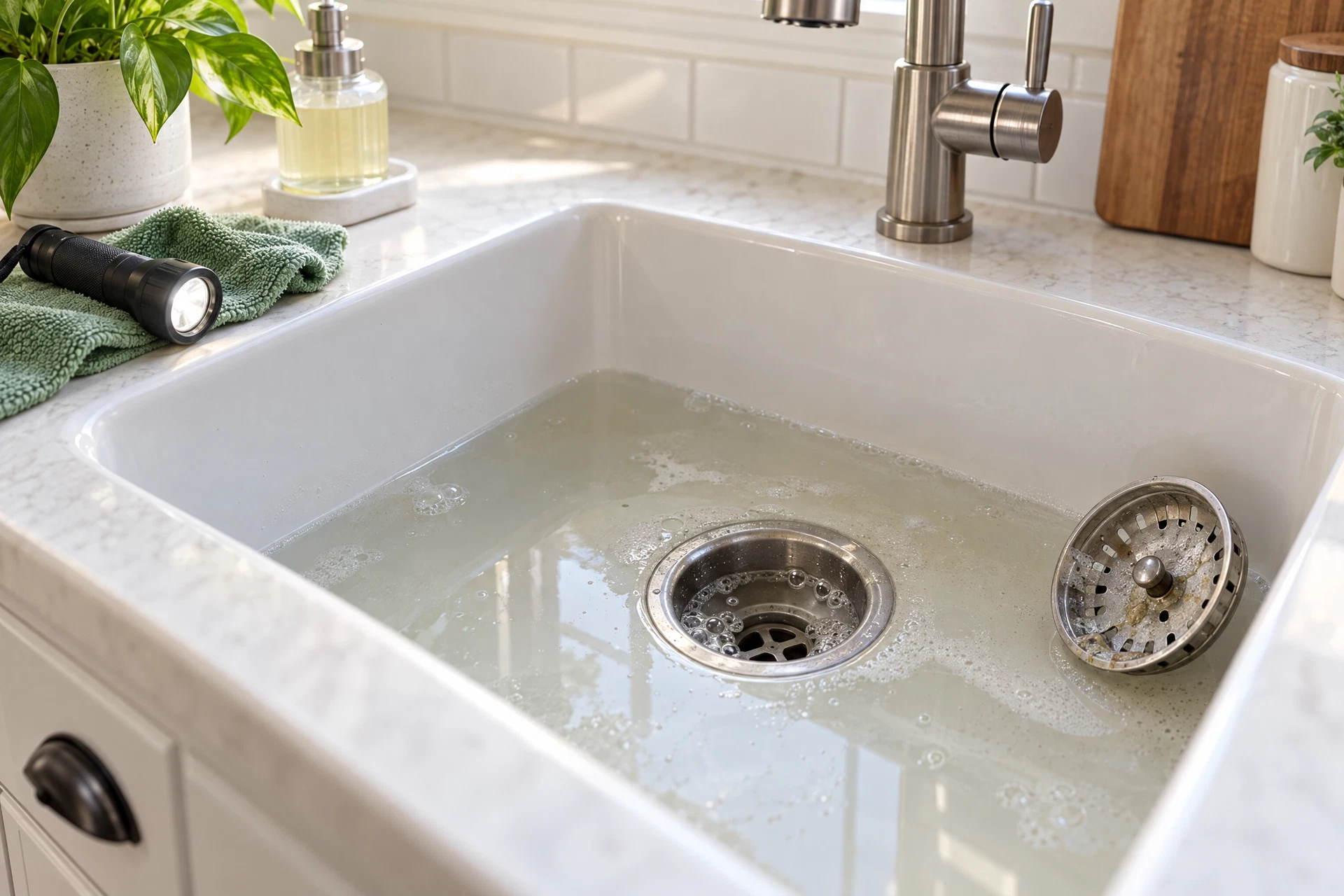
A sink that takes longer to empty, a shower pan that holds water, or a toilet bowl that drains sluggishly can indicate a restriction. Stop adding water if the level is rising. A single fixture may have a local blockage, while slow drainage in several fixtures can point to a larger water or drain-line concern that should not be ignored.
- Clear visible hair or debris from a strainer without pushing it farther into the pipe.
- Do not mix chemical drain products or use them as a substitute for finding a recurring problem.
What to do before a small problem becomes a backup
Limit use of the affected fixture and note any water backing up into a tub, sink, or floor area. If wastewater rises, more than one drain is slow, or a toilet changes when another fixture runs, contact Northwest Plumbing Services for guidance. The family-owned company has served the area since 1991 and can discuss drain lines and related plumbing repairs for homes, remodels, new construction, or commercial properties. Call (503) 366-1323 or email office@nwplumbingservices.com to describe what you are seeing and ask about the next step. When the cause is unclear, review our Drain Camera Inspection guidance before deciding on repair.
Questions about this topic
Should I keep using a drain that is slow but still working?
Use it as little as practical while you observe the pattern. Continued water use can turn a partial restriction into a backup. If the slowness returns, affects multiple fixtures, or comes with an odor or gurgling, contact Northwest Plumbing Services.
When is a drain problem more urgent?
Stop using the affected fixtures and call for guidance when wastewater backs up, several drains change at once, or a toilet reacts when a sink, tub, or appliance drains. Share the exact symptoms so the office can help determine the appropriate next step.