A water heater rarely fails at a convenient time. In an Oregon home, a little advance attention can help you plan a repair or replacement before a cold shower, floor puddle, or loss of hot water becomes an urgent problem. Age, changing hot-water supply, visible leakage or rust, and rising energy use are useful warning signs. None of them proves that replacement is the only answer, so treat this guide as a reason to arrange an inspection rather than a do-it-yourself diagnosis. Northwest Plumbing Services can help homeowners compare repair, tank replacement, and tankless options for the home’s actual needs.
1. Your water heater is getting older
Many tank water heaters deserve a closer look once they have been in service for about a decade. Check the manufacturer label for the model and serial number, then use the manufacturer’s documentation to decode the production date. If the age is unclear, a plumber can inspect the unit and explain what its condition means for your planning. An older heater may still operate, but its age can make an unexpected failure more likely and may affect whether a repair is worthwhile. For replacement-planning context, review our Water Heater Replacement guidance.
2. Hot water is not lasting as long
Notice whether showers turn cool sooner, recovery takes longer, or several fixtures cannot get enough hot water at once. Sediment inside a tank can reduce usable capacity, while a weakening heating component can keep the water from reaching the expected temperature. These symptoms can have more than one cause, so avoid changing temperature controls or opening panels unless the manufacturer and a qualified professional say it is safe.
- Track when the change began and which fixtures are affected.
- Keep children away from any exposed hot-water or electrical equipment.
3. You see water, rust, or discolored hot water
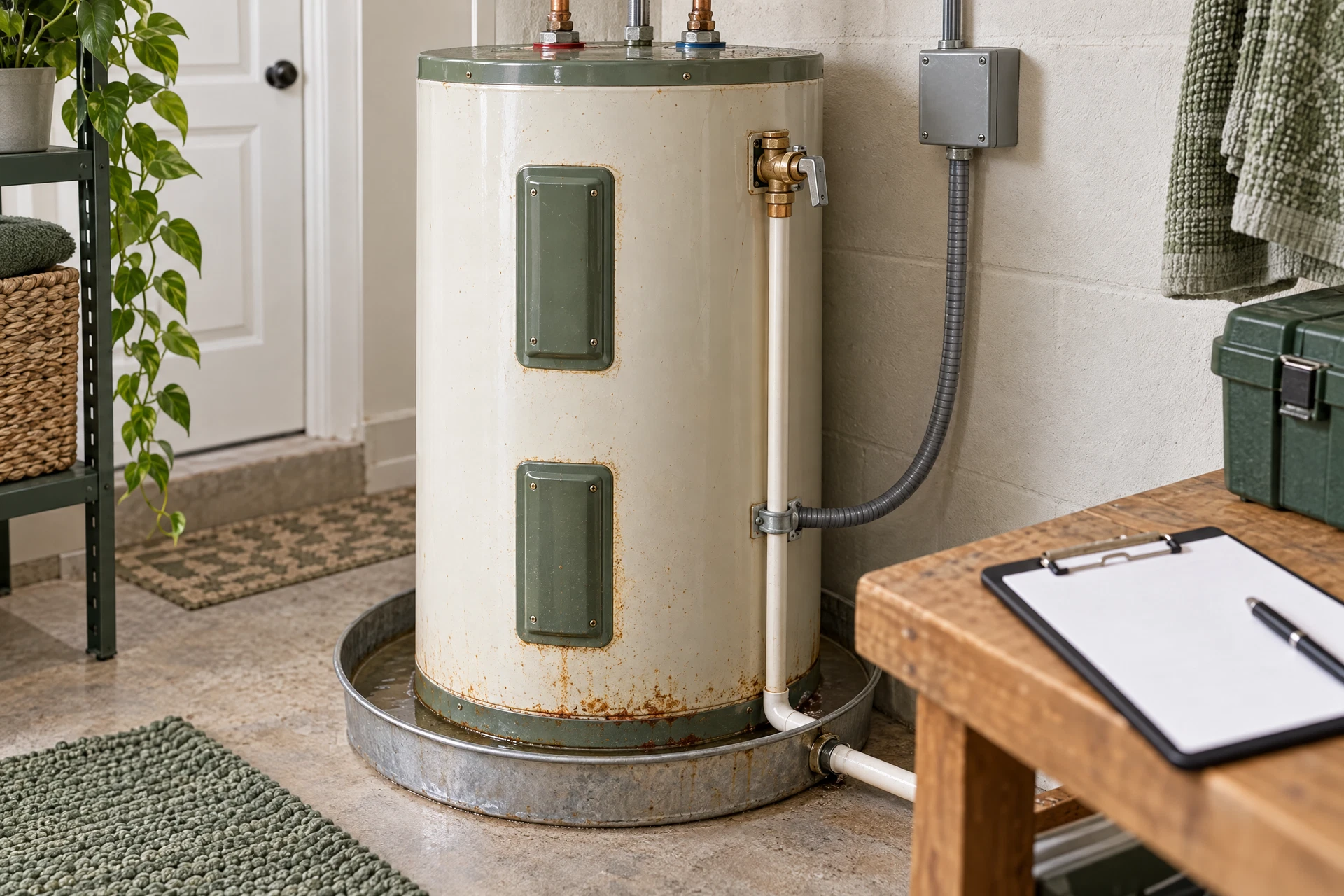
A damp floor, a growing puddle, or water around the tank calls for prompt attention. A failed internal tank can leak, and a tank that is rusting may not be a good candidate for a lasting repair. Brown or reddish hot water can also point to corrosion, although discoloration may come from other plumbing components. If water is near electrical connections, shut off power only if you can do so safely and contact a professional.
4. Energy use or operating costs are climbing
A noticeable increase in energy use can be a reason to review an aging water heater, especially when it arrives alongside slow recovery or inconsistent temperatures. Ask for a comparison of repair, a new conventional tank, and a tankless water heater rather than assuming one format fits every home. The right choice depends on household demand, available space, installation requirements, and budget. For water-heater maintenance and planning context, review our Water Heater Service guidance.
Questions about this topic
Should I replace my water heater as soon as it reaches ten years?
Not automatically. Age is a planning signal, not a diagnosis. Arrange an inspection to review condition, performance, leak risk, and whether repair or replacement makes practical sense.
What should I do if my water heater is leaking?
Keep people away from hot water, protect nearby belongings if safe, and contact a plumber promptly. If water is near electrical equipment, avoid touching wet components and use only a safe shutoff you can access without standing in water.
Can Northwest Plumbing Services help with tankless water heaters?
Yes. Tank and tankless water heater service are part of Northwest Plumbing Services’ verified offerings. Call the office to discuss your home and confirm the appropriate next step.