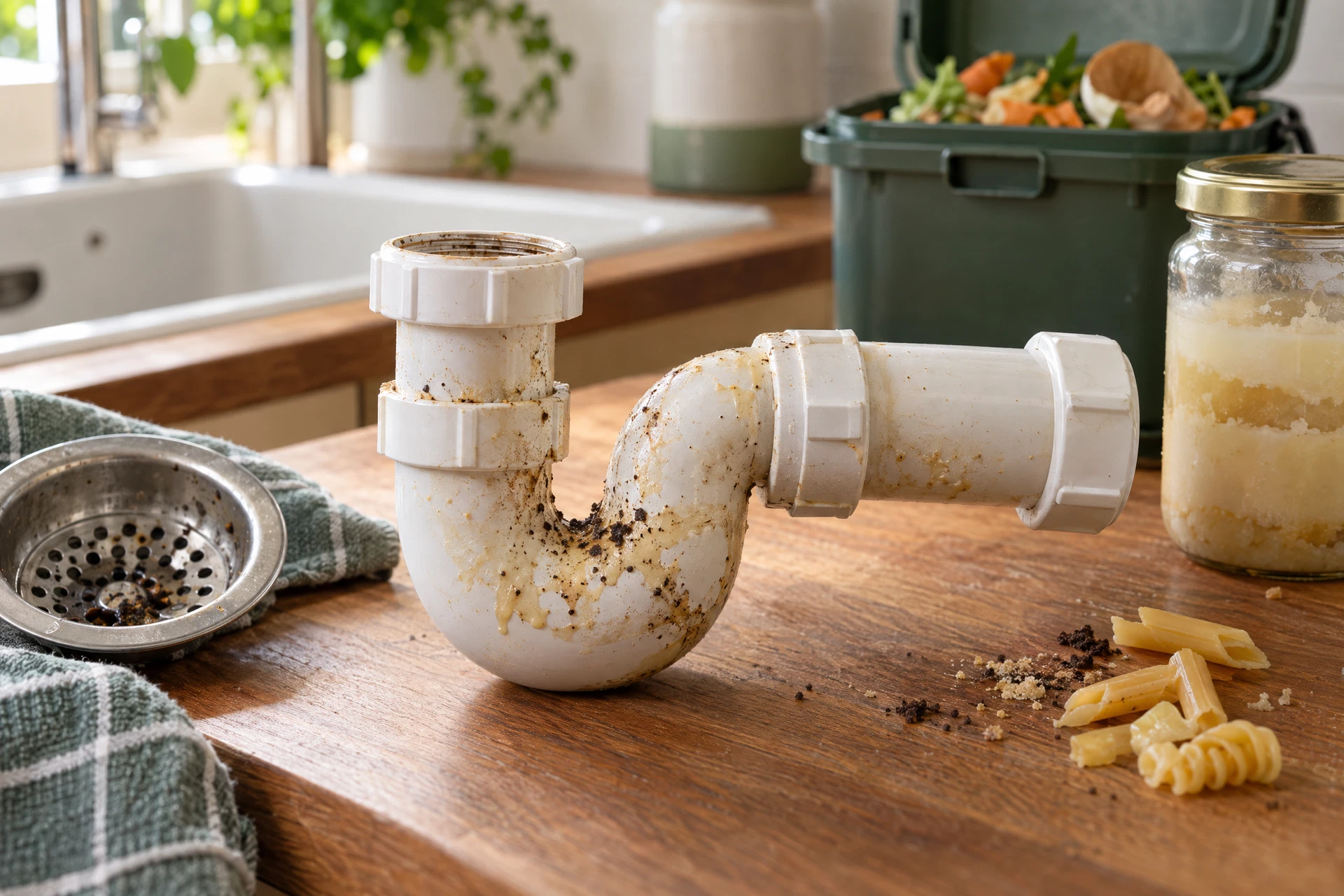
A kitchen sink works hard in a Pacific region home, from rinsing produce to washing up after a rainy-day meal. Most sink clogs do not arrive all at once; they build when cooking residue and food scraps collect inside the drain or connect with an older blockage. A few simple disposal habits can protect your drain and garbage disposal, but a slow or backed-up sink deserves attention before water damage or a larger plumbing repair develops. Here are five common mistakes to avoid, plus practical steps for Oregon homeowners.
1. Pouring grease, fats, or cooking oil down the drain
Warm grease and oil may flow easily into the sink, then cool and coat the inside of the drain line. That sticky layer can catch food particles and gradually narrow the passage. Salad dressing, bacon fat, shortening, and pan drippings can create the same problem. For recurring drain symptoms, review our Drain Cleaning guidance before choosing a next step.
Let fats cool in a disposable container, seal it, and place it in the trash according to local disposal guidance. Wipe greasy pans with a paper towel before washing them.
2. Treating coffee grounds as harmless
Coffee grounds can wash through an open drain, but they tend to settle into a dense, muddy layer when combined with grease or standing water. The result may be a sluggish sink that gets worse each time it is used.
- Keep a small compost or waste container beside the coffee maker.
- Use the drain strainer to catch loose grounds before rinsing mugs or equipment.
3. Sending pasta, rice, and scraps into the disposal
Cooked pasta and rice continue absorbing water after they leave the plate. They can swell, turn starchy, and combine with other debris in the trap or drain line. Even a working garbage disposal is not a substitute for sorting food waste.
Scrape plates into the trash or compost first. Run cold water while using a disposal only for small, appropriate scraps, and never force a large amount through at once.
4. Relying on eggshells or ignoring early warning signs
Eggshell pieces and their thin membranes can collect in a drain and add texture for grease and other residue to cling to. A disposal may grind shells, but it cannot prevent a developing blockage farther down the line.
A gurgle, slow drainage, unpleasant odor, or water rising in the other basin is a useful early warning. Remove and clean the strainer, try a sink plunger with the second basin sealed, and stop if the water backs up or the problem returns. Avoid caustic chemical drain cleaners, which can damage plumbing and create a hazard for anyone opening the line.
5. Waiting too long to ask for help
If careful use and a basic plunger do not restore normal drainage, the obstruction may be in the trap or a larger drain line rather than at the sink opening. Do not keep adding water to a backed-up basin, and do not dismantle plumbing you cannot safely reseal.
Northwest Plumbing Services can help with plumbing repairs and water or drain line work in and around Oregon. Call (503) 366-1323 or email office@nwplumbingservices.com to describe the symptoms and ask what inspection or repair makes sense. When the cause is unclear, review our Drain Camera Inspection guidance before deciding on repair.
Questions about this topic
Can I use boiling water to prevent a sink clog?
Hot water may help rinse away light, fresh residue, but it will not remove a built-up blockage and is not a safe fix for every plumbing setup. Prevent grease and oil from entering the drain, and seek help for recurring slow drainage.
What should I do when both sides of a kitchen sink back up?
Stop using the sink and dishwasher, remove standing water only if you can do so safely, and seal the other basin before trying a proper sink plunger. If the backup remains or returns, contact a plumber rather than using chemical cleaner.
Does Northwest Plumbing Services handle sink drain problems?
The company verifies plumbing repairs and water or drain line work among its offerings. Call the Oregon office at (503) 366-1323 to confirm the right service for your specific sink or disposal issue.