Your sewer line quietly carries wastewater away from your Oregon home, so trouble often starts with small changes rather than one dramatic failure. Several slow drains, a recurring backup, or an unexplained wet patch near the line can point to a deeper drainage problem. Columbia County homes also face the ordinary challenges of roots, aging pipe materials, shifted connections, and buildup. This guide helps you separate a one-fixture clog from symptoms that deserve a broader look, without assuming that every warning sign means replacement.
1. Several fixtures slow down or back up
A slow bathroom sink may have a local blockage. When the toilet, shower, kitchen sink, or more than one drain changes at the same time, the restriction may be farther along the home's main drainage route. Gurgling, water rising in a shower when a toilet is flushed, or repeated clogs are useful details to note. For sewer-line repair planning context, review our Sewer Repair Planning guidance.
- Check whether the problem affects one fixture or several.
- Pause water use if wastewater is backing up, and keep people and pets away from contaminated water.
- Do not keep treating repeated symptoms without finding their cause.
2. Sewage odors or unusual yard changes appear
A persistent sewage smell indoors or outdoors can signal a blockage, damaged connection, or another plumbing fault. Outside, watch for a wet area, unusually lush growth, soft soil, standing water, or a depression near the suspected line. Irrigation, rain, and groundwater can create similar conditions, so a yard change is a reason to investigate, not proof of a broken sewer pipe.
- Record where and when an odor or wet spot appears.
- Avoid digging or handling suspected wastewater yourself.
- Mention recent heavy rain, irrigation, remodeling, or drain work when you call.
3. The same sewer trouble keeps returning
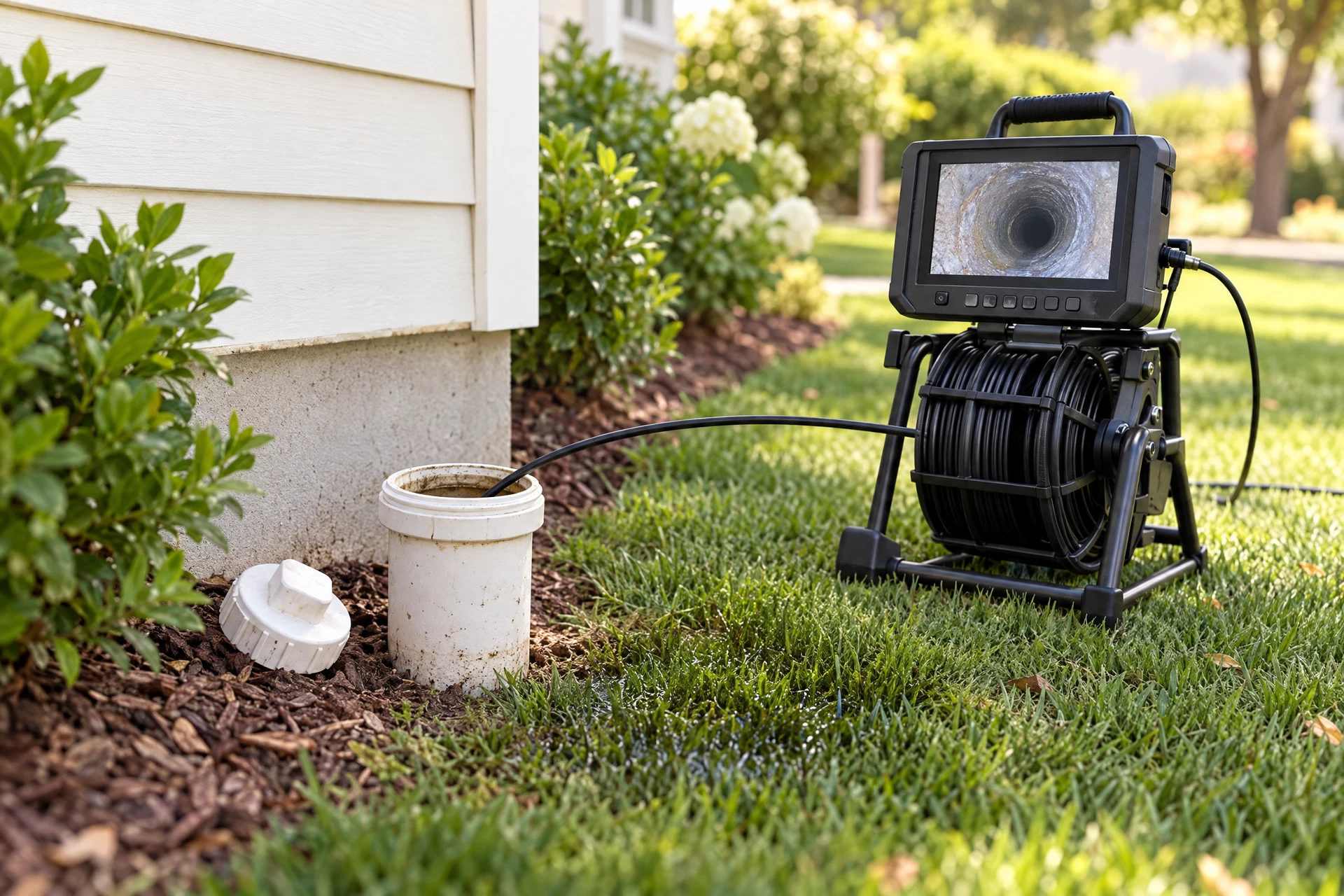
A temporary clearing can restore flow while leaving roots, pipe deterioration, a crack, an offset joint, grease, debris, or a sagging section unresolved. If a blockage returns, ask whether the next step should be a more complete evaluation. A camera inspection, when appropriate and available, can help show what is happening inside the line before anyone recommends repair or replacement.
- Keep a simple record of dates, affected fixtures, and prior work.
- Ask what the inspection found and which repair options fit that finding.
- Remember that an older line may need assessment; age alone does not decide its fate.
What to do next in Oregon
Call Northwest Plumbing Services at (503) 366-1323 or office@nwplumbingservices.com to describe the symptoms and discuss an appropriate evaluation. The family-owned company, established in 1991, handles water and drain lines and plumbing repairs for homes and other projects. Ask the office what can be confirmed for your situation, including whether inspection, cleaning, localized repair, or repiping is appropriate. For a closer look at a sewer-line concern, review our Sewer Camera Inspection guidance.
- Have the property address, symptom history, and any visible yard changes ready.
- Ask about scope, access, and next steps before work begins.
- For immediate health or electrical hazards, leave the area and contact the appropriate emergency service.
Questions about this topic
Do several slow drains always mean a sewer line problem?
No. Several affected fixtures can indicate a shared blockage, but other plumbing conditions are possible. A professional evaluation can distinguish an isolated issue from a main-line concern.
Does an older Oregon home automatically need sewer replacement?
No. Age is a reason to understand the pipe's material and condition, not a replacement decision by itself. Repeated symptoms and inspection findings should guide the recommendation.
What information should I share when I call?
Describe which fixtures are affected, when the problem began, whether it returns, any sewage odor or yard change, and recent drain or remodeling work.