Clean water should move toward your faucets, not backward from an irrigation line, fire-sprinkler system, business process, or other connection. Backflow happens when a change in pressure reverses the normal direction of flow and allows water from a questionable source into a potable water line. The risk matters for homes, rentals, restaurants, workplaces, and other properties across Columbia County. A backflow prevention assembly is designed to limit that risk, but it still needs the right installation, maintenance, and testing. Oregon Health Authority guidance says backflow assembly testing must be performed by an OHA-certified Backflow Assembly Tester. If you have received a notice from your water provider or are unsure what a device on your property does, start by confirming the local requirement rather than guessing.
Why backflow prevention matters
A cross-connection is any point where a drinking-water line could meet water or a substance that is not intended for drinking. Irrigation, hose connections, chemical equipment, fire protection, and some commercial plumbing arrangements can create different levels of risk. A drop in supply pressure can pull that water toward the clean-water system; excess pressure on the other side can push it in. The concern is not that every connection is contaminated, but that an unprotected connection can make a contamination event possible. For device and cross-connection context, review our Backflow Prevention guidance.
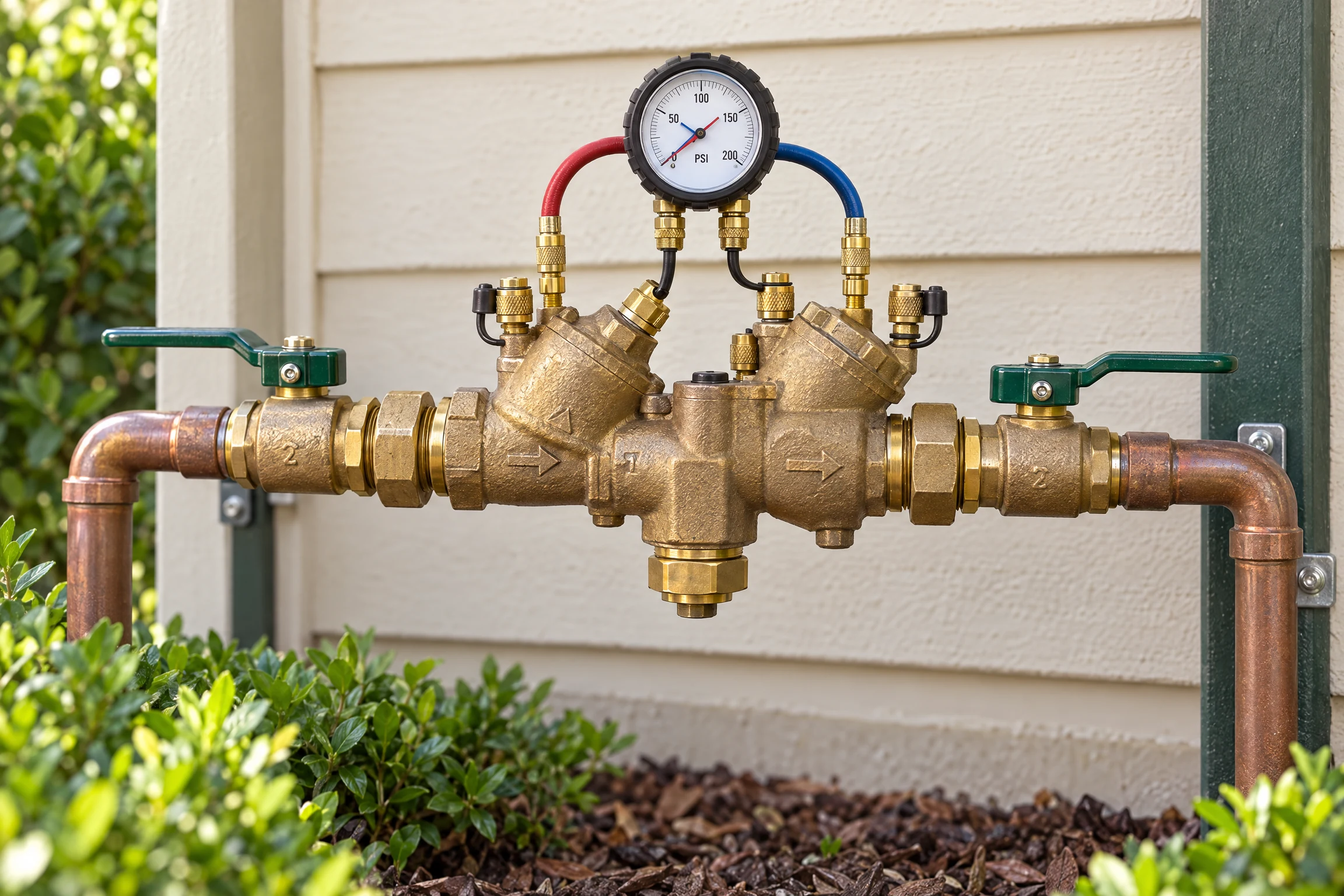
A prevention assembly uses internal checks or other protective features to help keep flow moving safely. It is a mechanical device, so a visual look is not enough to prove it will work when pressure changes.
- Ask your water provider whether your property is listed for cross-connection control.
- Do not bypass, remove, or alter a backflow assembly because it seems inconvenient.
- Keep the device accessible and note its location, make, model, and serial number if visible.
What testing usually involves
A qualified tester identifies the assembly, connects specialized test equipment, and checks whether its protective parts hold and release pressure as intended. Water may be shut off briefly during the appointment. If the assembly fails, the tester can explain whether cleaning, repair, or replacement is appropriate; a repaired assembly generally needs to be tested again. Keep prior notices or test reports available because the assembly type, serial number, and location can help with accurate reporting.
Oregon rules establish the statewide framework, while your community water supplier may set the schedule, notice process, and reporting steps that apply to your address. One Oregon water provider, for example, describes annual testing for covered assemblies, but requirements for your property should be confirmed with the responsible local water provider rather than assumed from another city.
- Use an Oregon-certified Backflow Assembly Tester for the test.
- Confirm the due date and report destination with your water provider.
- Plan ahead if a repair or re-test could be needed.
A practical next step in Oregon
If you received a testing notice, call the issuing water provider first and ask exactly what assembly, deadline, and certification they require. Then contact a tester from the Oregon Health Authority's public resources or ask a plumbing professional which questions to bring to the appointment. Northwest Plumbing Services is a family-owned company established by David and Mindy Sass in 1991, serving plumbing needs from its Oregon showroom. Our team handles plumbing repairs, water and drain lines, repiping, water heaters, remodels, new construction, and commercial plumbing. Call (503) 366-1323 or email office@nwplumbingservices.com to discuss a related plumbing concern and confirm whether the specific backflow work you need is available.
For an appointment conversation, have your property address, notice, assembly details, and any recent test result ready. That small bit of preparation can make it easier to separate a routine compliance question from a repair or water-line problem. For a water-line concern, review our Water Line Repair guidance.
Questions about this topic
Does every Oregon home need annual backflow testing?
Not necessarily. Requirements depend on the property's water uses, cross-connections, assembly, and water-provider program. Ask the responsible local water provider about your address and due date.
Who is allowed to test a backflow assembly in Oregon?
Oregon Health Authority says backflow prevention assembly testing must be performed by an OHA-certified Backflow Assembly Tester. Confirm current credentials before scheduling.
What if my device fails?
Ask the tester whether it needs cleaning, repair, or replacement, and follow the water provider's reporting instructions. A repaired assembly should be tested again before the matter is considered complete.