Your home’s sewer system is easy to ignore until a drain slows, a toilet gurgles, or wastewater backs up where it should not. Across Columbia County, wet weather, mature landscaping, and older homes can make routine care especially worthwhile. A few practical changes—being selective about what goes down a drain, planning before digging, and responding to warning signs—can help reduce avoidable trouble. This guide covers common habits that put sewer and drain lines under stress, along with sensible steps to take before a small concern becomes a larger plumbing repair.
Flush only what belongs in the toilet
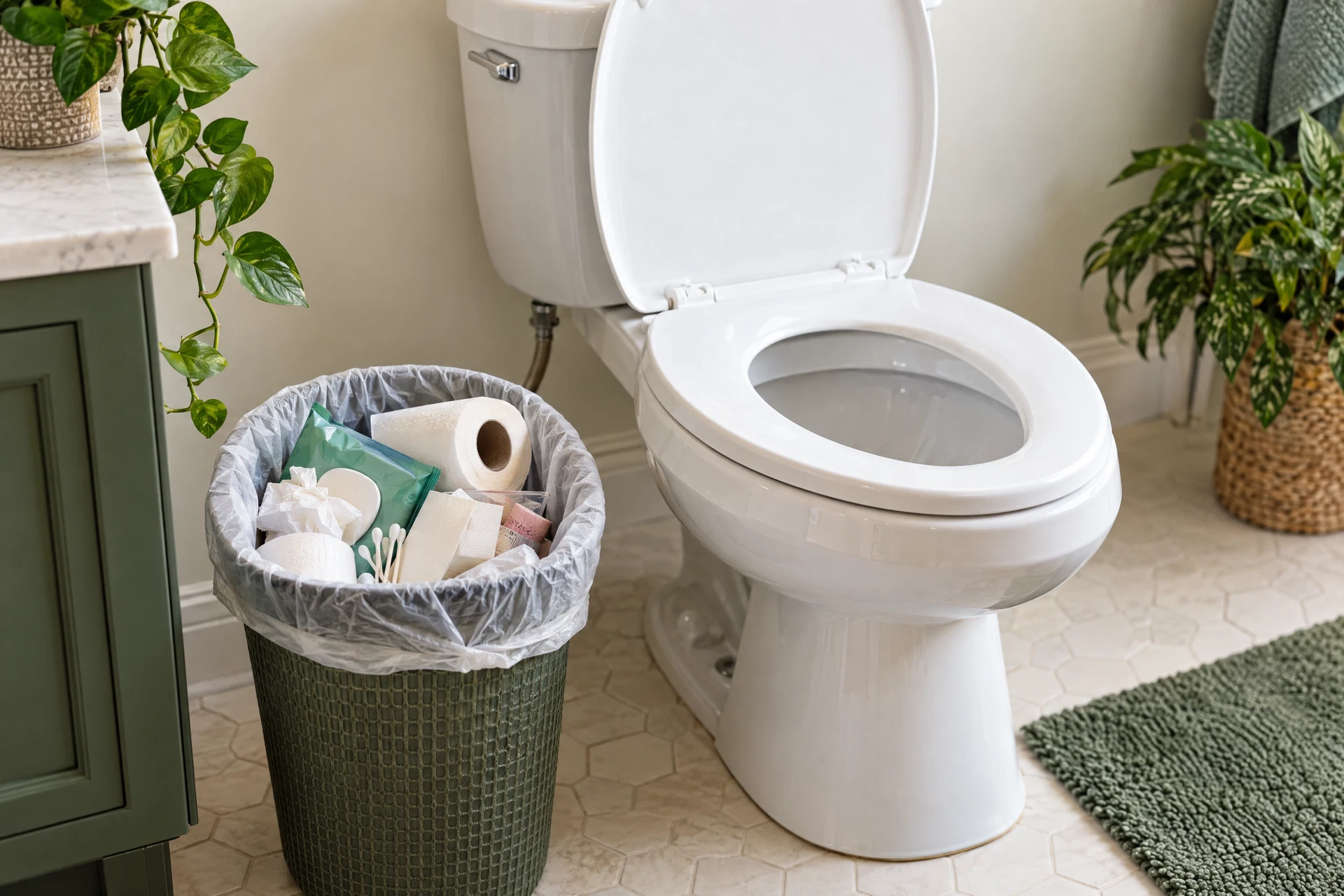
A toilet is designed for human waste and toilet paper. Wipes, cotton swabs, paper towels, feminine hygiene products, dental floss, and similar items can snag inside a line or collect with grease and other debris. Even products labeled flushable may not break down like toilet paper, so the safer habit is to place them in a lined wastebasket according to local disposal guidance. For sewer-line repair planning context, review our Sewer Repair Planning guidance.
Keep a small bin near the toilet and remind household members what can be flushed. If a toilet begins to drain slowly, bubble, or back up repeatedly, avoid repeated flushing; it can turn a partial blockage into an overflow.
- Flush human waste and toilet paper only.
- Never use the toilet as a trash can.
- Call for advice when recurring clogs do not improve with ordinary plunging.
Plan before you dig
Planting a tree, setting fence posts, adding a shed, or reshaping a garden can put buried utility lines and private plumbing at risk. Yard projects may also change how water moves across the property. Before breaking ground, contact 811 to request utility locating, then confirm the location of private lines that the public locate may not cover. Use extra care around cleanouts, sewer connections, and areas where the soil has settled.
If digging damages a line, stop work and keep people away from standing water. A plumbing professional can help identify the affected piping and recommend a safe repair plan.
- Call 811 before excavation, even for a modest project.
- Do not assume a prior landscape plan shows every private line.
- Plan tree and large-shrub locations with future roots and access in mind.
Do not wait for a full backup
Sewer trouble often gives early clues: several slow drains, sewage odors, wet spots in the yard, gurgling fixtures, or water rising in a floor drain. One isolated sink clog may be a fixture-level issue, but symptoms across the home can point farther down the drain system. Note when the problem occurs and which fixtures are affected. That information helps an inspection focus on the right section of pipe.
Avoid pouring chemical drain cleaner into a line when the cause is unknown. It may not clear the obstruction and can create a hazard for anyone who later opens the pipe.
- Track recurring symptoms instead of resetting the same clog repeatedly.
- Keep children and pets away from contaminated water.
- Ask about inspection or servicing before planned remodeling or major landscaping.
A practical next step in Oregon
Northwest Plumbing Services is family-owned by David and Mindy Sass and has served customers since 1991. The team can discuss plumbing repairs, water and drain lines, repiping, fixture concerns, remodels, new construction, and commercial plumbing. If you are dealing with a suspected sewer or drain issue, call (503) 366-1323 or email office@nwplumbingservices.com with the symptoms, affected fixtures, and any recent digging or remodeling. The office can explain what service may fit and confirm current availability for your property in Columbia County. For a closer look at a sewer-line concern, review our Sewer Camera Inspection guidance.
- Contact our Oregon office for showroom directions or mailing details.
- Contact our Oregon office for showroom directions or mailing details.
- Oregon CCB#77141.
Questions about this topic
What should I do if several drains slow down at once?
Limit water use, avoid repeated flushing, and contact Northwest Plumbing Services to describe which fixtures are affected. A broader pattern can need professional diagnosis rather than another single-fixture treatment.
Is calling 811 enough before I dig?
811 is an important first step for locating public utilities. Private plumbing and other privately installed lines may need separate confirmation, so ask the utility locator or a qualified professional what is covered before excavation.