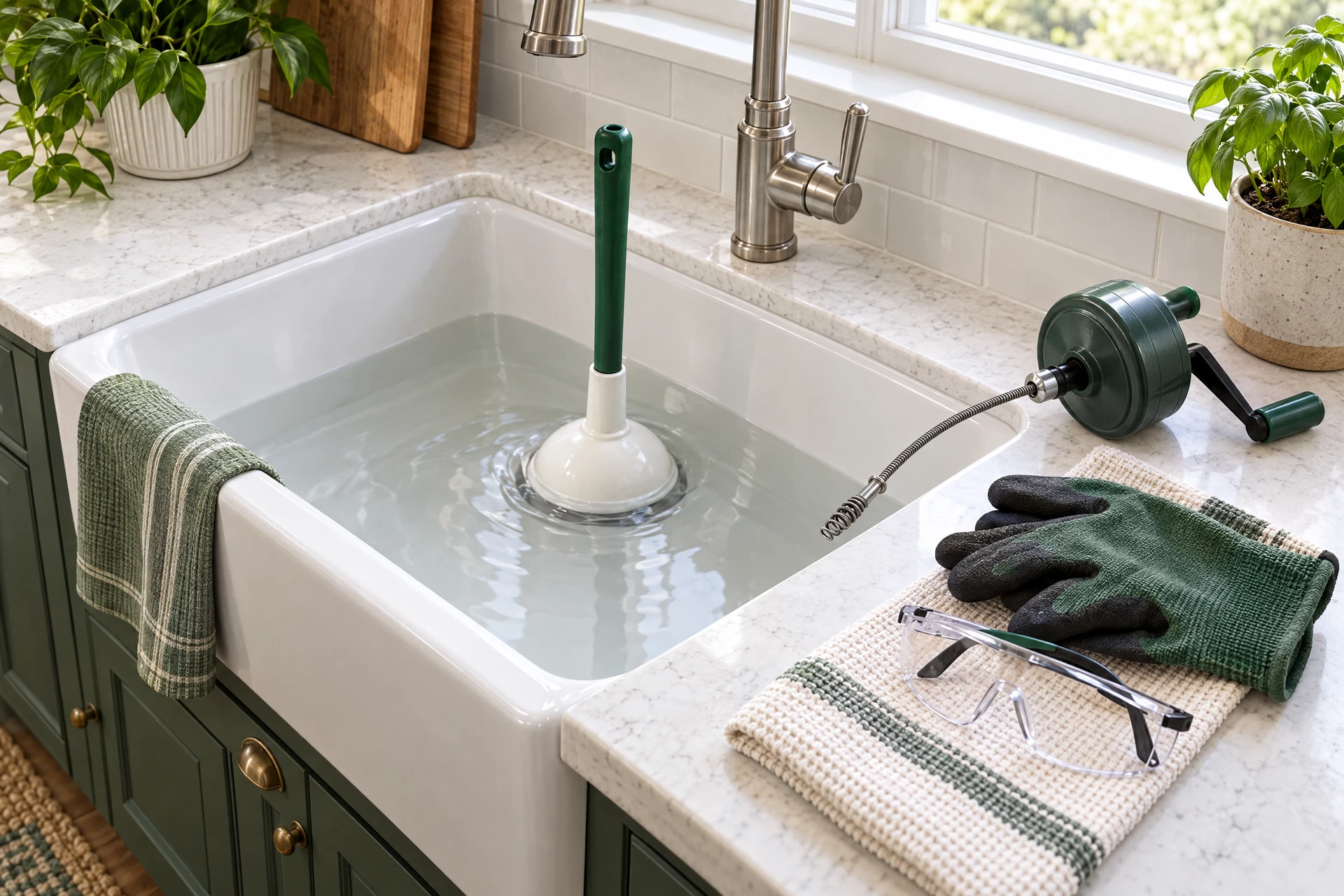
A slow kitchen sink, standing water in the shower, or a backed-up bathroom drain can interrupt an ordinary day. Before reaching for a harsh liquid drain opener, try a measured mechanical approach. Chemical products can create health hazards, may not solve the obstruction, and can make later plumbing work more difficult. In and around Columbia County, a few basic tools and some patience can handle many small, accessible clogs. The goal is to loosen or remove the blockage without forcing it deeper into the line or damaging a fixture.
Start with a plunger and a good seal
Use a clean cup-style plunger for a sink, tub, or shower rather than sharing the toilet plunger. Leave a little standing water for a seal, plug the second opening on a double-bowl sink, and cover a tub or sink overflow. For recurring drain symptoms, review our Drain Cleaning guidance before choosing a next step.
Center the plunger over the drain and pump firmly for several seconds, then lift it to check the flow. Repeat if water begins to move, keeping clear of any water that may contain cleaner or debris.
- Do not plunge a drain if you recently poured chemical cleaner into it; contact a professional and mention the product used.
- If the clog affects several fixtures at once, treat it as a possible branch-line or main-line issue rather than continuing to plunge one drain.
Try a small hand auger for a stubborn clog
If plunging does not help, a small hand auger, or drain snake, can reach farther into a sink or tub drain. Feed it slowly to resistance, then turn gently to break through or catch the obstruction. Pull debris out when possible and put it in the trash.
A plastic hair-removal tool can help near a shower drain. Avoid forcing a tool, taking apart a trap you cannot reseal, or using improvised wire that could scratch a fixture or become lodged.
- Wear gloves and eye protection, and stop if the cable will not advance with light pressure.
- Never mix drain chemicals or add a second product to a drain that has already been treated.
Know when the blockage needs a professional diagnosis
Repeated backups, foul odors, gurgling, sewage-colored water, or slow drainage at multiple fixtures can point beyond the visible drain. A recurring clog may involve buildup, damaged pipe, or a line needing thorough service. Stop using affected fixtures if water rises or backs up onto floors.
Northwest Plumbing Services can help plan the next step for drain-line concerns and plumbing repairs. Call (503) 366-1323 or email office@nwplumbingservices.com with the affected fixtures, what you tried, and whether chemicals were used.
- Keep children and pets away from standing wastewater.
- Ask what inspection or repair options fit the condition of your drain before work begins.
Prevent the next slow drain
Use a hair catcher in showers and tubs, scrape food scraps into the trash, and keep grease and cooking oil out of sink drains. Run water while using a disposal and follow its care instructions. These habits reduce material entering the line and make changes in drainage easier to notice. When the cause is unclear, review our Drain Camera Inspection guidance before deciding on repair.
- Do not rely on routine chemical treatments as a substitute for finding the cause of recurring backups.
- Arrange service when a drain repeatedly slows, even if it clears temporarily.
Questions about this topic
Should I use a liquid drain cleaner before calling a plumber?
It is safer to start with a plunger or appropriate hand tool and avoid mixing chemical products. If cleaner has already been used, tell the plumbing office exactly what product was poured down the drain before anyone works on it.
Why are several drains backing up at the same time?
Multiple affected fixtures can indicate a blockage farther along a shared branch or main drain line. Limit water use and contact Northwest Plumbing Services for guidance rather than repeatedly treating each opening.
What information should I provide when I call about a clog?
Share the affected fixtures, when the problem began, whether water is backing up, what tools or products you tried, and whether the issue has happened before. That context helps the office discuss an appropriate next step.