Your plumbing usually gives you clues before a small pipe problem becomes a soaked cabinet, damaged floor, or unexpectedly high water bill. Throughout Columbia County, changing water pressure, aging materials, freezing weather, and ordinary wear can affect home pipes. A dripping connection or faint sound behind a wall is worth checking. Northwest Plumbing Services is family-owned and established in 1991. Our practical approach starts with finding the source, limiting damage, and explaining repair or repiping options. Here are common pipe concerns and safer next steps.
Burst or leaking pipes
A burst pipe may be obvious, but many leaks begin quietly. Look for puddles, damp drywall, stains on ceilings or cabinets, a sudden pressure drop, or running water sounds when every fixture is off. A higher water bill without changed household use can also point to a hidden leak. For a pipe condition that needs attention, review our Pipe Repair guidance.
If water is actively spreading, shut off the nearest fixture valve or the home’s main water supply if you can do so safely. Move belongings away from the water and avoid electrical equipment in a wet area. Then contact a plumbing professional so the leak and any related pipe damage can be assessed.
- Check under sinks, around toilets, near the water heater, and where exposed lines enter the home.
- Do not open walls or attempt a major repair when the leak’s location is uncertain.
Corrosion and restricted flow
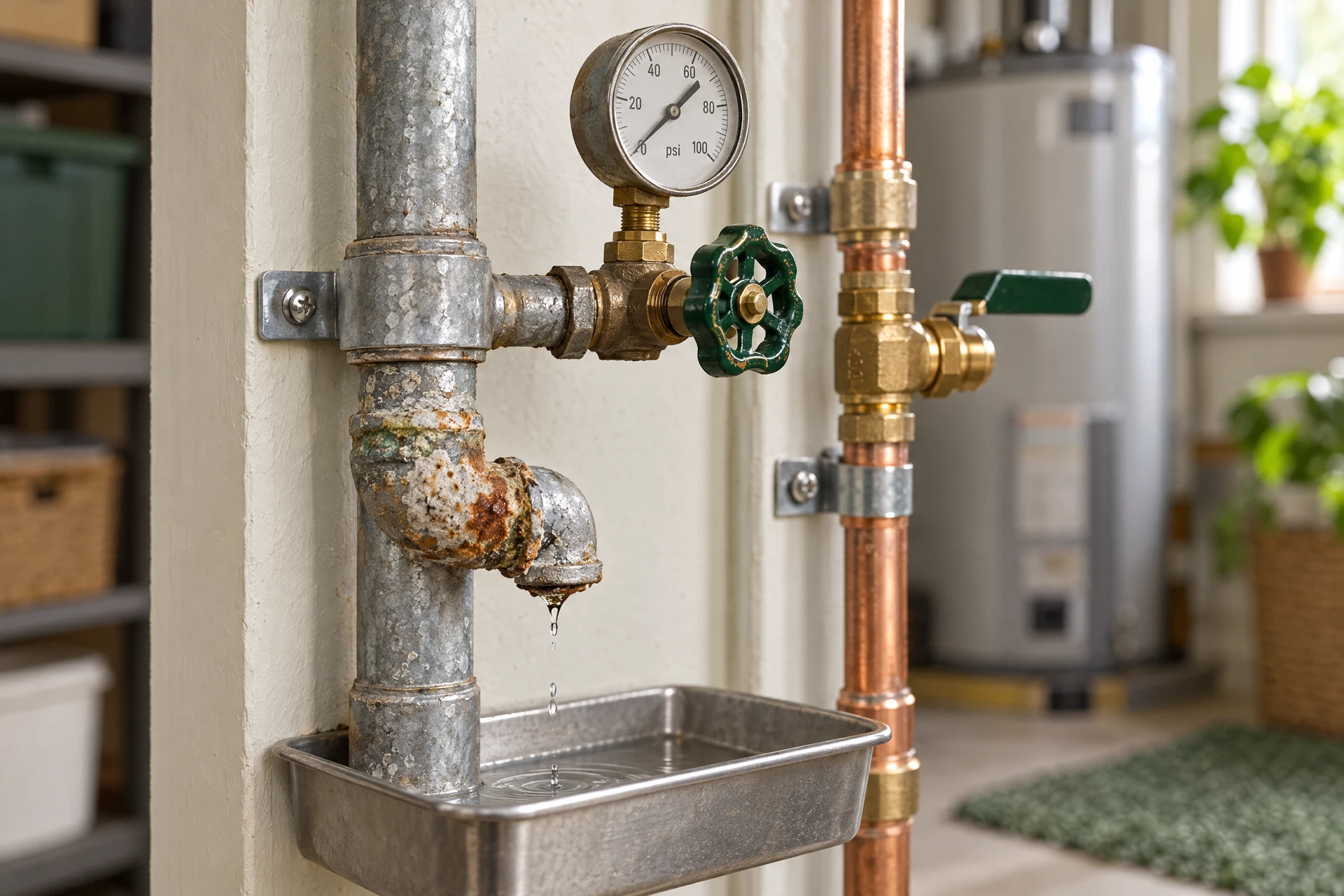
Older galvanized steel or other corroding materials can build up rust inside a line. The opening narrows, so a weak stream may be mistaken for a fixture problem or low pressure. Corrosion can weaken threaded connections and create leaks. Discolored water, seepage, or several fixtures losing flow are reasons to ask for an inspection.
A repair may address one failed section, while widespread deterioration can make repiping a more sensible long-term discussion. The right choice depends on the pipe material, location, condition, and the home’s water-use needs.
- Track which fixtures are affected and whether the problem changes when more than one is running.
- Avoid repeated chemical treatments unless a professional confirms they are appropriate for your system.
Water pressure that is too high
High pressure can strain supply lines, fixture valves, and connections over time. It may show up as banging or rattling pipes, dripping faucets, noisy fixtures, or leaks that keep returning after a small repair. Pressure that suddenly changes should be investigated, especially when several fixtures are involved.
A plumber can measure the pressure and check the condition of the system before recommending a solution. Do not assume that increasing pressure will fix weak flow; a restriction, failing valve, or corroded pipe may be the real cause.
- Note when noises or pressure changes occur and which fixtures are affected.
- Have recurring leaks evaluated instead of tightening connections indefinitely.
Plan the next step
Northwest Plumbing Services can help with plumbing repairs, water and drain lines, and repiping. We also work on pipes, faucets, toilets, disposals, water heaters, remodels, new construction, and commercial plumbing. If a pipe issue is affecting an accessible bathroom project, ask about low-threshold Bestbath shower options as part of the planning conversation.
For a concern at your Columbia County property, call (503) 366-1323 or email office@nwplumbingservices.com. Describe what you see, where it is happening, and whether water is still moving so the office can help you determine the appropriate next step. When system-wide pipe work is being considered, review our Repiping Services guidance.
Questions about this topic
When should I call about a pipe problem?
Call promptly for active leaks, water damage, a sudden pressure change, repeated leaks, or signs of corrosion. Shut off water safely first when needed.
Does low water pressure always mean the pipes need replacing?
No. A clogged aerator, valve issue, localized restriction, or corroded section can affect flow. An inspection helps identify the cause before you plan a repair or repiping project.