Plumbing trouble in an Oregon home rarely announces itself all at once. A drain may slow down before it backs up, a faucet can drip for weeks, or a damp patch may appear near a water or drain line. Rainy weather, mature landscaping, older homes, and everyday grease or hair buildup can all complicate the picture. Paying attention to small changes gives you a chance to protect cabinets, floors, walls, and routines before a minor issue becomes a disruptive repair. Here are practical signs to watch for and sensible steps to take in Columbia County.
Start with drains and water pressure
One slow sink often points to buildup from food, grease, hair, or soap. Clear surface debris and avoid chemical drain cleaner, which can create hazards for anyone working on the line. When several fixtures slow down together, clogs return, or a toilet gurgles while another drain runs, the restriction may be farther into the home's drain system. For a broader service-planning overview, review our Plumbing Services guidance.
A sudden change in water pressure also deserves a closer look. Check whether a valve is partly closed and whether the issue affects one fixture or the whole house. A single weak faucet may need fixture service; a home-wide change can be related to a leak, damaged or scaled piping, or another supply-side concern.
- Note which fixtures are affected and when the change began.
Do not dismiss drips or hidden moisture
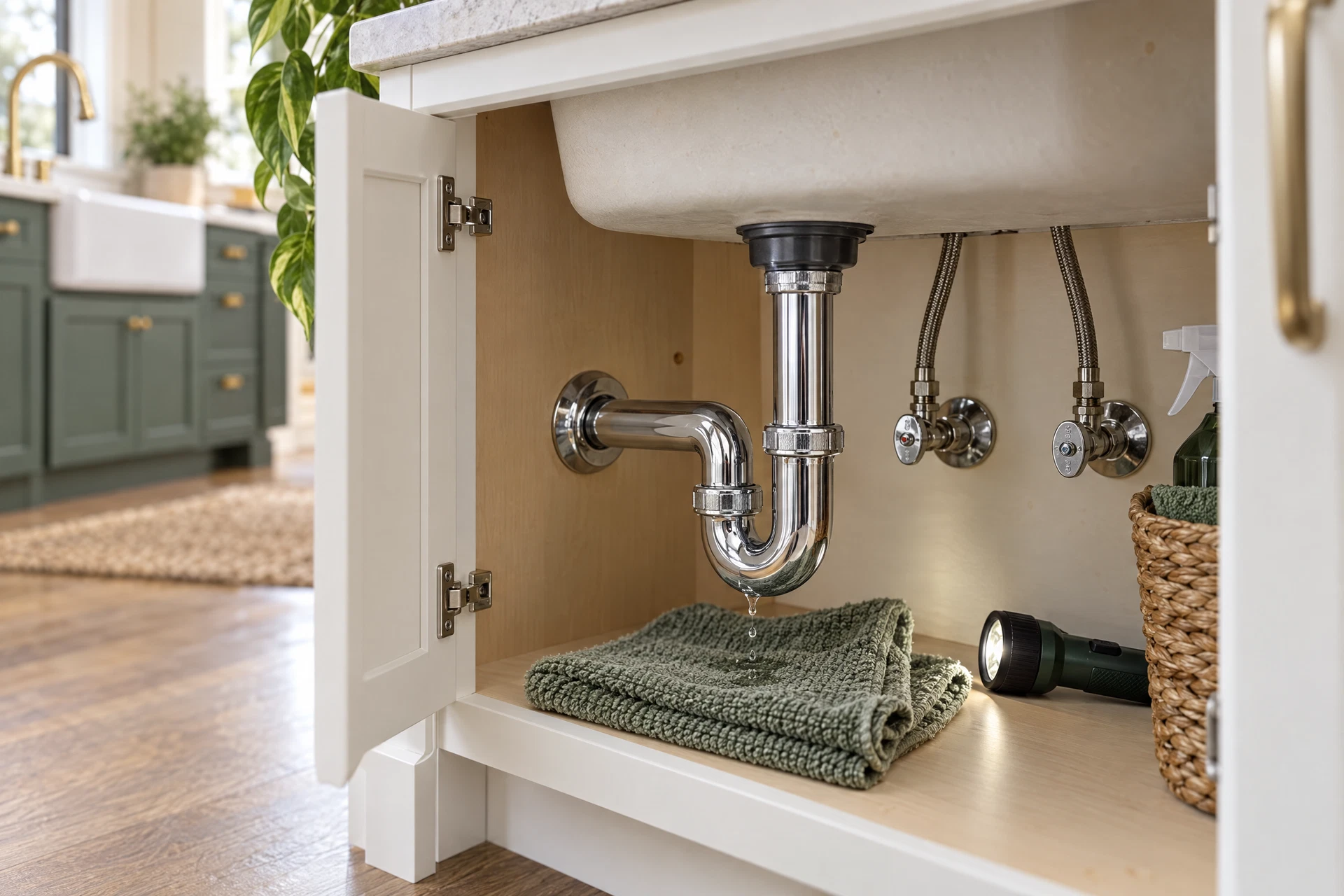
A dripping faucet wastes water and can point to a worn part. Look under sinks and around toilets, disposals, hose connections, and water-heater piping for dampness. Behind walls or below floors, watch for a musty smell, peeling paint, ceiling stains, warped flooring, or water sounds when fixtures are off. A higher water bill is another reason to investigate.
If you find active water, shut off the nearest fixture valve when practical and protect nearby belongings. For a leak you cannot locate or safely control, contact a plumber rather than opening walls or guessing at the source.
- Photograph stains or moisture and note whether they grow after use.
- Keep electrical equipment away from wet areas and avoid contact with contaminated water.
Pay attention to yard and underground warning signs
A persistent wet spot, lush strip of grass, soft soil, standing water, or sewage odor near a buried line should not be ignored. Irrigation, roof runoff, groundwater, and drainage can look similar, so a wet yard does not prove a drain-line failure. Record where the change appears, whether it follows rain, and whether indoor drains or odors changed too.
Older properties and homes with recurring drain trouble may benefit from an evaluation of their water or drain lines before a remodel or other major work. Northwest Plumbing Services can help discuss the symptoms and the appropriate repair or line-service next step; ask what inspection options fit the property.
- Treat sewage odors, repeated backups, and unstable ground as reasons to call promptly.
- Do not dig into a suspected buried line without considering utility locations and site safety.
A practical next step for Oregon homeowners
Write down the fixture, symptom, timing, and anything that makes it better or worse. That information helps separate a one-fixture repair from a broader water or drain-line concern. Northwest Plumbing Services provides plumbing repairs for pipes, faucets, toilets, and disposals, along with water and drain-line work, repiping, water heaters, remodels, new construction, and commercial plumbing. Call the office to describe the issue and confirm what service is appropriate for your home. For a pipe condition that needs attention, review our Pipe Repair guidance.
Questions about this topic
Does a wet area in my yard always mean a drain-line problem?
No. Irrigation, rain runoff, groundwater, and drainage can look similar. Note the location and timing, then ask a plumbing professional to help determine whether a water or drain line needs attention.
What should I do if several drains slow down at once?
Limit water use until you understand the cause, avoid chemical drain cleaner, and contact the office for guidance. Multiple slow fixtures or recurring backups can indicate a problem beyond one trap or drain opening.