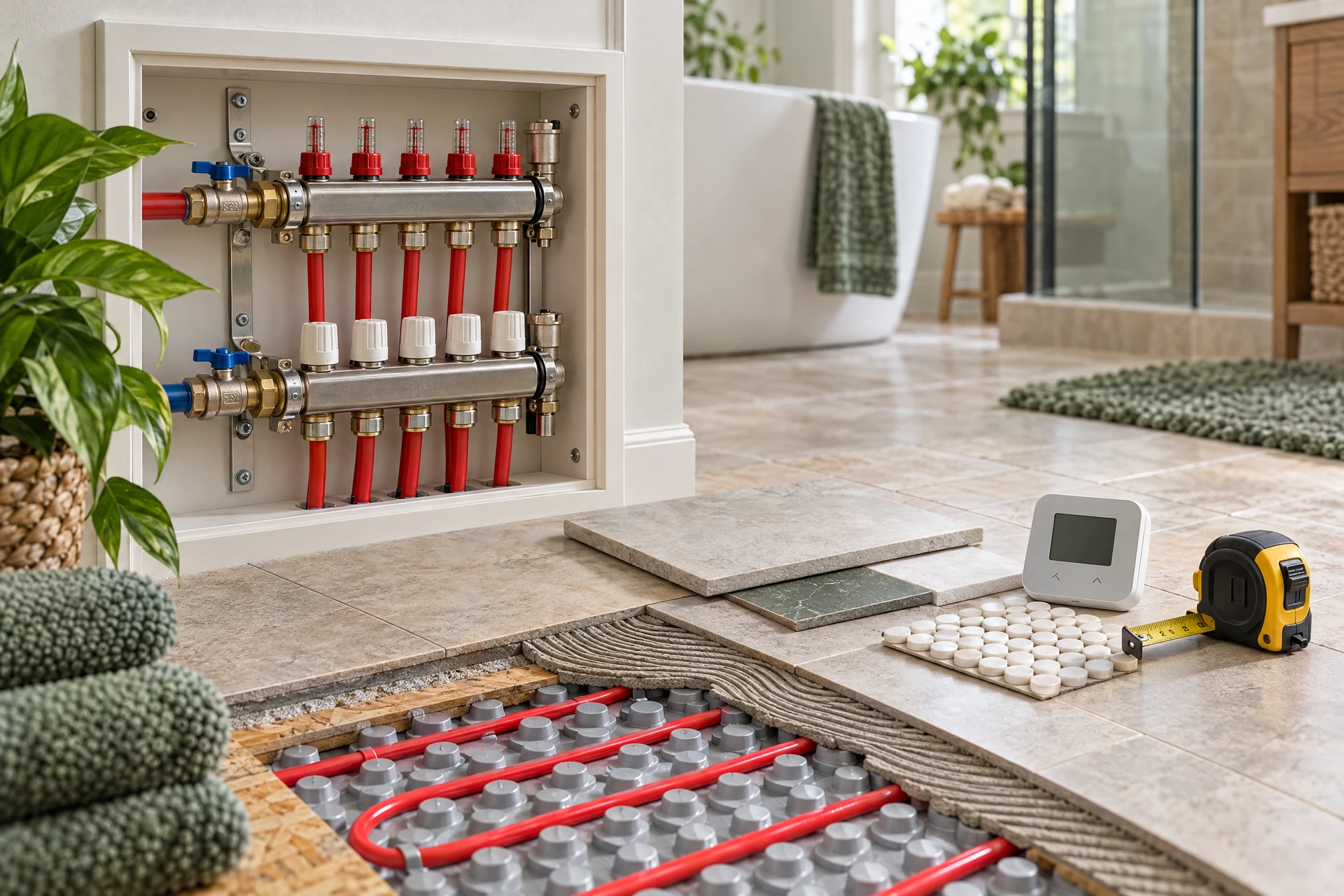
Radiant floor heating can be an appealing option during a damp Columbia County winter, especially when you want a comfortable bathroom or kitchen floor without relying only on moving warm air. The basic idea is simple: heat travels through electric heating elements or water-filled tubing installed beneath a finished floor, warming the surface above it. The planning is less simple. Floor construction, available space, controls, insulation, water-heating equipment, and local project requirements all affect whether the approach makes sense. Here are practical questions to consider before you commit to a radiant-heat project in Oregon or elsewhere in regional Oregon.
How does radiant floor heating work?
Electric systems use resistance cable or mats under the floor. Hydronic systems circulate heated water through tubing. In either case, the floor becomes a broad, low-temperature heat surface. Comfort depends on thoughtful design, insulation, and controls that match the room. For hydronic system planning, review our Boiler Installation Planning guidance.
Radiant heat is not one universal product. A remodel with tile may have different choices from new construction or a floor with limited height available. Ask for a clear explanation of the heat source, tubing or cable layout, controls, floor buildup, and service access before work begins.
- Identify whether the plan is electric or hydronic and why that option fits the room.
- Confirm the finished-floor material and any height, moisture, or insulation concerns.
Is radiant heat a do-it-yourself project?
Small electric mats can look straightforward, but mistakes can be expensive once finished flooring covers the system. Hydronic layouts require careful loop sizing, routing, balancing, controls, and connections. Poor planning may mean removing finished surfaces to correct buried work.
Before installation, have the design reviewed by an appropriately qualified professional and follow product, electrical, plumbing, and permit requirements that apply to your project. Northwest Plumbing Services can discuss the plumbing side of a remodel, but radiant-heating equipment and installation should be confirmed with the professionals handling that scope.
How can I keep the project within budget?
Start with the room where warm flooring will add the most everyday value, such as a bathroom. Limiting the heated area can reduce material and installation work. During a remodel, ask how the system will interact with the proposed floor, insulation, and existing equipment before choosing a product.
If a hydronic design is under consideration, ask whether the proposed heat source and domestic hot-water plan are compatible. Do not assume an existing water heater, boiler, or fuel system can serve a new radiant loop without a professional review. Request an itemized scope that separates floor preparation, heating components, controls, connections, finish work, and future service considerations.
- Compare a focused single-room installation with a whole-home plan.
- Set aside room in the budget for subfloor preparation, controls, and access if repairs are ever needed.
What should I ask before calling a plumber?
Gather the room dimensions, floor type, remodel plans, and any information about your current water heater or plumbing. Then ask who is responsible for system design, electrical work, controls, permits, and final floor installation. Those details help prevent gaps between trades.
Northwest Plumbing Services is family-owned, established in 1991, and serves plumbing needs from its Oregon showroom. Services include repairs, water and drain lines, repiping, water heaters, remodel and new-construction plumbing, and commercial plumbing. Radiant heating is not a verified specialized offering, so call to confirm scope or whether another specialist should be involved. For boiler-specific considerations, review our Boiler Questions and Plumbing Guidance guidance.
Questions about this topic
Can radiant floor heat be added during a bathroom remodel?
Often, a bathroom is a practical place to evaluate radiant flooring because the floor is already being opened or replaced. Feasibility depends on the subfloor, finished-floor material, available height, heat source, controls, and project requirements. Have the installation plan reviewed before materials are ordered.
Does Northwest Plumbing Services install radiant floor heating?
Radiant floor heating is not a verified specialized offering in the information available for Northwest Plumbing Services. Contact the office at (503) 366-1323 or office@nwplumbingservices.com to confirm whether your project can be supported and which portions require another qualified trade.
What is the next step if I am considering radiant heat in Oregon?
Write down the room, floor material, remodel stage, and current water-heating setup, then contact Northwest Plumbing Services to discuss the plumbing scope. Contact our Oregon office for showroom directions or mailing details.