Summer brings more activity at home, from visiting family and kids out of school to extra laundry, cooking, and showers. That added use can expose a sewer or drain problem that was already developing, while a heavy Pacific region rain can put additional pressure on lines and low areas. Oregon homeowners do not need to diagnose the cause themselves. Watch for changes in how fixtures drain, unusual odors, wastewater near the yard, or a backup, then reduce water use and contact Northwest Plumbing Services for guidance. Family-owned by David and Mindy Sass since 1991, we help homeowners plan the next practical step for plumbing repairs, water and drain lines, and related service needs.
Slow or uneven drainage can signal a developing blockage
A kitchen sink may still empty while a bathtub, toilet, or disposal drains slowly. That uneven pattern can point to a partial blockage farther along the shared drain or sewer line. Gurgling, rising water, or a toilet that struggles after other fixtures run are additional reasons to pay attention. For sewer-line repair planning context, review our Sewer Repair Planning guidance.
Pause repeated plunging and avoid chemical drain cleaners when several fixtures are affected. Use only the water you need, keep people away from a backed-up fixture, and call the office so the situation can be discussed before a small restriction becomes an indoor overflow.
- Note which fixtures are slow and whether the problem changes when another runs.
- Do not flush wipes, paper towels, grease, or other items that worsen a blockage.
Odors and wastewater deserve prompt attention
A persistent sewage smell indoors, around a cleanout, or near the yard is not simply a summer nuisance. It may be related to a blockage, a dry trap, a damaged connection, or another drain-line concern. If wastewater appears where it should not, keep children and pets away from the area and limit water use until you receive advice.
Do not open an unknown cleanout or enter a contaminated area. A plumber can help determine whether the next step involves a fixture, drain line, sewer connection, or repair.
- Record when the odor appears and whether it follows laundry, showers, or rain.
- Ventilate safely; do not mask odors with chemicals.
Watch the yard after rain and heavy household use
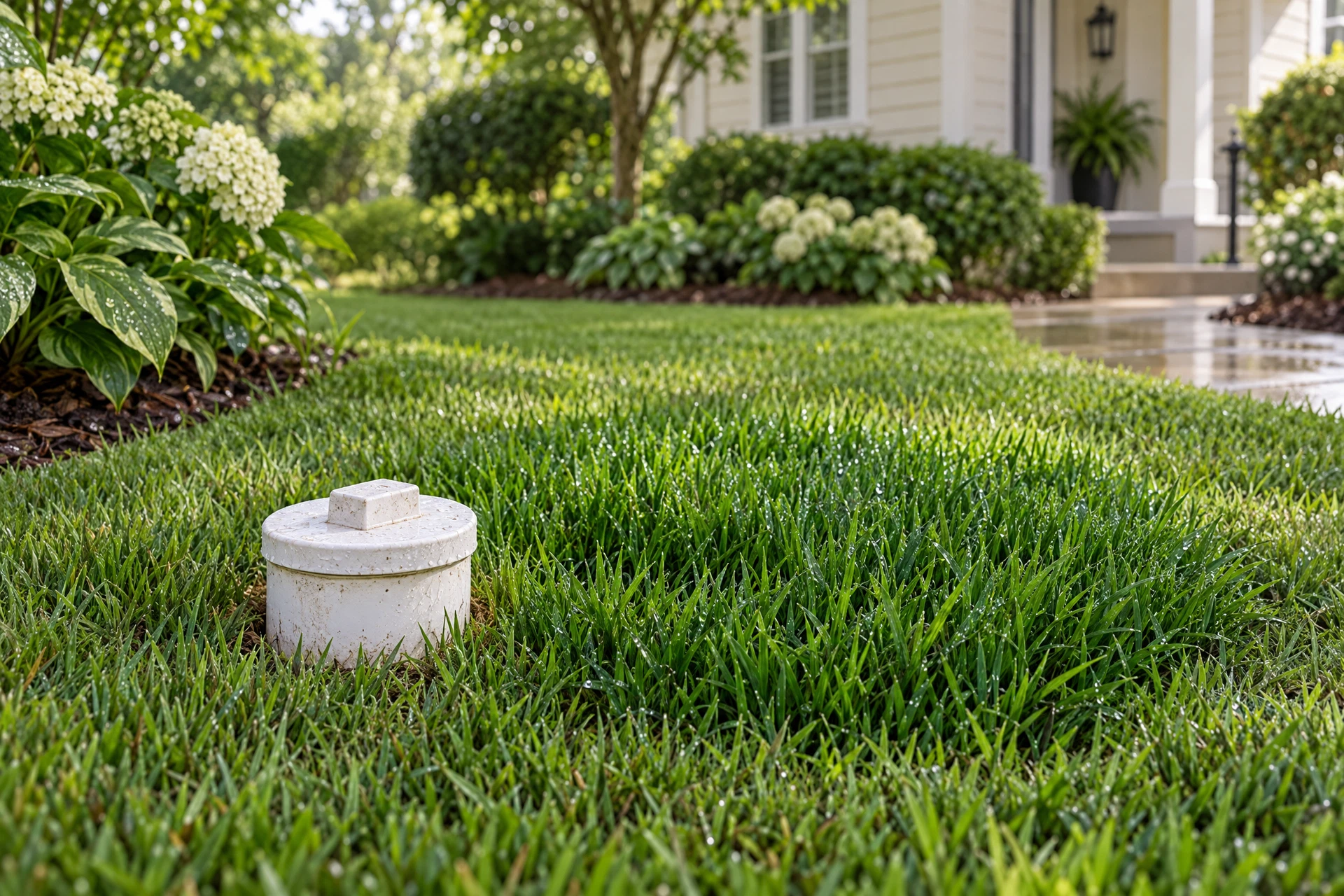
An unusually lush, wet, or foul-smelling patch of grass near a buried sewer route can be a clue that water is not moving as it should. In Columbia County, rain and saturated ground can make outdoor signs harder to interpret, so treat standing water, soft soil, or repeated wet spots as a reason to ask for an inspection rather than proof of one specific failure.
Avoid driving over the area and keep stormwater, roof runoff, and downspouts from being directed toward the suspected line. Take a photo from a safe distance and share what changed, when it started, and whether indoor drains are also slow.
- Check outdoor signs only from a safe distance; never touch or walk through suspected wastewater.
- After a major rain, pay attention to whether backups or odors return when the ground is saturated.
A sensible next step for Oregon homeowners
Early attention can make planning easier. Before calling, gather the affected fixture locations, recent weather, any visible water, and whether the issue is recurring. Northwest Plumbing Services offers plumbing repairs and water and drain-line work, and can discuss the right service path for your home or property. If you are unsure whether your situation needs immediate attention, call the office at (503) 366-1323 or email office@nwplumbingservices.com. For a closer look at a sewer-line concern, review our Sewer Camera Inspection guidance.
Questions about this topic
Should I keep using water if more than one drain is slow?
Limit water use until you have guidance. Running sinks, showers, laundry, or toilets can add to a shared blockage and may turn a slow drain into a backup.
Is green grass by a sewer line proof of a leak?
No. Extra moisture, soil conditions, and seasonal growth can have several causes. A recurring wet or unusually lush area, especially with odor or slow indoor drains, is a reason to request an inspection.
How do I contact Northwest Plumbing Services?
Call (503) 366-1323 or email office@nwplumbingservices.com. Contact our Oregon office for showroom directions or mailing details.