A water heater can give plenty of warning before it stops working. A slow return to hot water, an unfamiliar sound, or a damp spot near the tank deserves attention, especially in a Columbia County home where a small leak can damage floors and stored belongings. Whether your home has a tank or tankless water heater, noticing a change early gives you more options for a safe repair or a planned replacement. Northwest Plumbing Services has served local homeowners since 1991, and our family-owned team can help you sort out what you are seeing without guessing at the cause.
Hot water runs out too soon
A shorter supply of hot water, slow heating, or no hot water at all can point to several issues. A tank model may have a failing heating component, a thermostat problem, or sediment taking up usable space. A tankless unit may need attention if mineral buildup is restricting flow or the system is not receiving the expected power or gas supply. Do not remove covers or work around electrical or fuel connections yourself. Note when the problem occurs and whether every fixture is affected, then ask a qualified plumber to diagnose it. For water-heater maintenance and planning context, review our Water Heater Service guidance.
Odd smells, cloudy water, or a rusty tint
Hot water that smells unusual or looks cloudy can reflect bacteria, mineral deposits, or corrosion inside a tank. If the odor or discoloration is present in both hot and cold water, the source may be elsewhere in the plumbing. Avoid drinking water that looks or smells abnormal until the cause is understood. A professional can check the heater, connections, and related water lines and explain whether service, flushing, or a component replacement is appropriate for your equipment.
Popping, rumbling, or other new sounds
Noise from a tank often means mineral sediment has collected at the bottom and is being disturbed during heating. It can also signal a component that is wearing out. Sound alone cannot identify the repair, so record when it happens and whether the water temperature has changed. Routine maintenance can help some systems, but flushing a heater is not a good do-it-yourself project if you are unsure how to isolate power, water, or fuel safely.
Any water around the heater
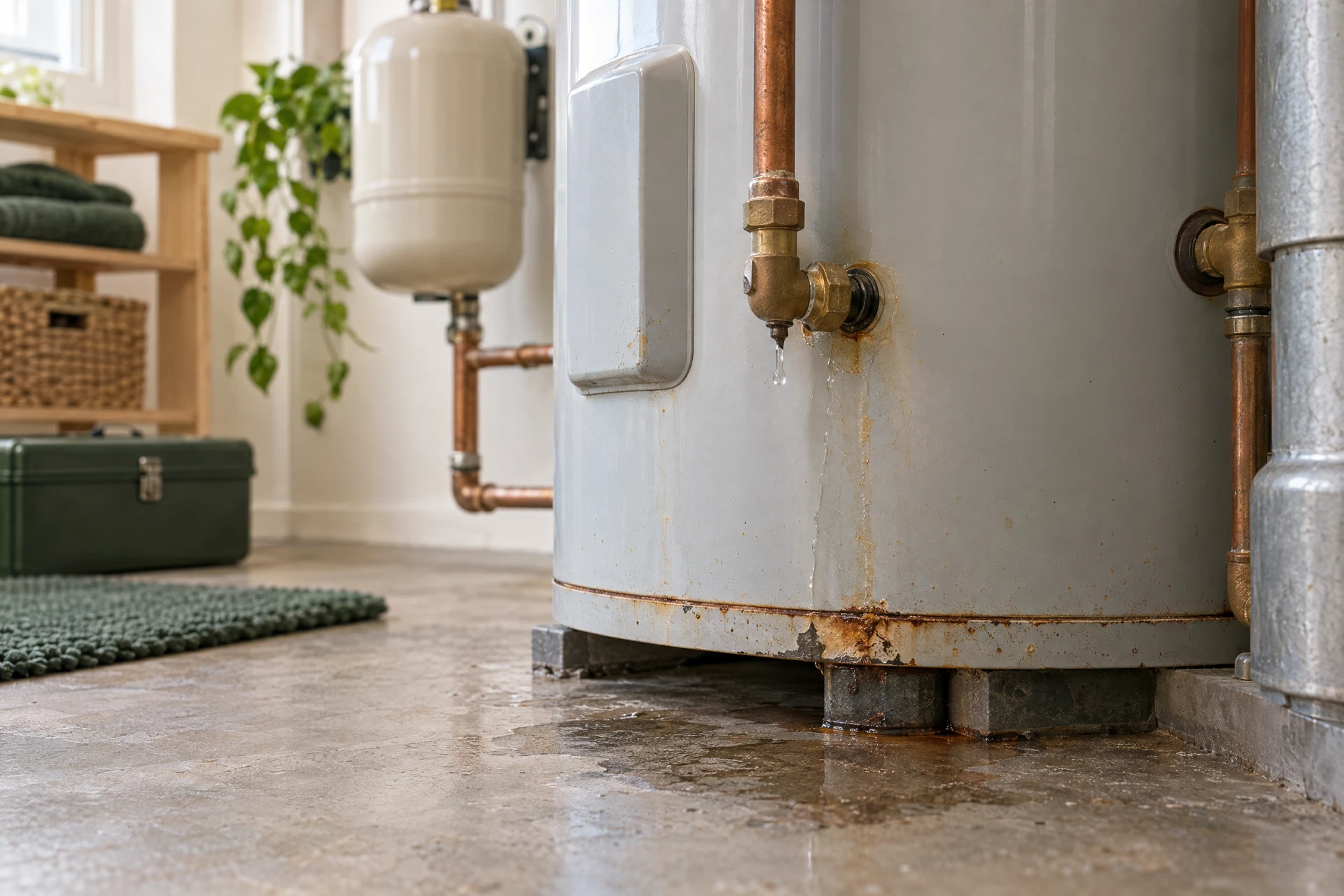
Treat pooling water, a steady drip, or moisture at a fitting as an urgent warning. If it is safe to do so, stop using hot water and shut off the heater’s water supply. For an electric unit, turn off its breaker only if you can do that safely and without stepping in water; do not touch wet electrical equipment. Move belongings away from the area, then contact Northwest Plumbing Services at (503) 366-1323 or office@nwplumbingservices.com. We can discuss repair or replacement for tank and tankless water heaters and help protect the rest of the plumbing system. For a unit showing trouble signs, review our Water Heater Repair guidance.
Questions about this topic
Should I repair or replace my water heater?
That depends on the heater’s condition, age, leak location, repair history, capacity, and your household’s hot-water needs. Northwest Plumbing Services can inspect the system and explain practical repair and replacement choices.
Who should I call about a water heater problem in Oregon?
Contact Northwest Plumbing Services at (503) 366-1323 or office@nwplumbingservices.com. Contact our Oregon office for showroom directions or mailing details. Ask the office about current availability and the right next step for your situation.