When a buried water or sewer line needs a new route, open trenching is not the only approach worth discussing. Horizontal directional drilling, sometimes called directional boring, creates a planned underground path between small entry and exit pits instead of exposing the full length of the line. That can help limit disruption to a yard, driveway, walkway, or other features around a Columbia County property. The right method depends on the site, the existing line, access, soil, utilities, and the proposed route. Northwest Plumbing Services can help you talk through the plumbing scope and next steps; call (503) 366-1323 or email office@nwplumbingservices.com to describe the problem.
What directional drilling involves
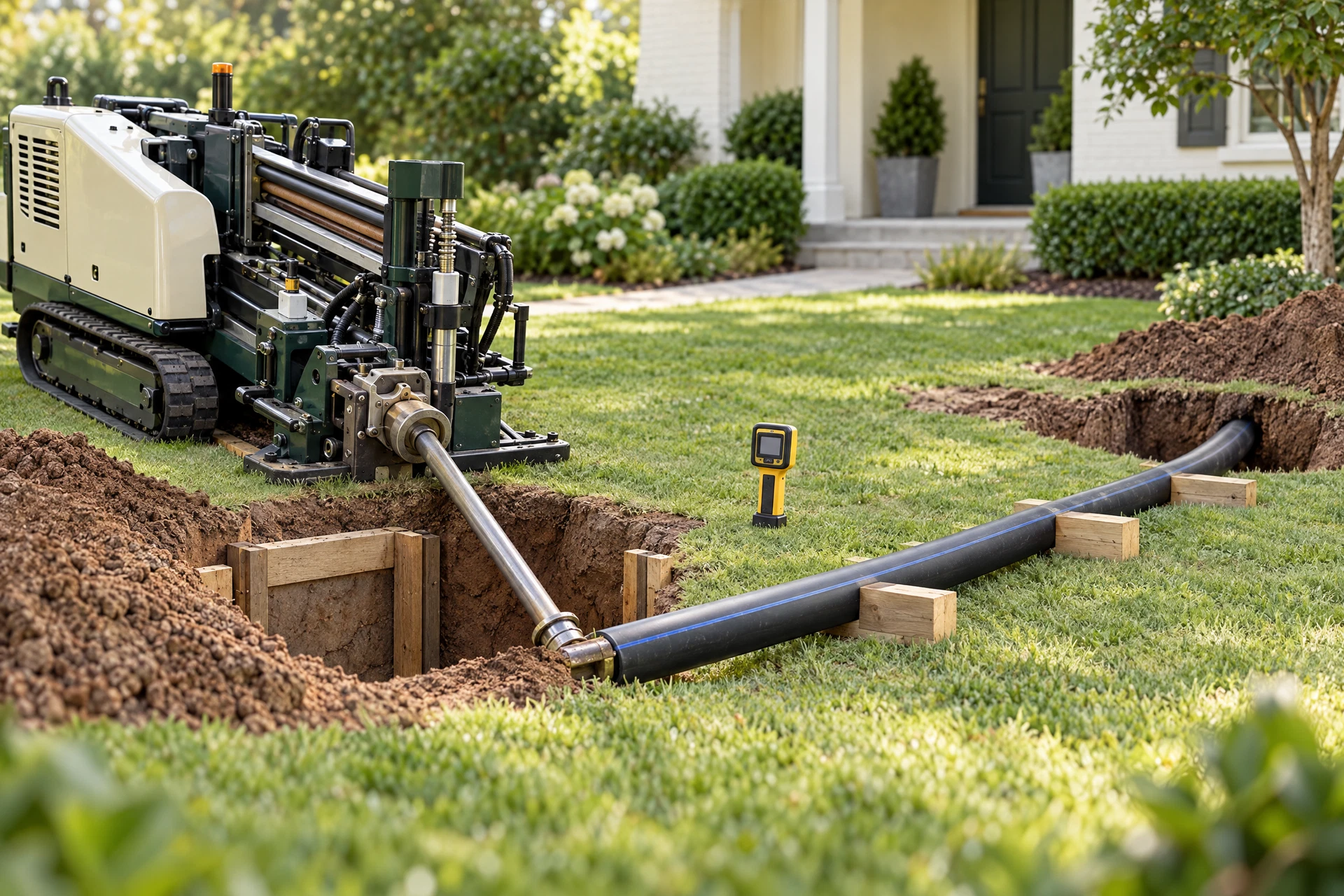
Planning comes first. The route needs to account for known utilities, structures, property constraints, and the connection points for the replacement line. A steerable drill head then makes a small pilot bore from the planned entry point toward the exit point. If the path needs to avoid an obstruction, the drilling direction can be adjusted within the design limits. For line-replacement planning context, review our Water Line Replacement guidance.
After the pilot path is complete, the replacement pipe is attached to the drill string and pulled back through the bore. The result is a new underground route with far less continuous excavation than conventional trenching. Small pits are still needed, and the work is not automatically suitable for every property or pipe condition.
Why a homeowner might consider it
Using a bore rather than opening the entire route may reduce the amount of soil, landscaping, paving, or other surface material that must be disturbed. It can also provide a way to plan around some buried obstacles. Whether it saves time or money is project-specific, since drilling equipment, access, pipe material, utility locating, permits, connections, and restoration all affect the scope.
- Ask where the entry and exit pits would go and what surfaces will still need restoration.
- Request a route plan that identifies known utilities and connection points.
- Compare directional drilling with open trenching for your actual soil, access, and line conditions.
Questions to settle before work begins
A useful site conversation should cover whether the project concerns a water line, drain line, or sewer line; how the existing line will be disconnected; and how the new line will be tested and connected. Ask who handles utility locating, permitting, inspections, surface restoration, and unexpected obstructions. A plumber can also explain whether repair, repiping, or full replacement makes sense before a route is selected.
Talk with Northwest Plumbing Services
Northwest Plumbing Services is family-owned by David and Mindy Sass and has served plumbing needs since 1991. The Oregon team handles plumbing repairs, water and drain lines, repiping, and related residential, remodel, new-construction, and commercial plumbing work. Directional drilling availability and project suitability should be confirmed for your site rather than assumed. Contact our Oregon office for showroom directions or mailing details. Call (503) 366-1323 or email office@nwplumbingservices.com. Oregon CCB#77141. For replacement-planning context, review our Sewer Replacement guidance.
Questions about this topic
Does directional drilling eliminate all digging?
No. The method generally uses smaller entry and exit pits, plus any excavation needed for connections, utility work, access, testing, or restoration. The amount varies by site.
Is directional drilling right for every Oregon property?
Not necessarily. The route, soil, access, existing utilities, line condition, property layout, and local requirements all need to be reviewed before choosing a replacement method.
Can Northwest Plumbing Services confirm whether it is available for my project?
Yes—contact the office with your address, line type, symptoms, and any plans or utility information. Ask the team to confirm the available approach and scope for your property.