A clogged toilet is inconvenient, but a calm first response can help prevent an overflow and protect your bathroom floor. In and around Columbia County, start by stopping additional flushing and checking whether the bowl water is still rising. A plunger may clear a simple paper blockage, while a toilet auger can help with a stubborn stoppage. If the toilet keeps backing up, another drain is affected, or you suspect a toy or other solid object is lodged inside, Northwest Plumbing Services can help diagnose the problem and recommend the right repair.
Start with a safe first check
If the bowl is close to overflowing, turn the shutoff valve near the floor clockwise. Do not flush again while you are troubleshooting. Give the water a moment to settle, then clear space around the toilet and put on gloves. For toilet repair or replacement context, review our Toilet Plumber guidance.
Avoid chemical drain cleaners in a toilet. They may splash back, harm nearby finishes, or leave caustic liquid in the bowl for anyone who works on it later. Do not use a wire hanger or force a rigid object through the trap; porcelain can scratch or crack, and the obstruction may become harder to retrieve.
- Stop flushing and close the shutoff valve if the water level rises.
- Keep children and pets away from the work area.
- Use eye protection and gloves when there may be contaminated water.
Try a toilet plunger
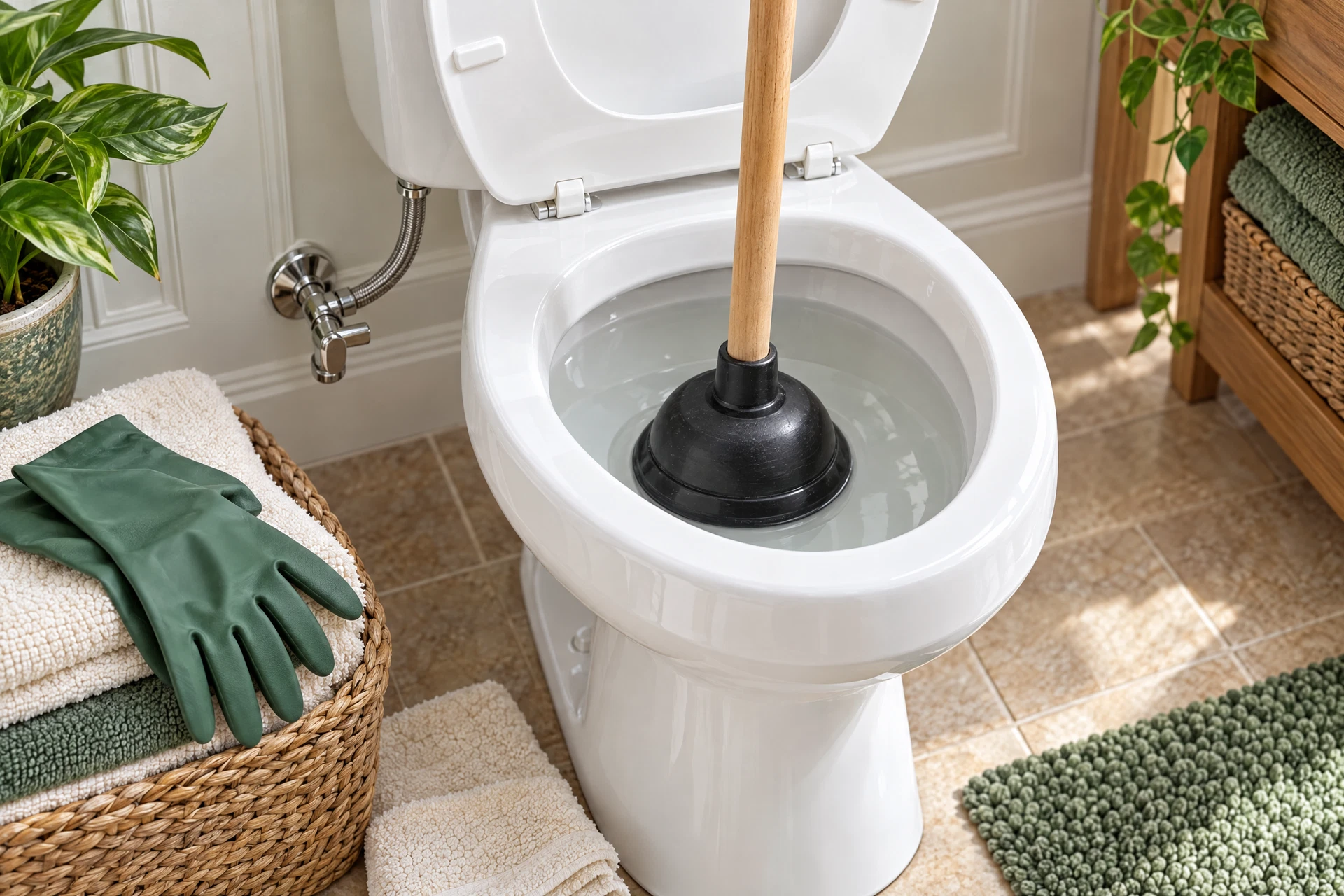
A flange-style toilet plunger is designed to seal the opening better than a flat sink plunger. Place the flange into the drain opening and press down gently to remove trapped air. Keep the seal in place while making several steady strokes, then pull up to see whether the water begins to drain. The goal is controlled pressure and suction, not repeated hard impacts that can pack the blockage tighter.
If the level drops, test with a small amount of water before attempting a full flush. Stop if the bowl rises again. A plunger can sometimes release paper or waste, but it will not reliably remove a solid object that has been dropped into the toilet.
- Use a toilet flange plunger and maintain a complete seal.
- Pump steadily rather than forcing the handle downward.
- Test drainage cautiously before flushing normally.
Use a closet auger only if needed
A toilet auger, also called a closet auger, has a curved guide that follows the toilet trap. Feed it gently, turn the handle, and stop if you meet unusual resistance. The cable may break up a soft stoppage or help retrieve an accessible object. Follow the tool instructions and keep the guide seated so the porcelain is protected.
If the auger does not restore drainage after careful attempts, do not keep adding force. A blockage farther along the drain, a damaged trap, or a larger sewer-line issue may need professional diagnosis.
- Choose a tool made for toilets, not a bare metal drain snake.
- Turn gently and avoid forcing the cable through resistance.
- Stop if the toilet, floor, or nearby fixtures show signs of damage or leakage.
Know when to call Northwest Plumbing Services
Contact the office when plunging and a careful auger attempt do not clear the toilet, when the clog returns, or when several fixtures drain slowly at the same time. Gurgling, sewage odors, water appearing around the base, or wastewater backing up into a tub are also reasons to stop using affected fixtures and ask for help. These signs can point beyond a single toilet and should not be covered up with repeated flushing.
Northwest Plumbing Services is a family-owned company led by David and Mindy Sass, established in 1991. The team handles plumbing repairs, including toilets, pipes, faucets, disposals, water and drain lines, repiping, water heaters, remodels, new construction, and commercial plumbing. Call (503) 366-1323 or email office@nwplumbingservices.com to discuss the symptoms and next step. For a toilet drain concern, review our Toilet Drain Service guidance.
- Have the toilet location and recent symptoms ready when you call.
- Tell the office whether other sinks, tubs, or toilets are affected.
- Ask the office to confirm current availability and any service details before scheduling.
Questions about this topic
Can I use chemical drain cleaner to unclog a toilet?
It is best not to. Chemical products can splash, damage finishes, and create a hazard for anyone who later opens or repairs the toilet. Use a toilet plunger first, and contact a plumber if the blockage remains.
Why does my toilet clog again after it seems clear?
A recurring clog can indicate a partial blockage, a problem in the toilet trap, or a restriction farther along the drain line. Note how often it happens and whether other fixtures are slow, then contact Northwest Plumbing Services for guidance.
What should I do if more than one fixture is backing up?
Stop flushing and limit water use until the cause is understood. Multiple affected fixtures can suggest a shared drain-line problem, so call Northwest Plumbing Services rather than continuing with repeated plunging.