Your sewer system works quietly until a backed-up drain, unpleasant odor, or slow fixture demands attention. A few everyday habits can reduce the amount of debris and buildup moving through your plumbing, while early attention can keep a small concern from becoming a larger repair. For homeowners throughout Columbia County, Northwest Plumbing Services offers practical guidance rooted in the way local homes are used and maintained. Use these dos and don’ts as a simple starting point, then contact our office when you need help understanding a drain or sewer-line concern.
Do: Keep debris out of the drain
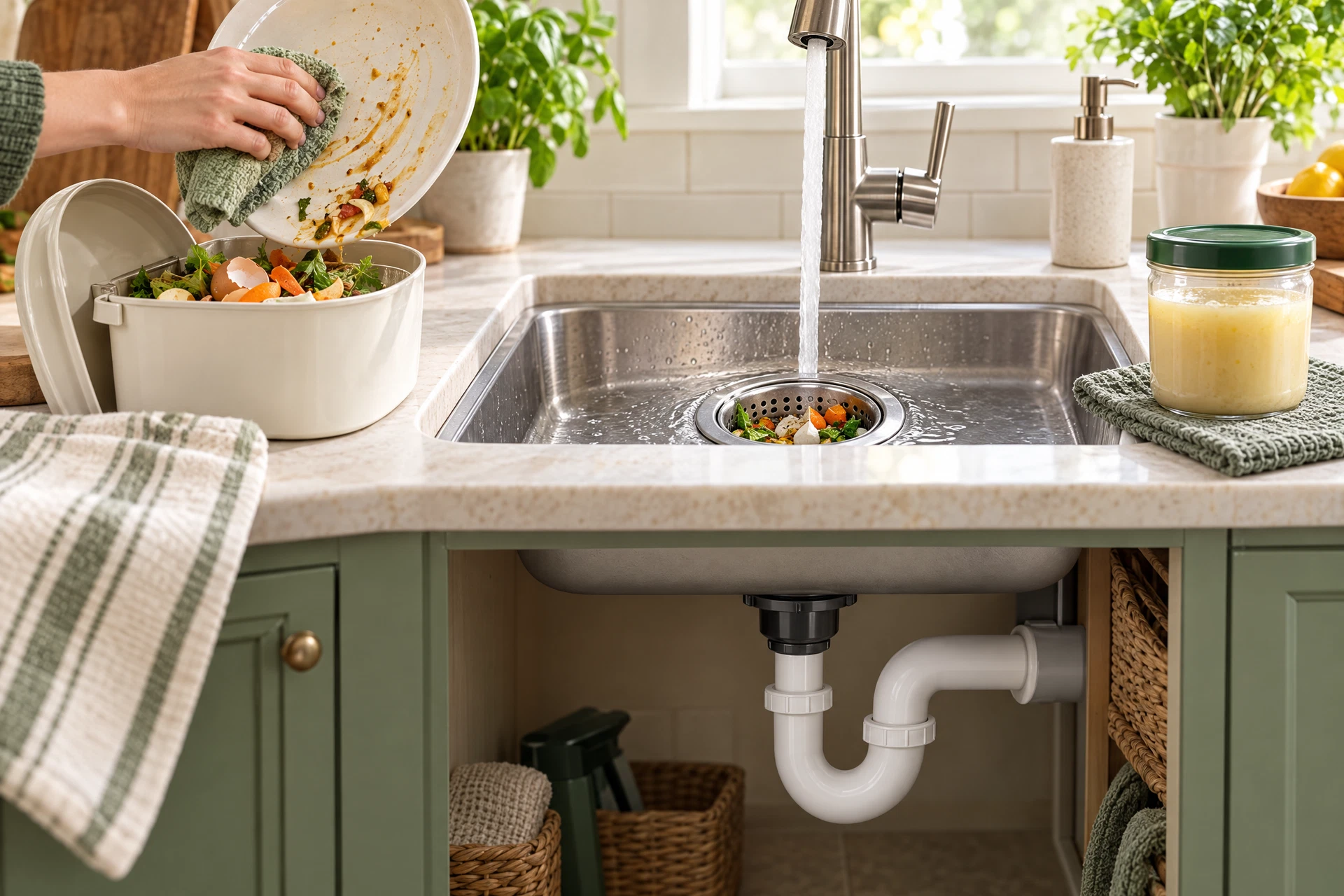
Place strainers in kitchen, bathroom, and shower drains. They can catch food scraps, hair, and small objects before those materials travel deeper into the piping. Empty strainers into the trash instead of rinsing the collected debris down another drain. For sewer-line repair planning context, review our Sewer Repair Planning guidance.
When using a garbage disposal, run a steady flow of cold water while the disposal is operating and for a short time afterward. Feed scraps gradually rather than forcing a large amount through at once. A disposal is not a substitute for a trash bin, so keep fibrous, stringy, and very hard materials out of it.
- Wipe plates and pans before washing them.
- Use a container for food scraps that should go in the trash or compost.
- Clean drain strainers regularly so water can pass freely.
Don’t flush or pour avoidable trouble
The toilet is designed for human waste and toilet paper. Even products labeled flushable can remain intact long enough to contribute to a blockage, so put wipes, paper towels, cotton products, and personal-care items in the trash.
Never send cooking grease, oil, or cooled fat down the sink. These materials can cling to pipe walls and harden as they cool. Let them cool in a heat-safe container, discard them according to local guidance, and wipe greasy cookware before washing it.
- Keep paint, solvents, pesticides, and other chemicals out of household drains.
- Follow the product label and Columbia County disposal guidance for unwanted chemicals.
- Do not mix cleaners or use harsh products as a substitute for diagnosing a clog.
Do: Pay attention to warning signs
Repeated slow drains, gurgling toilets, sewage odors, water rising in an unexpected fixture, or several fixtures acting up together deserve attention. Note when the problem occurs and which fixtures are affected. That information can help a plumbing professional narrow down whether the issue is isolated or farther along the drain system.
Avoid repeatedly forcing a stubborn blockage with improvised tools. If you are unsure what is happening, call Northwest Plumbing Services at (503) 366-1323 or email office@nwplumbingservices.com to discuss the next sensible step.
- Treat recurring symptoms as a reason to ask for professional guidance.
- Keep children and pets away from standing wastewater.
- Confirm the scope and recommended work with the office before proceeding.
A practical next step
Healthy sewer habits cannot prevent every aging-pipe or line problem, but they can reduce avoidable stress on your plumbing. If you need repairs involving drains, water lines, toilets, disposals, or related plumbing, contact Northwest Plumbing Services. The family-owned company has served customers since 1991 from its Oregon showroom. For a closer look at a sewer-line concern, review our Sewer Camera Inspection guidance.
Questions about this topic
Are flushable wipes safe for my sewer line?
It is safer to place wipes in the trash, even when the package says flushable. They may not break down like toilet paper and can contribute to blockages.
What should I do if several drains slow down at once?
Stop adding water if wastewater is rising or backing up, and contact a plumbing professional for guidance. Call Northwest Plumbing Services at (503) 366-1323 to discuss the symptoms and available next steps.