The kitchen is one of the busiest parts of a Columbia County home, so its drains handle a steady mix of water, food scraps, oils, and soap. A few everyday habits can help prevent slow sinks, disposal trouble, and dishwasher backups. Treat the drain as a working part of your plumbing system rather than a place to send anything that fits. These practical dos and don’ts are useful for homes in Oregon and throughout Oregon, while still leaving room for a plumber to diagnose problems that routine care cannot solve.
Don’t send grease or the wrong scraps down the drain
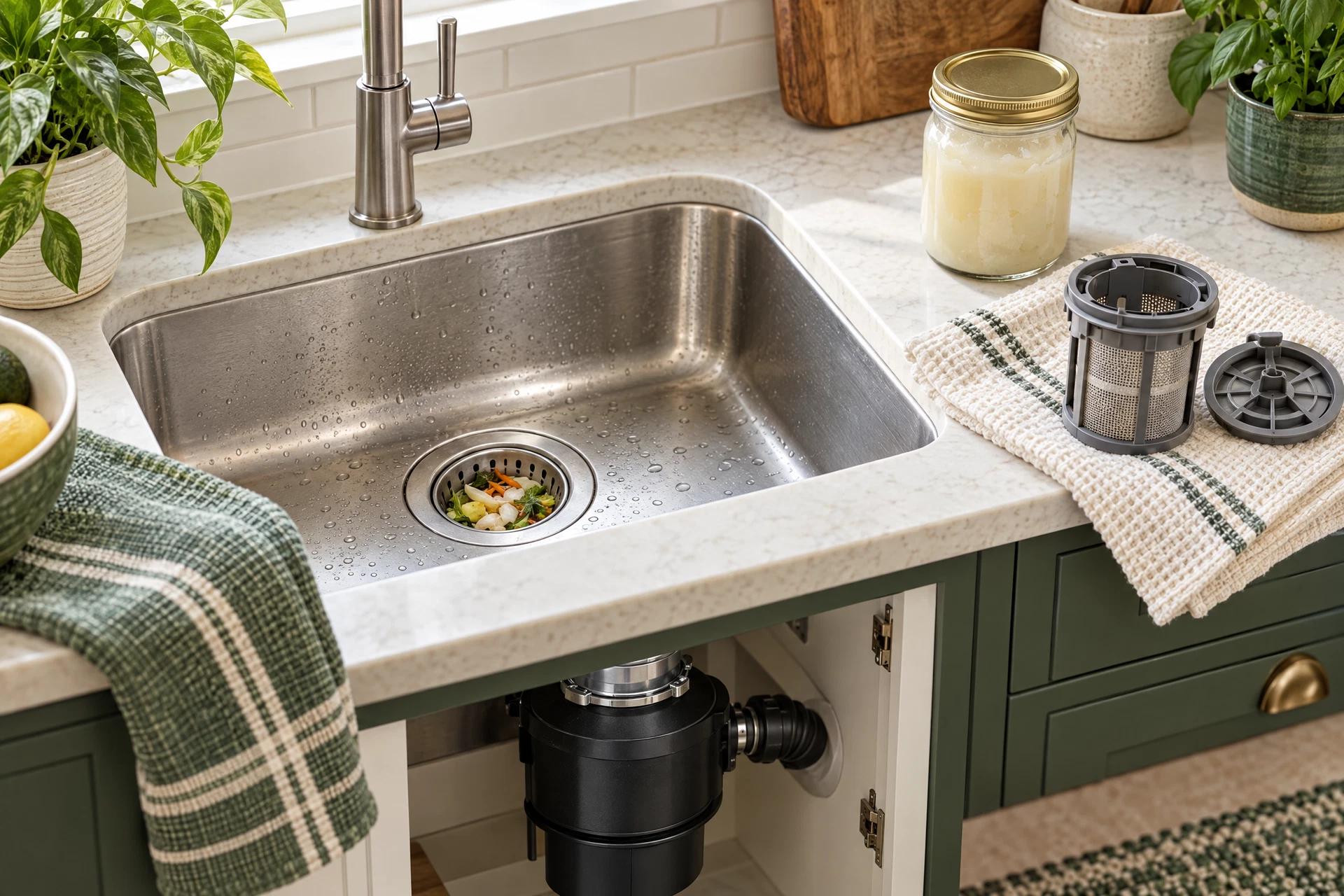
Cooking oil, bacon grease, and buttery fats may pour easily when warm, but they can cool inside the drain and collect other debris. Let grease cool, then place it in a container for disposal instead of washing it away. A sink strainer can catch solids, but it cannot make liquid grease drain-safe. For kitchen-side drain symptoms, review our Kitchen Drain Services guidance.
Garbage disposals are not a substitute for a trash can or compost setup. Non-food items, bones, fibrous peels, large portions, and starchy foods can strain the unit or contribute to a clog. Feed small amounts at a time and follow the disposal manufacturer’s guidance.
- Keep coffee grounds, cooking grease, and oils out of the drain.
- Scrape plates before rinsing and avoid forcing large or stringy scraps into the disposal.
Do use the disposal and dishwasher thoughtfully
When the disposal is running, use a steady flow of cool water to help move food waste through the line. Cool water can also keep residual fats firmer while the disposal breaks up scraps. Afterward, let the water run briefly to help clear the chamber and drain.
Dishwashers work better when plates are scraped first. Excess food can collect in the filter or drain hose, leading to poor cleaning, slow draining, or water backing toward the sink. Check and clean the filter according to the appliance instructions, especially when performance changes.
- Run the disposal with cool water, in modest batches, rather than packing it full.
- Inspect the dishwasher filter and keep the area around the sink drain free of food buildup.
Know when a kitchen drain needs attention
A faint odor, repeated slow draining, gurgling, standing water, or dishwasher water returning to the sink can signal more than a dirty strainer. Stop adding water if a backup is rising, and do not mix chemical drain cleaners. Those products may damage fixtures or create a hazard for anyone who later works on the line.
Simple habits cannot prevent every plumbing problem. A blockage farther down the line, a damaged pipe, or an issue shared with the home’s water or drain lines may need professional troubleshooting.
- Turn off the disposal before reaching near it; never put your hand inside to retrieve an object.
- Contact Northwest Plumbing Services when symptoms keep returning or multiple fixtures drain slowly.
Plan the right next step
Northwest Plumbing Services is family-owned by David and Mindy Sass and has served customers since 1991. The Oregon team can discuss plumbing repairs involving sinks, faucets, disposals, water and drain lines, and related remodel or construction needs. Call (503) 366-1323 or email office@nwplumbingservices.com to describe what you are seeing and ask what service is appropriate.
For a kitchen backup, share which fixtures are affected, whether the dishwasher is involved, and what you have already tried. That information helps the office direct your request without guessing at the cause. For disposal-related care, review our Garbage Disposal Services guidance.
Questions about this topic
Can I pour cooking grease down a kitchen drain if I use hot water?
It is better not to. Grease can cool farther inside the line and collect debris even if hot water carries it away at first. Let it cool and dispose of it separately.
Why is my dishwasher backing up into the sink?
A dirty filter, food-filled drain hose, disposal connection, or a blockage farther along the drain system may be involved. Stop adding water and contact the office if the problem persists or returns.
What should I do if several kitchen fixtures drain slowly?
Avoid chemical drain cleaners and limit water use at those fixtures. Several symptoms together can point to a shared drain-line issue that needs professional assessment.