Cold floors can make an Oregon morning feel even damper, especially in a bathroom, kitchen, or entryway. Radiant floor heating warms the floor surface from below instead of blowing heated air around the room. The two common approaches are electric mats or cables and hydronic tubing that carries heated water. Neither is automatically best for every Oregon home. The right choice depends on the room, finished-floor plans, available electrical and plumbing infrastructure, how often you want the heat, and whether the system is supplemental comfort or part of a larger heating plan. Use the comparison below as a starting point, then talk through the installation details before opening a floor.
Electric radiant heat: targeted comfort with a simpler layout
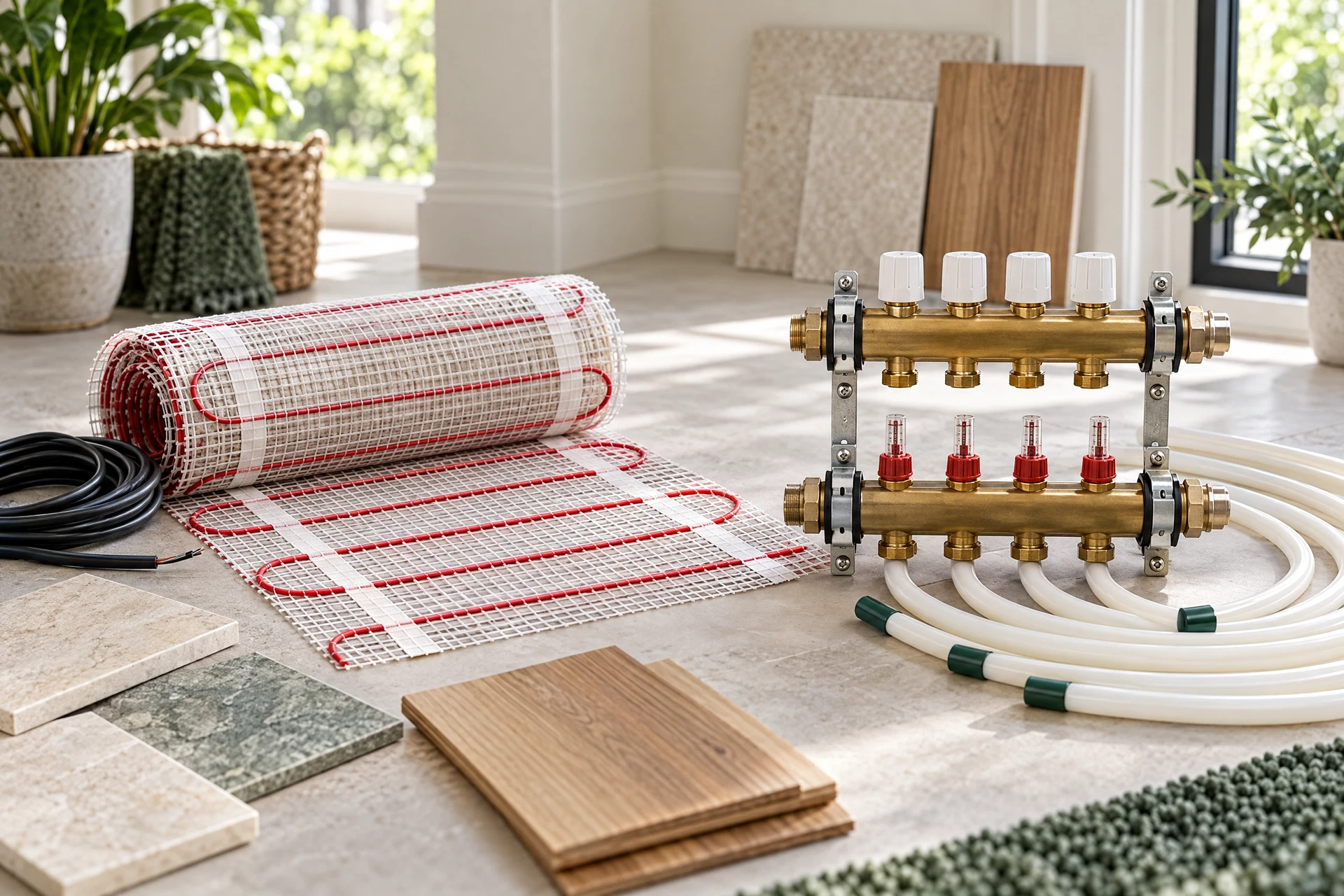
Electric systems use resistance cables or preformed mats beneath the flooring. They can suit a single bathroom or other defined area where you want warm tile at predictable times. A thermostat and schedule can make room-by-room control straightforward, and the installation may be less involved when a remodel already includes new flooring. Your electrician and remodeling team should confirm circuit capacity, controls, floor buildup, and the manufacturer's installation requirements. For hydronic system planning, review our Boiler Installation Planning guidance.
Electric heat is not automatically a whole-home solution. Operating cost depends on local electricity rates, insulation, thermostat settings, and the area being heated. Ask for a realistic load and operating discussion rather than judging the system by installation price alone.
Hydronic radiant heat: water tubing beneath the floor
Hydronic systems circulate heated water through tubing under the floor. They may be considered for a new build or a substantial remodel where tubing, manifolds, controls, and the heat source can be planned together. A water-based design can distribute heat efficiently across larger areas, but it usually brings more coordination, equipment, and commissioning questions than a small electric zone.
Hydronic work can involve specialized heating equipment and local code requirements. Northwest Plumbing Services offers remodel and new-construction plumbing, but radiant-floor or boiler scope is not a verified service offering; call the office to confirm whether your project is within its current scope or whether another qualified trade should be involved.
Questions to settle before choosing
Start with the floor assembly. Tile, engineered wood, vinyl, and other materials have different temperature limits and installation rules. Then identify the heating goal: one comfortable zone, several rooms, or a primary heat source. Review insulation below the floor, thermostat placement, access to controls, electrical service, water lines, and what happens if a component needs service later.
For a Columbia County project, bring a simple floor plan, the planned flooring, and any information about existing water heaters or heating equipment. A plumbing conversation can also uncover related work, such as moving water lines during a remodel or planning supply and drain connections before finishes are installed.
- Ask who is responsible for design, electrical work, flooring, controls, and final testing.
- Get installation and expected operating costs separated so the comparison is practical.
- Confirm permits, warranties, maintenance needs, and what the proposal does not include.
Plan the next step in Oregon
Northwest Plumbing Services is family-owned by David and Mindy Sass and has served the area since 1991. For a remodel, new construction, or related plumbing question, contact the office at (503) 366-1323 or office@nwplumbingservices.com. The team can help discuss verified plumbing services and can confirm whether radiant-floor coordination is available for your project. Contact our Oregon office for showroom directions or mailing details. For boiler-specific considerations, review our Boiler Questions and Plumbing Guidance guidance.
Questions about this topic
Is electric or hydronic radiant floor heating better?
It depends on the room size, floor construction, heating goal, energy costs, and project scope. Electric often fits a focused comfort zone, while hydronic systems require more planning for tubing, controls, and a compatible heat source. Compare the complete installed and operating costs.
Can radiant floor heating be added during a remodel?
Sometimes. The feasibility depends on access below or above the floor, finished-floor height, insulation, electrical capacity, water-based equipment, and product requirements. Review those details before materials are ordered or demolition begins.
Can Northwest Plumbing Services install a radiant floor system?
Radiant-floor installation is not a verified offering in the available company information. Call (503) 366-1323 to ask whether the current project scope is a fit or whether you should coordinate with another qualified specialist.