Plumbing trouble rarely starts with a dramatic flood. In an Oregon home, it may begin as a shower that drains more slowly, a faucet that thumps when it closes, or water pressure that feels different from one room to the next. Small changes are worth noticing because they can point to a developing issue in a fixture, water line, drain, or larger plumbing system. A quick check with Northwest Plumbing Services can help you understand what is happening before a simple repair becomes a disruptive one. Here are five signs that it is time to call the office and talk through the next step.
1. Water pressure changes without an obvious reason
A sudden drop in pressure may come from a leak, buildup, a restriction, or a pressure-control problem. If only one faucet is affected, clean the aerator and see whether the change is limited to that fixture. If several fixtures are weak, or pressure keeps shifting, avoid guessing at the cause. Note when it happens and contact a plumber for an evaluation. For a broader service-planning overview, review our Plumbing Services guidance.
A pressure change paired with damp cabinets, stained walls, or the sound of water running deserves prompt attention. If you see active water escaping, shut off the nearby fixture or main supply when it is safe and call the office.
2. A drain stays slow after a careful first try
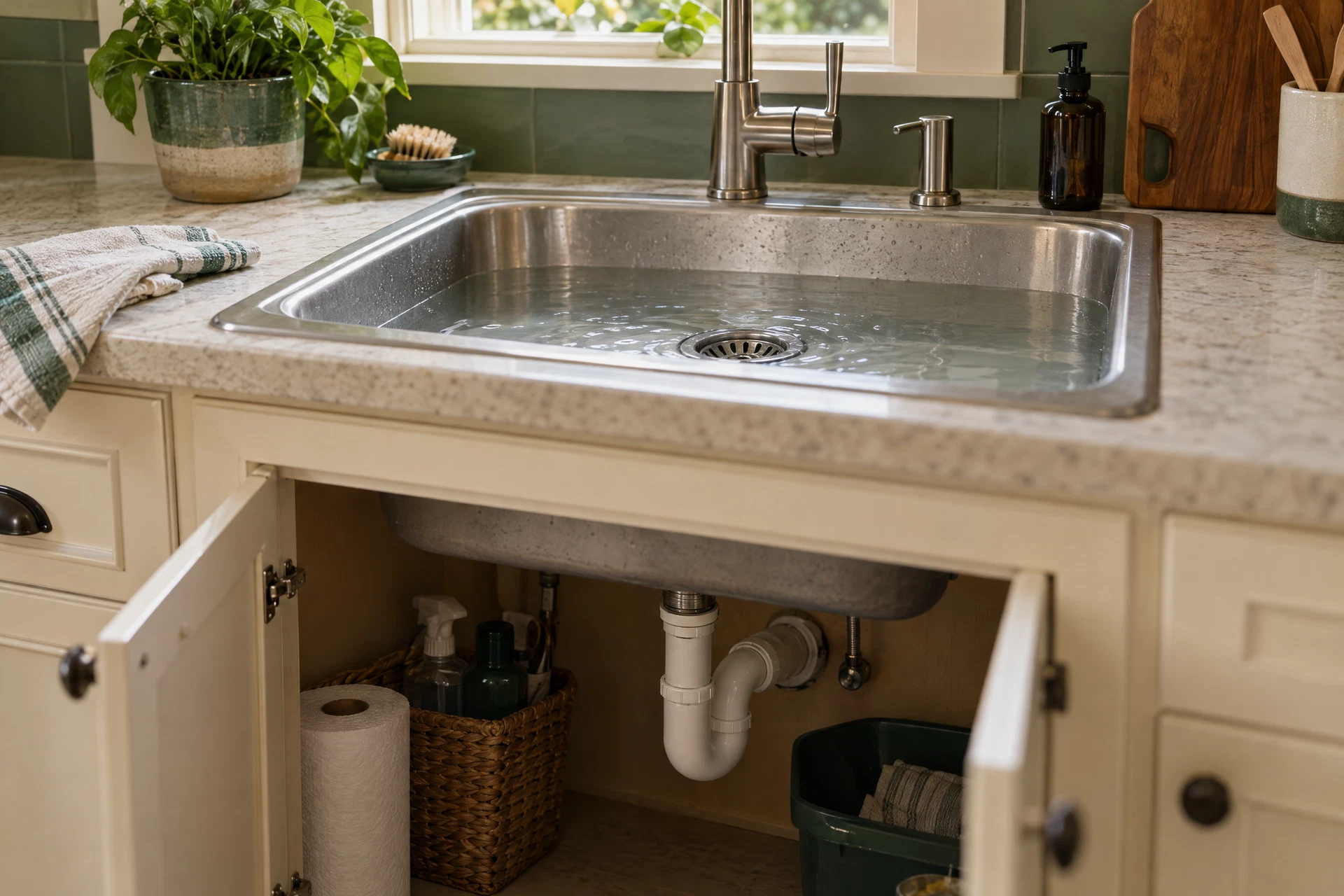
A plunger may clear a simple fixture-level clog. Give it a sensible try, but do not keep forcing a stubborn blockage or pour repeated chemical cleaners into the line. A slow kitchen, bathroom, or floor drain can signal buildup farther along the drain line, and aggressive DIY work can damage fittings or leave harsh chemicals behind for the next person to handle.
If more than one drain is slowing, the toilet level changes, or water backs up into a tub or sink, stop using the affected fixtures and call for guidance.
3. Pipes, drains, or fixtures make unusual sounds
Gurgling after a flush, knocking when a faucet closes, or unexplained running-water sounds are useful clues rather than ordinary house noise. They may relate to pressure, valves, air in the lines, a fixture, or a developing drain concern. Record which fixture is involved and whether the sound happens during use or when everything is off.
Do not open walls or change valves just to chase a noise. Sharing those observations with Northwest Plumbing Services gives the plumber a better starting point.
4. You notice sewage odors, backup, or a major installation ahead
A sewage smell or wastewater backing up into a tub or floor drain is not a wait-and-see problem. Stop using nearby plumbing, keep people and pets away from contaminated water, and contact the office for next-step advice. If the source is unclear, describe what you smell or see rather than attempting a deep cleanout yourself.
Call before moving a sink, dishwasher, toilet, or other fixture, or before planning a remodel, repipe, water-heater change, or new-construction plumbing. Proper connections, access, and code requirements are easier to plan before work begins. Northwest Plumbing Services also offers accessible low-threshold Bestbath shower installations for homeowners considering a safer bathroom layout. For a pipe condition that needs attention, review our Pipe Repair guidance.
Questions about this topic
What should I tell Northwest Plumbing Services when I call?
Share the affected fixture or room, when the symptom began, whether more than one fixture is involved, and any visible leak, odor, backup, or unusual sound. Photos can help the office understand the situation before discussing next steps.
Does Northwest Plumbing Services handle larger plumbing projects?
The company’s verified services include plumbing repairs, water and drain lines, repiping, tank and tankless water heaters, remodels, new construction, commercial plumbing, and accessible low-threshold Bestbath showers. Ask the office about the specific scope of your project.