A garbage disposal can make cleanup easier after a family meal, but it is not a substitute for a compost bin or a kitchen trash can. The habits you use at the sink affect the disposal, the trap, and the drain line. In Oregon and across Oregon, cold, wet weather makes dependable plumbing especially welcome, so a few simple routines are worth keeping. Use the disposal for small amounts of suitable food, keep problem materials out of it, and call Northwest Plumbing Services when a persistent jam, leak, or drainage problem needs a closer look.
Use cold water and small batches
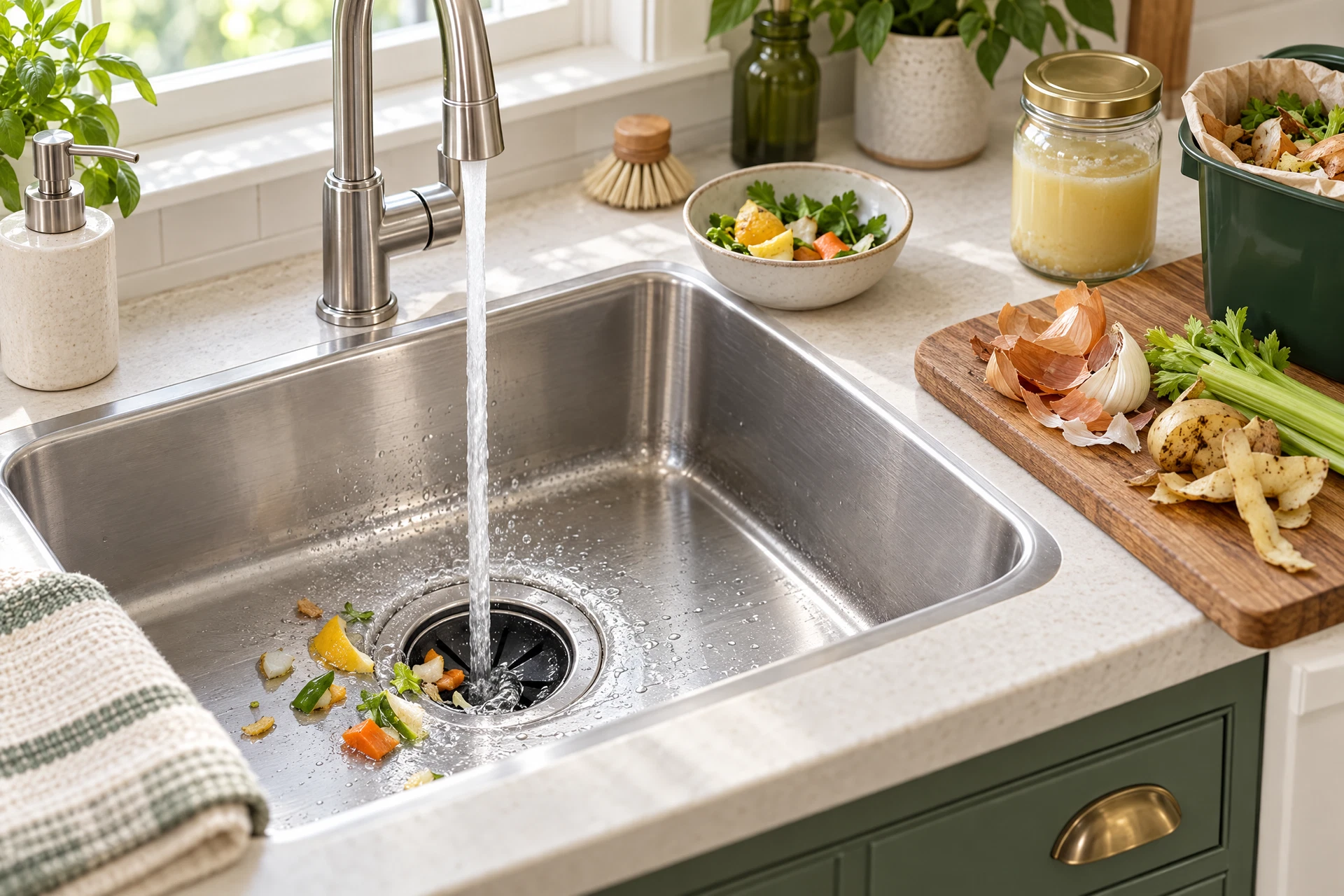
Turn on a steady stream of cold water before starting the disposal, keep it running while the unit works, and let it flow briefly afterward. Cold water helps keep fats more solid so they are less likely to coat the disposal or drain as they move away from the sink. Feed scraps gradually instead of pushing a large load through at once. For kitchen-side drain symptoms, review our Kitchen Drain Services guidance.
A disposal is best for the small residue left on plates, not a full bowl of food. Put larger quantities in the appropriate compost or trash stream, following local guidance, rather than asking the motor and drain to handle more than they were designed for.
- Do scrape excess food from plates before rinsing them.
- Do keep cold water running through the entire grinding cycle.
- Do stop and investigate if the sink drains slowly or the motor sounds strained.
Keep grease, oil, and fat out
Never pour liquid cooking grease, fat, or oil into the disposal or sink. As it cools, it can cling to the inside of the disposal and drain, then collect other debris and contribute to a blockage. Let it cool in a suitable container and dispose of it according to local waste guidance.
- Don’t rely on hot water to carry grease safely through the plumbing.
- Do wipe greasy pans and plates with a paper towel before washing them.
Know which scraps to skip
Non-food items can damage the grinding components and motor, so keep paper, chemicals, cigarette butts, and similar waste out of the unit. Fibrous scraps such as onion skins and celery stalks can wrap around moving parts. Starchy peels, including potato peels, may break down into a thick paste that makes drainage harder.
- Don’t put glass, metal, plastic, or other non-food waste into the disposal.
- Don’t grind long, stringy vegetable fibers or large amounts of peels.
- Do use composting or trash options for scraps that are a poor fit for the disposal.
Simple upkeep and when to call
Regular use can help prevent stagnant buildup. For routine cleaning, add a small amount of dish soap and run the unit with cold water. Ice can be used occasionally to help loosen residue, but it is not a repair for a jam or a damaged disposal. Never reach into the opening; switch off the unit and follow the manufacturer’s safety instructions before checking anything. For disposal-related care, review our Garbage Disposal Services guidance.
- Do stop using the disposal if it leaks, hums without grinding, or trips the reset repeatedly.
- Do contact Northwest Plumbing Services for help with disposal repairs, related drain concerns, or a replacement discussion.
- Do have the office confirm current availability and the right next step for your property.
Questions about this topic
Should I use hot or cold water with a garbage disposal?
Use cold water while the disposal runs and for a short time afterward. It helps keep grease and fat from softening and coating the drain as scraps move through.
Can a garbage disposal handle potato peels, celery, or onion skins?
Those scraps are better kept out. Fibers can tangle in the grinding parts, while potato peels can form a thick, paste-like material that contributes to slow drainage.
Who should I call about a disposal that leaks or will not run?
Contact Northwest Plumbing Services at (503) 366-1323 or office@nwplumbingservices.com. The office can discuss the issue and confirm current service availability.