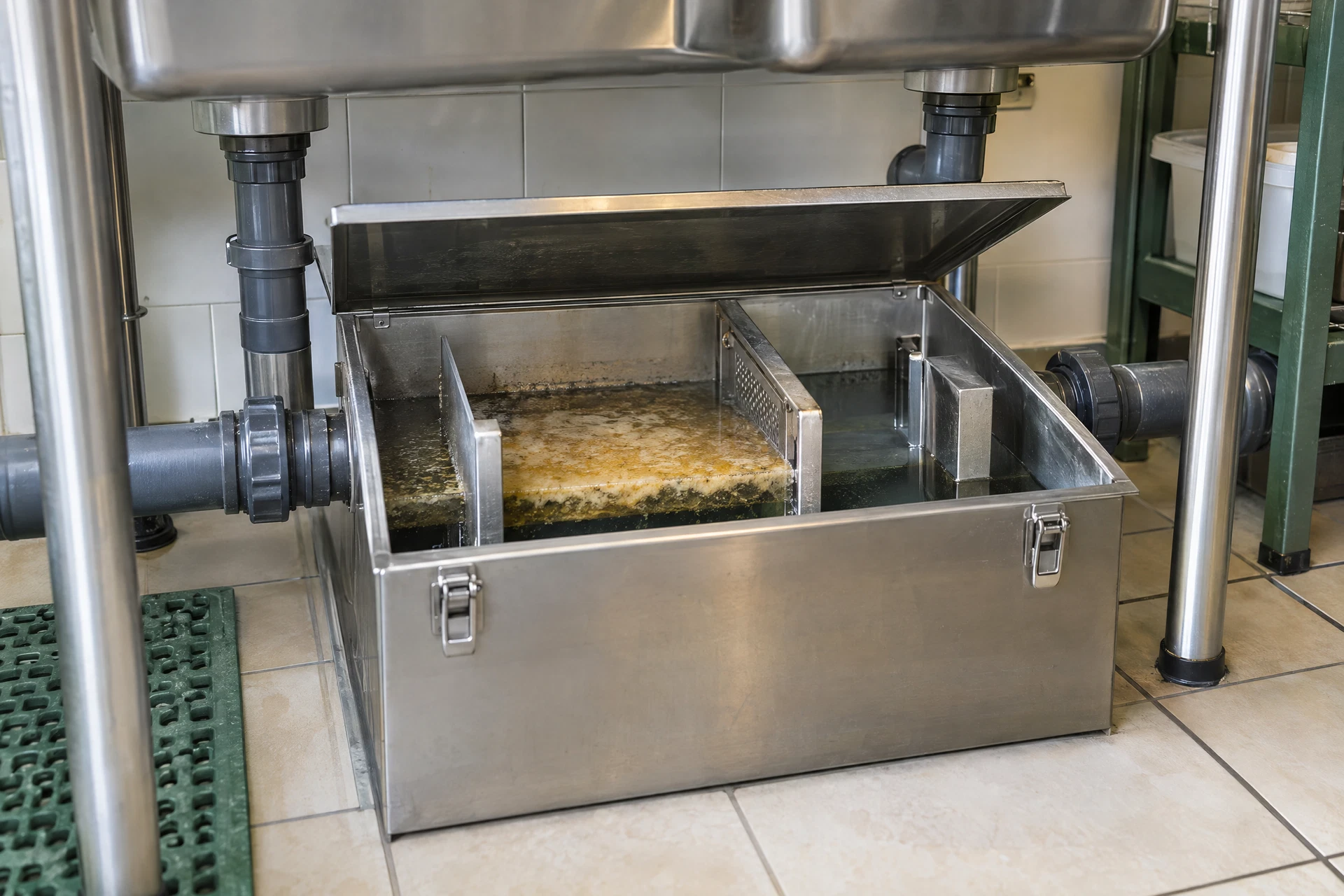
Restaurants, cafés, schools, and other food-service kitchens in Oregon handle plenty of fats, oils, and grease, often shortened to FOG. When that material goes down a drain, it can cool, collect, and restrict private plumbing or larger sewer lines. A grease trap, also called a grease interceptor, is designed to sit between kitchen fixtures and the sanitary sewer so FOG can be captured before it travels farther. The basic idea is simple: slowing wastewater gives grease time to separate from water, making it possible to remove. Good habits and a maintenance plan matter just as much as the device itself, especially for businesses serving Columbia County customers.
How a grease trap works
As warm wastewater enters the interceptor, its flow slows. Water continues through the outlet while heavier food solids settle and grease rises as it cools. The trap only works when it has enough capacity and its baffles, lid, and connections remain in usable condition. A blockage, damaged component, or overfilled chamber can let FOG pass into the drain line instead of holding it back. Indoor hydromechanical units and larger outdoor gravity interceptors serve different layouts, so sizing and installation should match the kitchen's fixtures and volume. For a business-side plumbing project, review our Commercial Plumbing for New Construction guidance.
Everyday steps that reduce FOG problems
Kitchen staff can reduce the load before it reaches the trap. Scrape pans and plates into the garbage, collect used cooking oil for proper disposal, and use sink strainers to catch food scraps. Do not treat a drain with grease-cutting chemicals, enzymes, or other additives as a substitute for pumping; those products may move FOG downstream rather than remove it. Keep a simple log of cleanings, odors, slow drains, and backups so changing conditions are easier to spot.
- Keep fats, oils, and grease out of sinks whenever possible.
- Do not pour fryer oil, sauces, or food solids into floor drains.
- Ask the local sewer authority about applicable sizing, inspection, disposal, and recordkeeping rules for your facility.
Plan maintenance before a backup
There is no single cleaning interval that fits every kitchen. Usage, fixture count, interceptor type, and accumulated solids all affect the schedule. Have the device inspected and cleaned before buildup reduces its working capacity, and follow any schedule or threshold required by the authority serving your property. Persistent odors, gurgling, slow fixtures, visible grease, or repeated backups are reasons to call for professional evaluation rather than waiting for a sewer emergency. Keep pump-out documentation if your regulator or property manager requires it.
A practical next step in Oregon
If you are opening, remodeling, or troubleshooting a food-service space, Northwest Plumbing Services can discuss commercial plumbing, drain and water lines, repairs, and project planning. The family-owned company has served from Oregon since 1991. Call (503) 366-1323 or email office@nwplumbingservices.com with your fixture layout, symptoms, and any existing maintenance information. Ask the office to confirm the current scope, scheduling, and any local coordination needed for your property. For recurring drain symptoms, review our Drain Cleaning guidance before choosing a next step.
Questions about this topic
Is a grease trap the same as a grease interceptor?
People often use the terms interchangeably, although equipment varies by design, capacity, and installation. An evaluation should identify the device on your property and the requirements that apply to it.
Can I choose a cleaning schedule by calendar alone?
A calendar is a useful starting point, but the right interval depends on use, flow, solids, and the device's condition. Review the trap and follow the applicable local authority's requirements rather than relying on a one-size-fits-all interval.
Who should I contact about a grease-trap concern?
For plumbing evaluation or repair planning, contact Northwest Plumbing Services at (503) 366-1323 or office@nwplumbingservices.com. Contact the relevant sewer authority for local compliance questions, and ask our office to confirm whether your requested work is within our current service scope.