A toilet that keeps running can waste water, add an irritating sound to a quiet Oregon night, and signal a small tank problem that is often easy to identify. In many cases, water is slipping from the tank into the bowl because the flapper is not sealing. Other possibilities include a float set too high or a chain that holds the flapper partly open. You can make a few careful checks with the tank lid removed. If the problem is not obvious, the leak continues, or you would rather have a professional handle it, Northwest Plumbing Services can help homeowners in Columbia County and throughout Oregon. The family-owned company has served local customers since 1991.
Start with a safe tank check
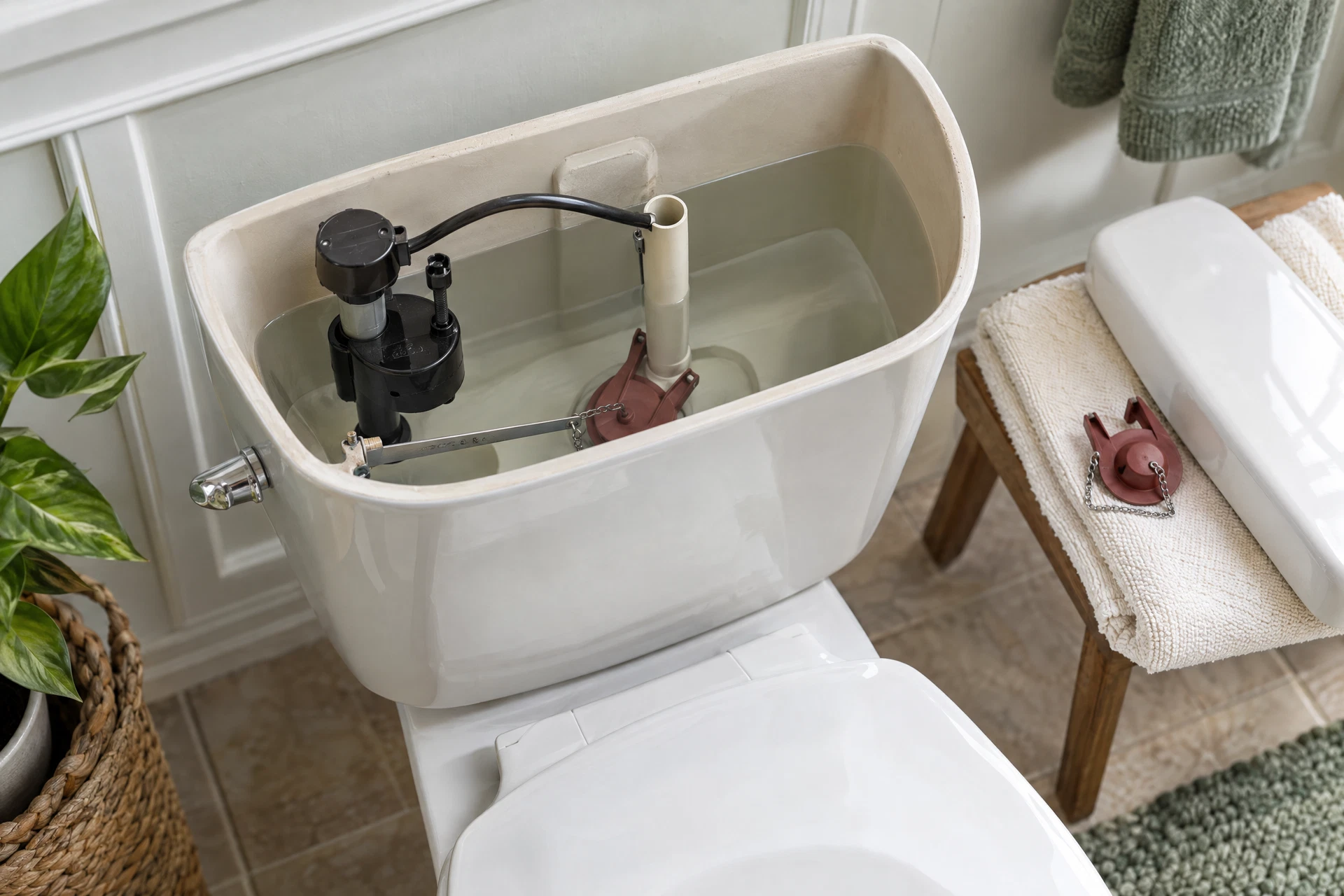
Lift the tank lid gently and set it on a towel or another stable surface. Do not force the flush handle or reach into moving parts while the toilet is flushing. Watch the water level and listen for where the sound continues. If water is spilling into the overflow tube, the fill system may be letting the tank fill too high. If the bowl receives a faint, steady trickle, the flapper or its seal deserves closer attention. For toilet repair or replacement context, review our Toilet Plumber guidance.
Before taking anything apart, locate the shutoff valve near the floor or wall behind the toilet. Turn it clockwise only if the toilet begins to overflow or you need to stop the flow while inspecting it. Older valves can be stiff, so do not force one that may be stuck or leaking.
- Keep the tank lid and small parts away from children and pets.
- Use the toilet's shutoff valve for an urgent stop; do not rely on the flush handle.
Inspect the flapper and chain
The rubber flapper should lie flat over the flush opening after the flush cycle. Mineral buildup, age, warping, or a damaged seal can leave a path for water into the bowl. Lightly check whether it settles back into place; avoid scraping or pulling hard on brittle rubber. A replacement flapper may solve the problem, but the correct style depends on the toilet's flush valve and tank design.
The chain should have a little slack when the flapper is closed. If it is too short, the flush lever can hold the flapper open. If it is tangled or caught under the flapper, reposition it carefully and test one flush.
- A discolored, cracked, or misshapen flapper is a good reason to plan a replacement.
- Do not add heavy objects to the chain or force a seal that does not fit.
Check the float and know when to call
The float tells the fill valve when the tank has enough water. If the float is adjusted too high, water may continue into the overflow tube. Some toilets use a ball on an arm, while others use a cup that slides on the fill valve. Make only the small adjustment allowed by the mechanism, then flush and watch the refill cycle. If the water level cannot be adjusted, the fill valve may need service.
Stop troubleshooting and contact Northwest Plumbing Services if the shutoff valve leaks, the tank or bowl is cracked, the toilet rocks, parts are corroded, or the running returns after a reasonable adjustment. The office can also discuss repairs involving toilets, water lines, or related plumbing fixtures. Call (503) 366-1323 or email office@nwplumbingservices.com to describe what you are seeing and ask about the next step. For a toilet drain concern, review our Toilet Drain Service guidance.
- Have the toilet brand and any visible model information ready when you call.
- Ask the office to confirm current availability and any service details for your location.
Questions about this topic
Why does my toilet run for a few seconds after every flush?
A short refill is normal, but repeated cycling can point to a flapper that is not sealing, a chain with too little slack, or a float and fill valve that need adjustment. Watch the tank during the refill cycle and contact a plumber if the cause is unclear.
Should I replace the flapper myself?
A careful homeowner may replace a visibly worn flapper after shutting off the water and matching the replacement to the toilet. If the valve, seal, or connection is corroded, or the new part does not stop the leak, ask Northwest Plumbing Services to inspect it.
Who can help with a running toilet in Columbia County?
Northwest Plumbing Services provides plumbing repairs, including toilet and water-line work. Call (503) 366-1323 or email office@nwplumbingservices.com, and confirm current availability and service details with the office.