Your side sewer carries wastewater from your home toward the public sewer system, tying together drainage from sinks, toilets, laundry, and other fixtures. In the across Columbia County, that buried line can be easy to forget until a backup, slow drain, wet patch, or unpleasant odor signals trouble. A little planning helps you protect the line, avoid adding stress to your plumbing, and make better decisions when a repair is needed. Northwest Plumbing Services is family-owned by David and Mindy Sass and has served the area since 1991. If you have a concern about a water or drain line, contact the office to discuss the situation and the appropriate next step.
Know where the line runs
Keep any sewer-line information, property drawings, inspection records, or repair invoices together where you can find them. Knowing the likely route makes it easier to notice changes in the yard and helps you avoid digging, planting large-rooted vegetation, or placing a heavy structure directly over a buried line. Records may not show every alteration, so confirm locations with the appropriate local authority or a qualified professional before excavation. For sewer-line repair planning context, review our Sewer Repair Planning guidance.
Responsibility for a private connection and the public sewer main can differ by location and by the local agency's rules. Do not assume that a problem belongs to the city or to the homeowner. Ask the relevant utility or municipality how the boundary is handled for your property.
Look for early warning signs
Pay attention when several fixtures drain slowly at the same time, toilets gurgle, wastewater backs up into a low fixture, or a normally dry area of the yard stays damp. A recurring odor or a patch of unusually lush grass can also justify a closer look, although weather and surface drainage can have other explanations.
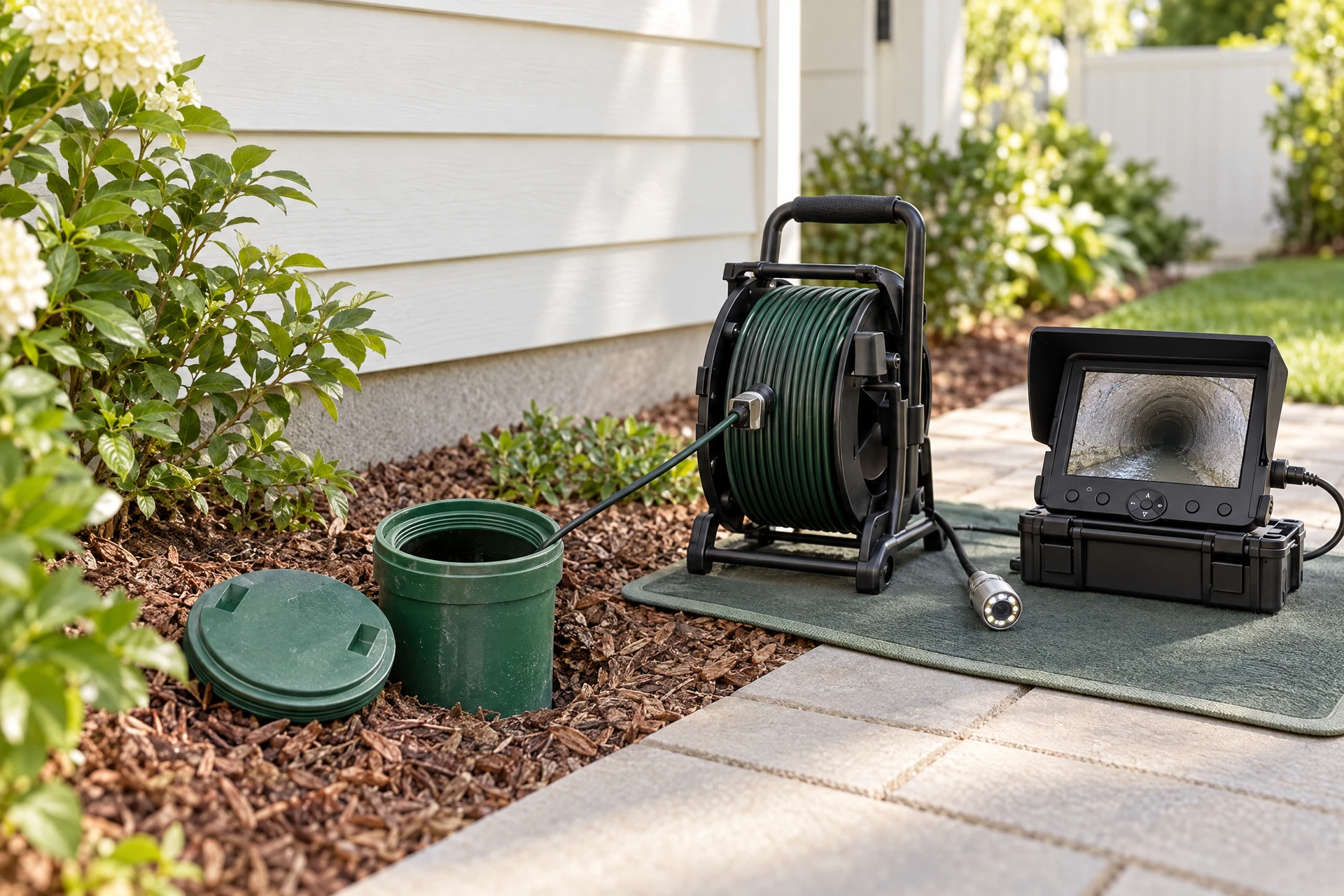
If the issue keeps returning, a professional assessment can help distinguish a fixture clog from a larger drain-line concern. Ask what inspection method is appropriate and whether a camera evaluation is available for your situation. Finding roots, a separated joint, a damaged section, or a leak early may give you more repair choices than waiting for a major backup.
Keep clogs out of the system
Flush human waste and toilet paper only. Wipes, paper towels, hygiene products, cotton items, and other household materials belong in the trash unless a local wastewater authority specifically says otherwise. In the kitchen, let fats, oils, and grease cool, then place them in a container for disposal rather than pouring them into a drain. Use sink strainers to catch food scraps and clean them regularly.
These habits cannot correct a cracked or root-filled line, but they can reduce avoidable blockages and protect the drains inside your home.
Plan repairs with the right help
A side sewer is buried, connected to other properties or public infrastructure in some locations, and not always straightforward to access. Avoid opening the ground or attempting a permanent repair based only on a surface symptom. A qualified plumbing professional can help identify the affected section, explain practical options, and flag when local permits, utility coordination, or property-boundary questions need attention.
Northwest Plumbing Services handles plumbing repairs and water and drain-line concerns. Call (503) 366-1323 or email office@nwplumbingservices.com to describe what you are seeing and ask the office to confirm current service availability for your location. For a closer look at a sewer-line concern, review our Sewer Camera Inspection guidance.
Questions about this topic
What should I do if multiple drains back up at once?
Stop adding water if possible, avoid chemical drain treatments, and contact a plumbing professional for guidance. Multiple affected fixtures can indicate a larger drain-line issue, but an inspection is needed to identify the cause.
Can I plant over my side sewer?
Before planting or building near a buried line, confirm its route and ask a qualified professional or the appropriate local authority about clearance and access. Large roots and future excavation can make line problems harder to address.
Does Northwest Plumbing Services offer side-sewer inspections in my area?
Call (503) 366-1323 or email office@nwplumbingservices.com with your address and symptoms. The office can confirm whether your request is within current service availability and explain the next step.