
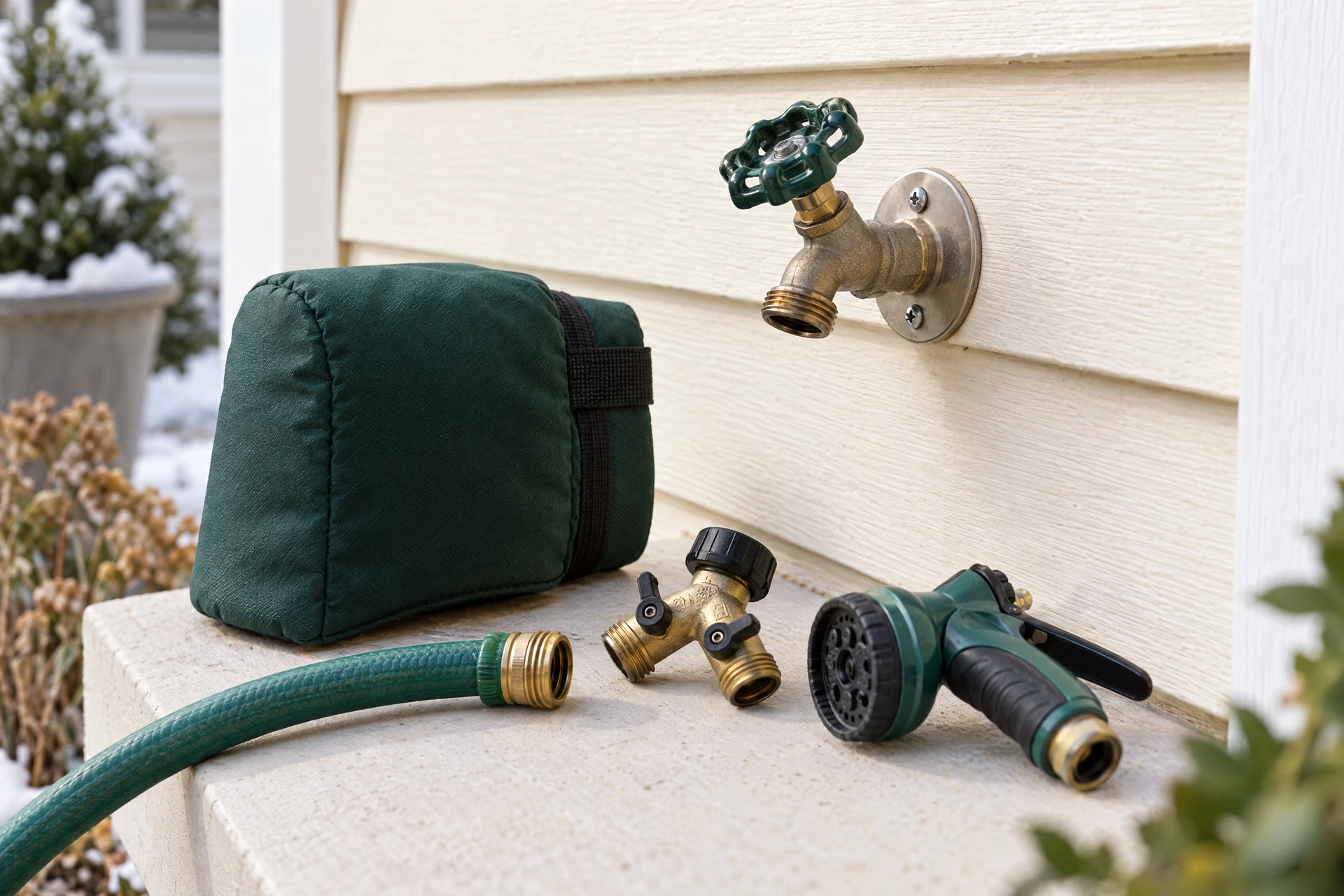
Cold weather around Columbia County can turn a small amount of trapped water into a costly plumbing problem. When water freezes inside an exterior faucet or the pipe behind it, it expands and can split the line. The leak may stay hidden until you open the faucet again months later, when water can enter a wall, crawlspace, or other part of the home. Winterizing is a short fall maintenance task that helps reduce that risk. Whether your home has a frost-free hose bib or a more traditional outdoor faucet, disconnecting the hose and making sure the line can drain are the most important first steps.
Choose a good time to prepare
Aim to winterize outdoor faucets in early to mid-fall, before a hard freeze is likely. In Oregon, the weather can change quickly, so do not assume you have missed your chance if temperatures have already dropped. Completing the work later is still better than leaving a hose bib connected and full of water. Check every exterior faucet, including one on the side or back of the house that is easy to overlook. For fixture-specific next steps, review our Faucet Repair, Installation & Replacement guidance.
Why a connected hose can create trouble
A frost-free faucet is designed to shut off farther inside the wall, but it still needs an open outlet so water can drain. A hose, splitter, timer, or nozzle left attached can hold water in the faucet and prevent that drainage. On a standard hose bib, water can remain in the exposed faucet and supply pipe unless the indoor shutoff is closed and the outdoor side is opened to drain.
- Frozen water can split a pipe or faucet body even when no leak is visible during the coldest weather.
- The first sign may be water escaping near the wall or inside the home when the faucet is used again.
Simple winterizing steps
Start by removing the garden hose and every attachment from the faucet. For a frost-free hose bib, leave the faucet open briefly so remaining water can drain onto the ground, then close it once it has drained. For a conventional hose bib, locate its interior shutoff if one is installed, close that valve, and open the outside faucet to release trapped water. Close the outside faucet after it has drained, and follow the valve manufacturer’s instructions if the setup differs.
If the faucet is not frost-free and has no dependable interior shutoff, an insulated faucet cover can add protection. A cover is not a substitute for draining the line, and it should be installed only after the hose and attachments are removed. Do not use a torch or other open flame to thaw a frozen pipe.
- Remove the hose, splitter, timer, and spray nozzle.
- Close the interior shutoff where applicable and open the exterior faucet to drain.
- Inspect the faucet and nearby wall area for cracks, dampness, or staining.
- Use an insulated cover on a standard faucet after the line has been drained.
When a plumbing check makes sense
Call Northwest Plumbing Services if the faucet will not shut off, you cannot identify the interior shutoff, or you notice leaking after a freeze. Our family-owned company has served the area since 1991 and handles plumbing repairs involving pipes and faucets. We can also discuss replacing an aging exterior faucet or planning related water-line work. For guidance on your specific home, contact the office at (503) 366-1323 or office@nwplumbingservices.com. For fixture planning and repair context, review our Plumbing Fixture Services guidance.
Questions about this topic
Is it too late to winterize an outdoor faucet after the first cold snap?
No. Disconnect the hose and attachments as soon as possible, then drain the line using the appropriate shutoff. If the faucet is frozen, do not force the handle or apply an open flame; contact a plumber if you see damage or cannot safely drain it.
Do frost-free hose bibs still need winter preparation?
Yes. Remove hoses and other attachments so the faucet can drain through its built-in design. If it continues to drip, leaks near the wall, or does not drain, have the faucet and connected pipe inspected.