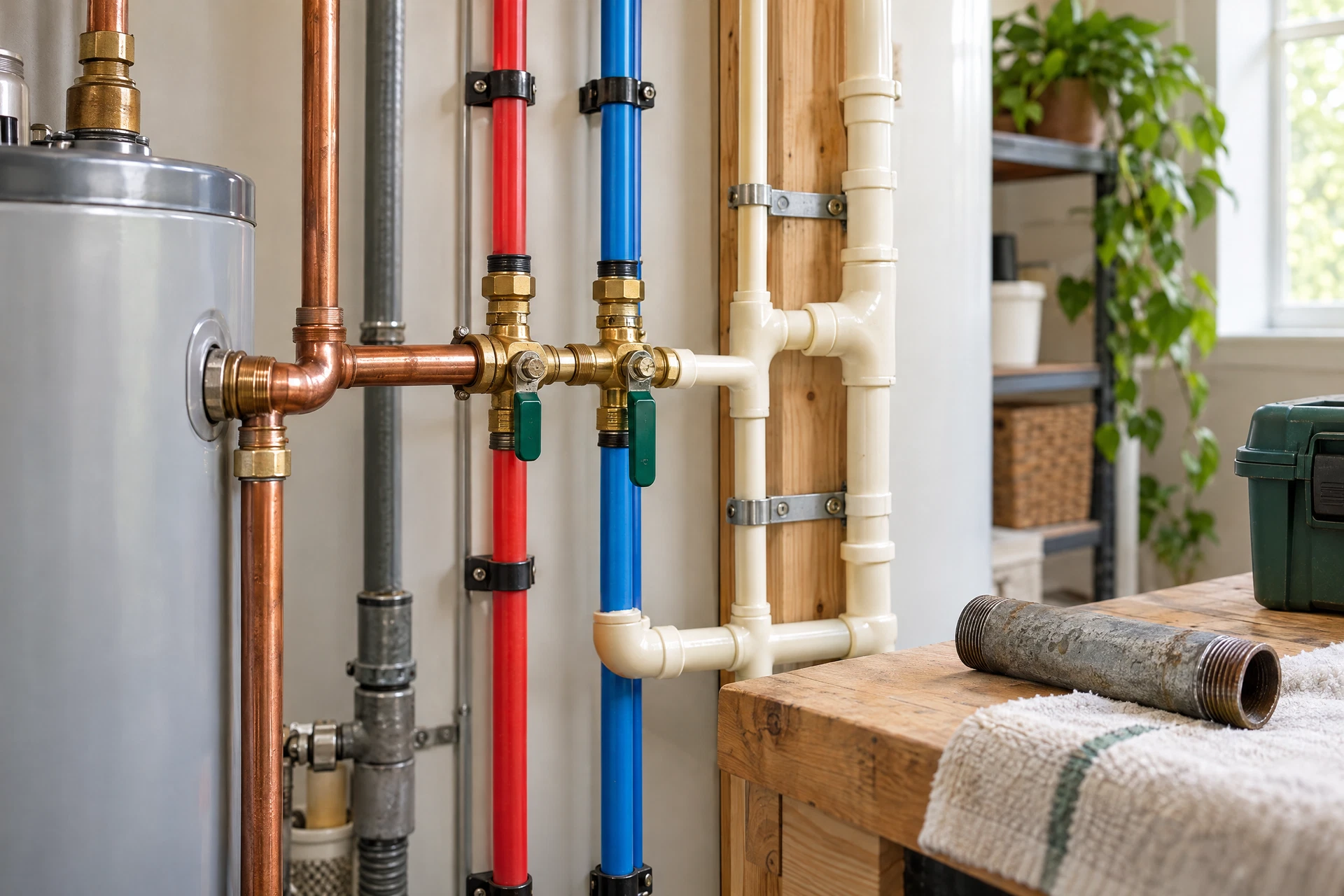
The pipes behind your walls do more than carry water: their material affects durability, installation, maintenance, and how a repair should be planned. Homes across Columbia County can contain a mix of older and newer plumbing, especially after additions, remodels, or past repairs. Copper, PEX, and CPVC are common choices for indoor water lines, while older galvanized piping may deserve a closer look from a professional. Learning the strengths and limitations of each material can help you describe a problem clearly and make sensible decisions before a repair or repiping project.
Copper: durable, familiar, and worth evaluating in older homes
Copper has long been used for hot and cold water lines because it is durable and can provide a long service life. It is also recyclable when it is eventually replaced. The tradeoff is cost, and older copper systems deserve careful evaluation rather than assumptions about their condition. For pipe-material and condition context, review our Pipe Repair, Replacement & Repiping guidance.
If a home was built before 1980, ask whether copper joints may contain lead-based solder. Testing and professional guidance can help determine whether targeted replacement or broader repiping makes sense. Do not cut into a wall or remove pipe insulation just to investigate; start with a plumbing assessment.
- Watch for recurring leaks, discoloration, or repairs that keep returning.
- Ask about the condition of joints and the material used in earlier repairs.
PEX: flexible routing for many indoor water-line projects
PEX, or cross-linked polyethylene, is flexible tubing used for hot and cold water distribution. Its ability to bend around framing can reduce the number of fittings needed in some layouts, which may simplify installation in a remodel or repipe. It also tolerates freezing better than many rigid materials, although no plumbing system should be left unprotected during a freeze.
PEX is intended for appropriate indoor or underground applications, not exposed outdoor runs. Because it can be damaged by rodents, ask how tubing will be protected in accessible areas. A plumber can also confirm that the selected product and connections suit the project.
- Protect vulnerable tubing from rodents, sunlight, and accidental damage.
- Keep the water shutoff accessible so a leak can be isolated quickly.
CPVC: practical plastic piping with freeze-related limits
CPVC is a plastic pipe used for residential hot and cold water. It does not rust like metal, and its cost can make it a practical option for some repairs or replacement plans. Its suitability depends on the existing layout, connection system, access, and local project requirements.
CPVC can split when water inside freezes. If a line is exposed to cold conditions, improve protection and ask for an inspection instead of waiting for a burst. Older plastic piping may also be a poor candidate for piecemeal repairs, so compare the long-term value of a focused fix with repiping.
- Know where pipes pass through unheated areas and protect those sections.
- Have a professional identify the material before choosing replacement fittings.
Plan the next step with the whole system in mind
A pipe label alone cannot determine the best solution. Access, water pressure, fixture connections, previous repairs, and the condition of nearby lines all matter. Northwest Plumbing Services can discuss plumbing repairs and repiping for homes, remodels, new construction, and commercial work in Oregon. Bring photos of visible piping and note when leaks, low pressure, or discolored water occur.
Call the Oregon office at (503) 366-1323 or email office@nwplumbingservices.com to talk through your situation and arrange the appropriate next step. When system-wide pipe work is being considered, review our Repiping Services guidance.
Questions about this topic
Can I tell which pipe material I have without opening a wall?
Often you can identify visible piping by its color, texture, and fittings, but mixed systems are common and appearances can mislead. Photograph accessible sections and ask a plumber to confirm the material before buying parts or planning replacement.
Should every older pipe system be replaced?
Not necessarily. The right scope depends on leaks, corrosion or deterioration, water-quality concerns, accessibility, past repairs, and your project goals. A professional assessment can compare a targeted repair with repiping.
Does Northwest Plumbing Services work on repiping projects?
Repiping is a verified offering. Northwest Plumbing Services also handles plumbing repairs and plumbing work for remodels, new construction, and commercial projects. Call the office to discuss your property and current availability.