A new year is a useful prompt to give your home’s plumbing a little attention. Throughout Columbia County, everyday wear, winter weather, and mature landscaping can turn a small maintenance concern into an inconvenient leak or backup. Three practical resolutions can help: learn a safer way to clear minor clogs, put recurring checks on the calendar, and ask about drain- or sewer-line planning when your home or project calls for it. These steps are not a substitute for professional diagnosis, but they can help you notice trouble earlier and know when to call Northwest Plumbing Services.
1. Use the right plunger for the job
A plunger works by alternating compression and suction to loosen a blockage, not by simply forcing it farther into the pipe. For a sink, shower, or tub, cover the overflow opening with a damp cloth, add enough water to cover the plunger cup, and make a good seal over the drain. Use several quick, controlled pumps, then lift the cup to see whether the water moves. For isolation and preparation context, review our Whole-Home Water Shut-Off Help guidance.
For a toilet, use a flange-style plunger so its extended ring fits the drain opening. If the bowl is already close to overflowing, first turn off the toilet’s shutoff valve. Stop if plunging does not improve the problem, if water backs up in another fixture, or if you suspect a foreign object; repeated force can worsen a blockage.
2. Put plumbing checks on a six-month calendar
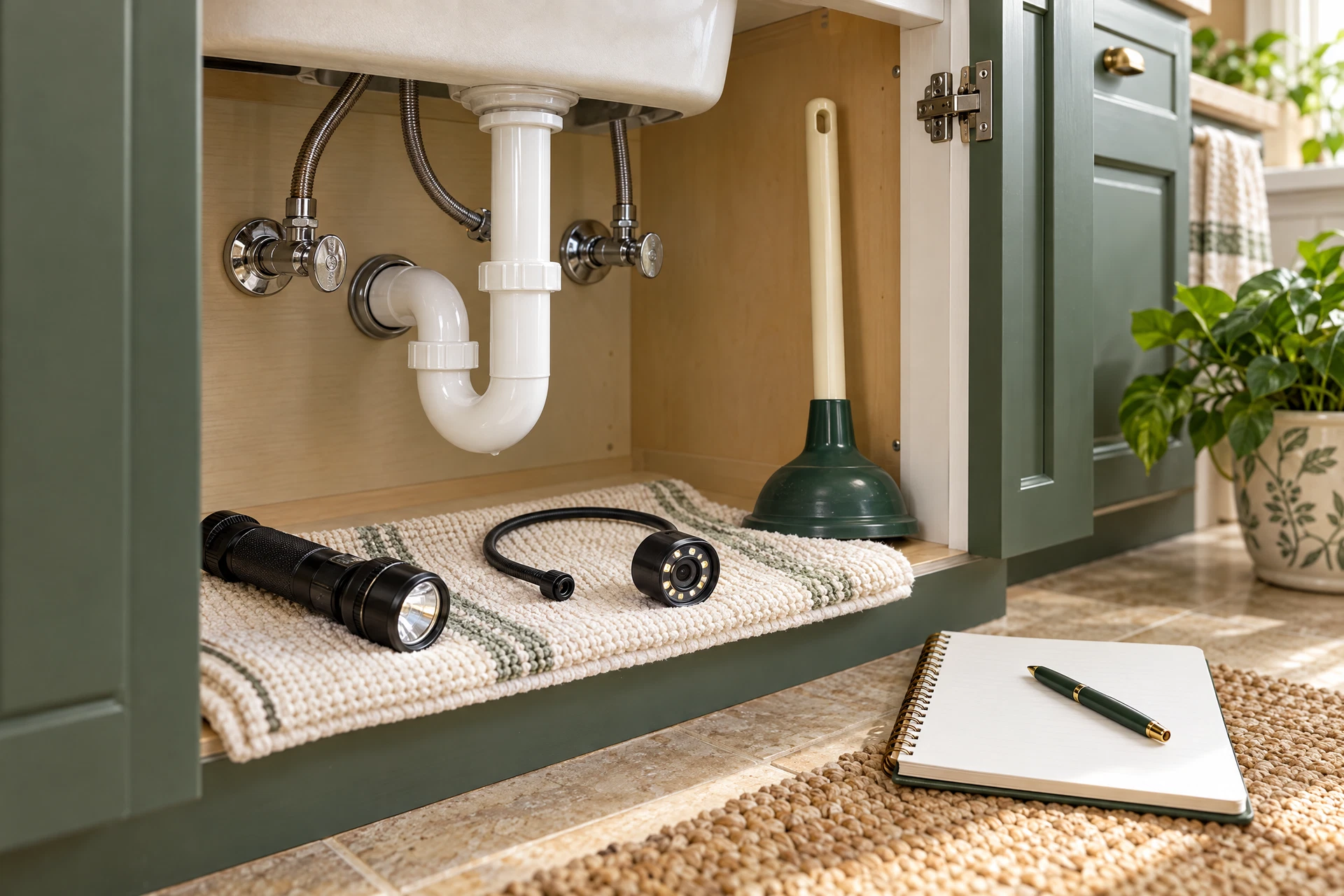
Twice a year, walk through the home and look beneath sinks, around toilets, near the water heater, and along visible water or drain lines. Watch for damp cabinets, mineral deposits, corrosion, slow drains, unusual sounds, or a toilet that runs after flushing. Check faucet and toilet shutoff valves only if they turn easily, and never force a stuck valve.
Follow the water-heater manufacturer’s maintenance guidance. Tank and tankless systems have different service needs, and flushing or adjusting equipment may be best handled by a professional. Northwest Plumbing Services can discuss tank and tankless water-heater concerns, along with repairs or replacement planning.
- Record the date, location, and symptoms of anything you find.
- Know where the main water shutoff is before an emergency occurs.
- Call promptly for an active leak, sewage backup, or loss of hot water.
3. Plan drain-line and sewer-line questions early
Slow drainage, recurring backups, gurgling fixtures, or unexplained wet areas deserve more than a temporary chemical treatment. Roots, buildup, damaged sections, or poor connections can all affect a drain or sewer line. If you are buying, remodeling, or building, ask what inspection or line-planning steps make sense for the property and project.
Northwest Plumbing Services works with water and drain lines and can help you discuss the next step. Ask the office whether a particular inspection or repair is available for your situation; availability and scope should be confirmed before scheduling.
Make the resolution practical
Keep a simple plumbing note with appliance information, shutoff locations, and dates of past work. When a concern persists, contact Northwest Plumbing Services at (503) 366-1323 or office@nwplumbingservices.com. Northwest Plumbing Services is family-owned. The company has served customers since 1991. Contact our Oregon office for showroom directions or mailing details. For water-heater maintenance and planning context, review our Water Heater Service guidance.
Questions about this topic
How often should I check my home plumbing?
A practical starting point is a visual check every six months, with additional attention after freezing weather, remodeling, or a new leak. Follow the manufacturer’s instructions for water-heater maintenance and ask Northwest Plumbing Services what professional service fits your equipment.
When should I stop plunging and call for help?
Stop when the clog does not improve, water backs up elsewhere, a fixture may contain a foreign object, or sewage is involved. Turn off water when needed and call the office so the situation and available service can be confirmed.