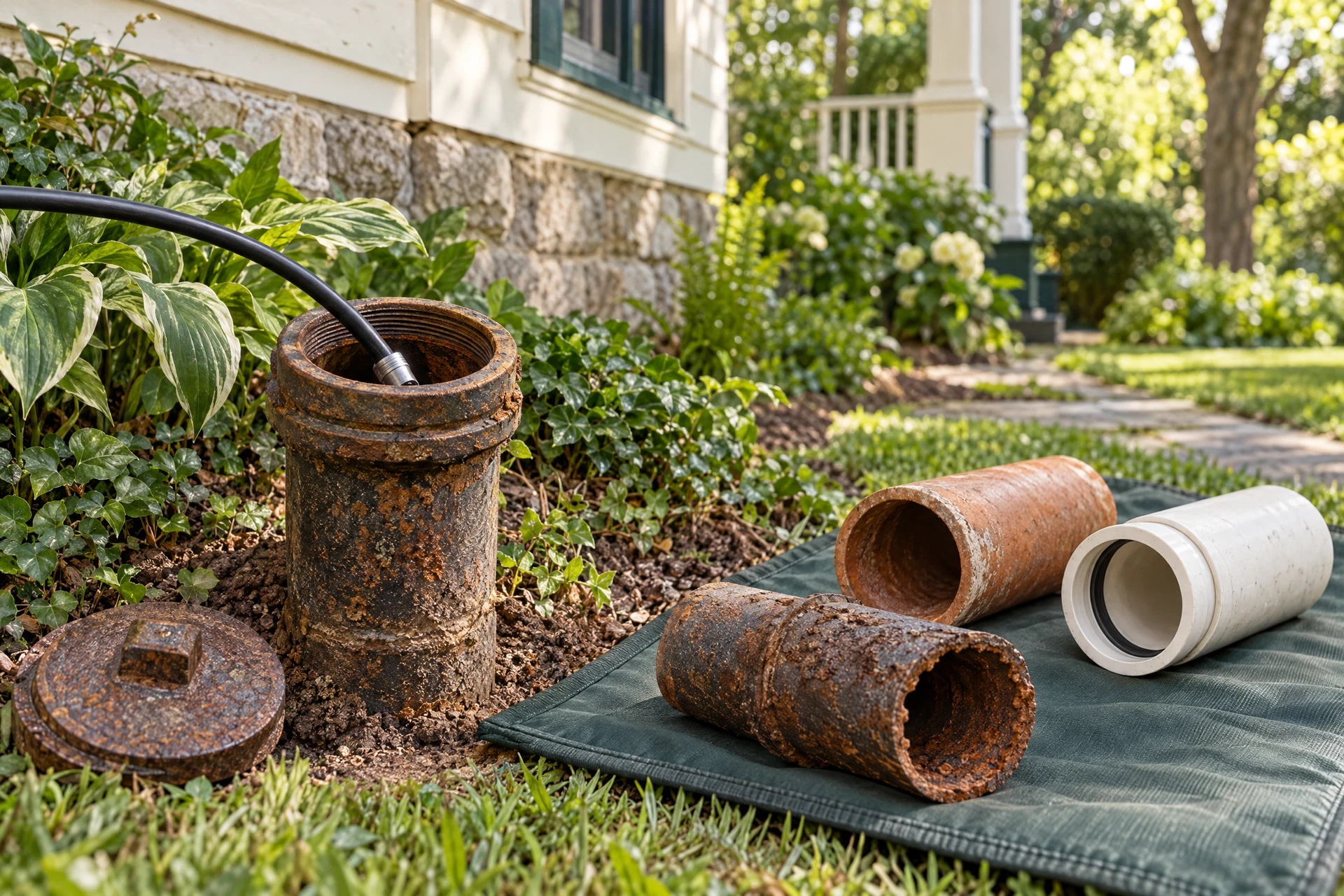
Older homes throughout Columbia County may have sewer lines installed in more than one era. A house can contain sections of cast iron, galvanized metal, clay, or newer plastic after earlier repairs, so a recently updated fixture or indoor pipe does not necessarily mean the whole sewer route is sound. Materials, soil, roots, settling, and past work all affect performance. If drains are repeatedly slow or a sewer concern keeps returning, treat it as a planning issue rather than waiting for a larger backup. Northwest Plumbing Services can help you discuss the right next step for your property; call (503) 366-1323 or email office@nwplumbingservices.com.
Start with the home's plumbing history
Check the age of the house, past inspection reports, and invoices for sewer or drain repairs. Ask previous owners what has been replaced and where. Keep those records with a simple sketch of cleanouts, the building drain, and the line leading toward the street. Mixed materials are common after partial repairs, and one new section cannot tell you how the remaining line is holding up. For sewer-line repair planning context, review our Sewer Repair Planning guidance.
- Note when the home was built and when major remodels occurred.
- Record recurring clogs, backups, odors, or drain-cleaning visits.
- Ask a plumber to explain which sections are confirmed, suspected, or still unknown.
Watch for performance and ground changes
A single slow sink may be a local fixture blockage, but several slow drains can point farther downstream. Repeated stoppages, wastewater backing up, gurgling, or unexplained odors deserve prompt attention. Outside, look for soggy soil, an unusual depression, or persistent lush growth along the likely sewer route. These signs can have several causes, including roots, cracks, corrosion, or a blockage, so avoid diagnosing the pipe from symptoms alone.
- Limit use of water if sewage is backing up indoors, and keep people and pets away from contaminated water.
- Do not pour harsh chemicals into a line that may need professional evaluation.
- Photograph visible ground changes and note when symptoms occur.
Plan an informed inspection
A plumber can review the symptoms, locate accessible cleanouts, and recommend whether a camera inspection or another diagnostic step makes sense. Ask for the findings in plain language, including the pipe material, affected section, urgency, and practical repair choices. A targeted repair may be appropriate in one situation, while a longer-term repiping or sewer-line plan may make more sense in another. The right decision depends on observed conditions, access, local requirements, and your home's layout. For recurring drain symptoms, review our Drain Cleaning guidance before choosing a next step.
- Gather your repair history before the appointment.
- Request a written scope for any recommended plumbing or sewer work.
- Contact Northwest Plumbing Services in Oregon to discuss your symptoms and next step.
Questions about this topic
Does an older home automatically need a sewer replacement?
No. Age is a reason to learn what is installed and check its condition, not proof that replacement is necessary. Repeated symptoms and inspection findings should guide the decision.
What should I have ready before calling Northwest Plumbing Services?
Have the property address, the timing and location of symptoms, any backup or drain-cleaning history, and available remodel or repair records. The office can help you confirm the appropriate service and current options.