A dripping faucet or slow drain can begin as a small nuisance and become a much bigger interruption. In and around Columbia County, everyday habits, seasonal weather, water conditions, and the age of a home’s plumbing all affect how systems perform. The good news is that a few practical checks can reduce strain on drains, fixtures, pipes, and water heaters. Use the guidance below as routine care, and contact Northwest Plumbing Services when a problem keeps returning, affects several fixtures, or needs a safe diagnosis.
Keep hair and soap out of bath drains
Shower and tub drains commonly slow down when hair, soap residue, or small objects collect in the trap or drain line. A simple strainer can catch much of that material before it travels farther into the plumbing. Empty the strainer regularly, and do not push jewelry, toys, or other objects into an open drain. For a broader service-planning overview, review our Plumbing Services guidance.
If water is already pooling, avoid forcing the blockage deeper with repeated plunging. A recurring clog may point to buildup farther along the line and deserves a proper inspection.
- Clean the drain cover and strainer as part of regular bathroom upkeep.
- Ask for help if slow drainage returns soon after cleaning.
Make hot water work harder
Running a shower, dishwasher, and washing machine at the same time can outpace a household water heater. Staggering those activities may restore comfort without changing the plumbing. If hot water is consistently limited, have the system evaluated and discuss whether a tank or tankless water heater better fits the home’s usage and available space.
Do not open electrical panels, adjust gas controls, or disassemble a water heater as a do-it-yourself fix. A qualified plumber can check performance and identify a safer next step.
- Notice whether the shortage affects one fixture or the whole home.
- Schedule service when water temperature changes suddenly or the heater leaks.
Protect the kitchen sink and disposal
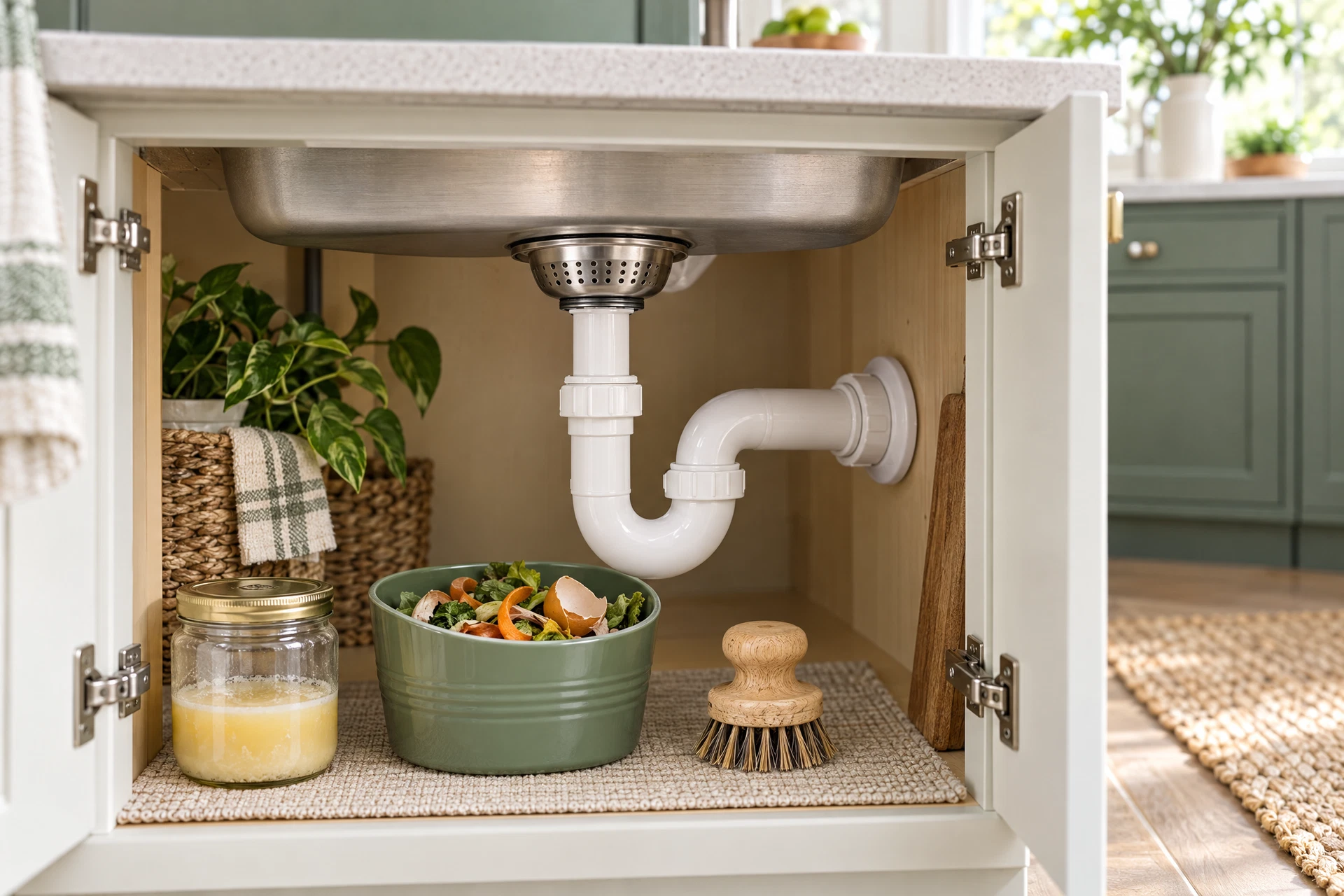
Grease, oils, fats, and food scraps can cling to the inside of drain piping and contribute to a backup. Let cooking fats cool, then place them in the trash rather than pouring them down the sink. Scrape plates before washing and run plenty of cold water when using a disposal, followed by a short rinse to carry loose particles through.
A sink that gurgles, drains slowly, or backs up repeatedly may need professional drain-line service rather than a stronger chemical cleaner.
- Use the disposal only for suitable, small food scraps.
- Never mix drain chemicals or use them near other cleaning products.
Watch for pipe stress and hidden leaks
A wet cabinet, stained wall, unexplained water use, or the sound of water after fixtures are off can signal a leak. Excessive water pressure can place added stress on older or weakened piping, while mineral buildup may affect fixtures and pipe interiors in some homes. A plumber can measure pressure, locate the source, and explain whether a repair, partial replacement, or repiping makes sense.
If a leak is active, shut off the nearest fixture valve or the home’s main water supply when safe, protect nearby belongings, and call Northwest Plumbing Services at (503) 366-1323. For a pipe condition that needs attention, review our Pipe Repair guidance.
- Check under sinks and around toilets, water heaters, and exposed pipe connections.
- Treat a recurring leak as a system issue, not just a spot to dry.
Questions about this topic
When should I call a plumber about a recurring clog?
Call when a drain repeatedly slows after basic cleaning, several fixtures are affected, or wastewater backs up. Those signs can indicate a blockage farther down the line.
Can Northwest Plumbing Services help with water heaters and repiping?
Yes. The company provides tank and tankless water-heater work and repiping, along with plumbing repairs and water or drain-line service. Call the office to discuss the home and current options.