Summer is a practical time to tackle the home projects that wait through the rainy months, from a bathroom refresh to new landscaping around an Oregon property. Plumbing deserves a place on that checklist before work begins. A misplaced screw, a damaged buried line, or renovation chemicals sent down a drain can turn a straightforward improvement into a costly interruption. Take a few minutes to identify the plumbing nearby, protect the systems you are not using, and call Northwest Plumbing Services when a project moves beyond safe homeowner work.
Check buried utilities before outdoor work
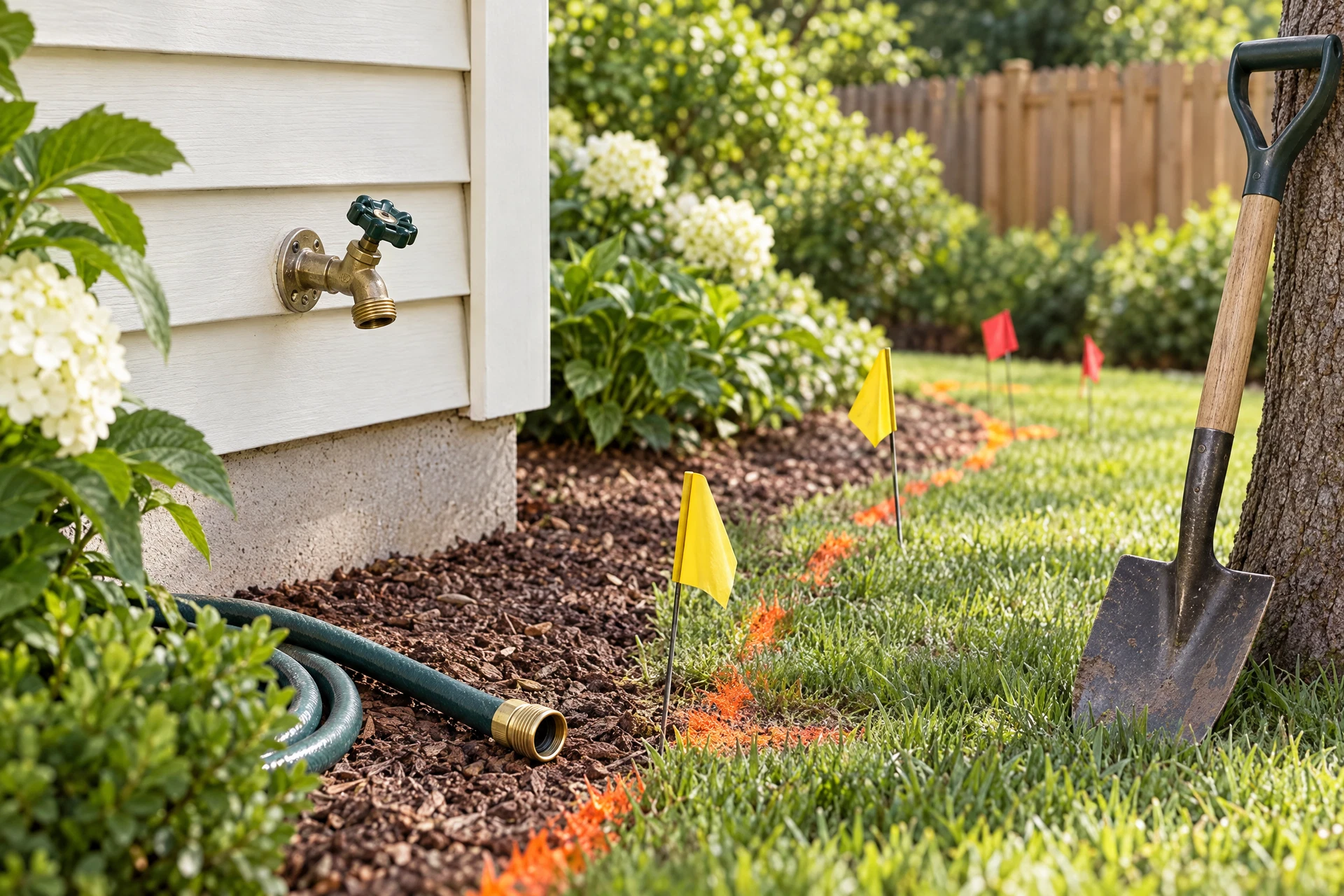
Planning a fence, planting bed, patio, irrigation change, or other digging? Pause before breaking ground and use Oregon's utility-locate process so buried lines can be identified. Keep the marked routes in mind as the project changes. If you are unsure whether a water or drain line crosses the work area, ask a plumbing professional to help you plan rather than guessing. For fixture planning and repair context, review our Plumbing Fixture Services guidance.
A little planning also helps protect sewer and water lines from damage caused by posts, grading, roots, or equipment. Keep project sketches and any accessible cleanout or shutoff locations for future reference.
- Mark the proposed digging area and arrange utility locating before excavation.
- Do not assume a line runs where an old drawing or fixture location suggests.
Protect outdoor faucets and water lines
Outdoor water may be useful while you wash tools or complete a repair, but make sure the faucet is closed and any temporary connection is removed when the job is finished. Check for drips, damaged hose bibs, and signs that a fitting was stressed during the work. Preparing the outdoor plumbing now can reduce the chance of trouble when colder weather returns.
- Close the faucet fully after use and inspect nearby connections for leaks.
- If a shutoff is hard to operate or a pipe appears damaged, stop and contact the office for guidance.
Keep renovation materials out of drains
Paint products, solvents, adhesives, sealants, and harsh cleaning chemicals do not belong in a sink, toilet, or floor drain. Follow the product label and Columbia County disposal guidance for leftover materials. Use a catch container for rinse water when appropriate, and keep debris such as grout, drywall dust, and scraps out of plumbing fixtures.
- Dispose of chemical products through an approved local collection or disposal option.
- Use drain protection during dusty or debris-heavy work, then remove it before normal use.
Plan before opening walls or changing fixtures
Before drilling, sawing, or fastening cabinets and shelving, identify the pipes behind the work area. During a kitchen or bathroom update, confirm the location of shutoffs and consider how new faucets, toilets, disposals, or water lines will connect. Projects involving repiping, water heaters, remodel plumbing, or new construction benefit from a plan that accounts for access and future maintenance.
Northwest Plumbing Services can discuss the plumbing portion of a project, including repairs, fixtures, water and drain lines, repiping, tank or tankless water heaters, commercial plumbing, and accessible low-threshold Bestbath showers. For a broader service-planning overview, review our Plumbing Services guidance.
- Know where the main and fixture shutoffs are before starting work.
- Stop work if you uncover an unexpected pipe, leak, or damaged fitting instead of covering it up.
Questions about this topic
When should I contact Northwest Plumbing Services about a summer project?
Contact the office before work if you are changing water or drain lines, moving fixtures, opening walls near plumbing, planning repiping, or replacing a water heater. For a Columbia County project, the team can discuss the plumbing scope and next steps.
What should I do if I damage a pipe during landscaping or remodeling?
Stop the work, keep people away from standing water or exposed utilities, and shut off the nearest safe water supply if you know its location. Call the office at (503) 366-1323 to discuss the situation and arrange appropriate plumbing help.