A sewer-like odor in the bathroom is unpleasant, but it can also be a useful clue. In a Columbia County home, the smell may come from a drain that is not being used, a fixture that is not draining normally, or a pipe connection that needs attention. Start with simple, safe observations rather than taking apart plumbing or using harsh chemicals. This guide explains what to look for, what a homeowner can try, and when it makes sense to contact Northwest Plumbing Services for help tracing the source.
Check for a drain that is backing up
Look at the shower, tub, sink, and floor drains near the odor. Shine a flashlight toward the opening and run a small amount of water in each fixture. Slow drainage, standing water, gurgling, or visible wastewater can point to a developing drain or sewer-line problem. For sewer-line repair planning context, review our Sewer Repair Planning guidance.
If wastewater is rising or more than one fixture is affected, stop using the nearby plumbing as much as practical. Keep children and pets away from contaminated water, and call for guidance instead of repeatedly flushing or running fixtures.
- Note which fixtures smell or drain slowly.
- Do not reach into a drain or handle sewage without appropriate protection.
A dry P-trap can let odor through
A P-trap is the curved section of drain piping beneath a sink or inside the drain path for many fixtures. It normally holds a small amount of water, creating a barrier between the room and sewer gases. A seldom-used shower, guest-bath sink, or floor drain can eventually lose that water through evaporation.
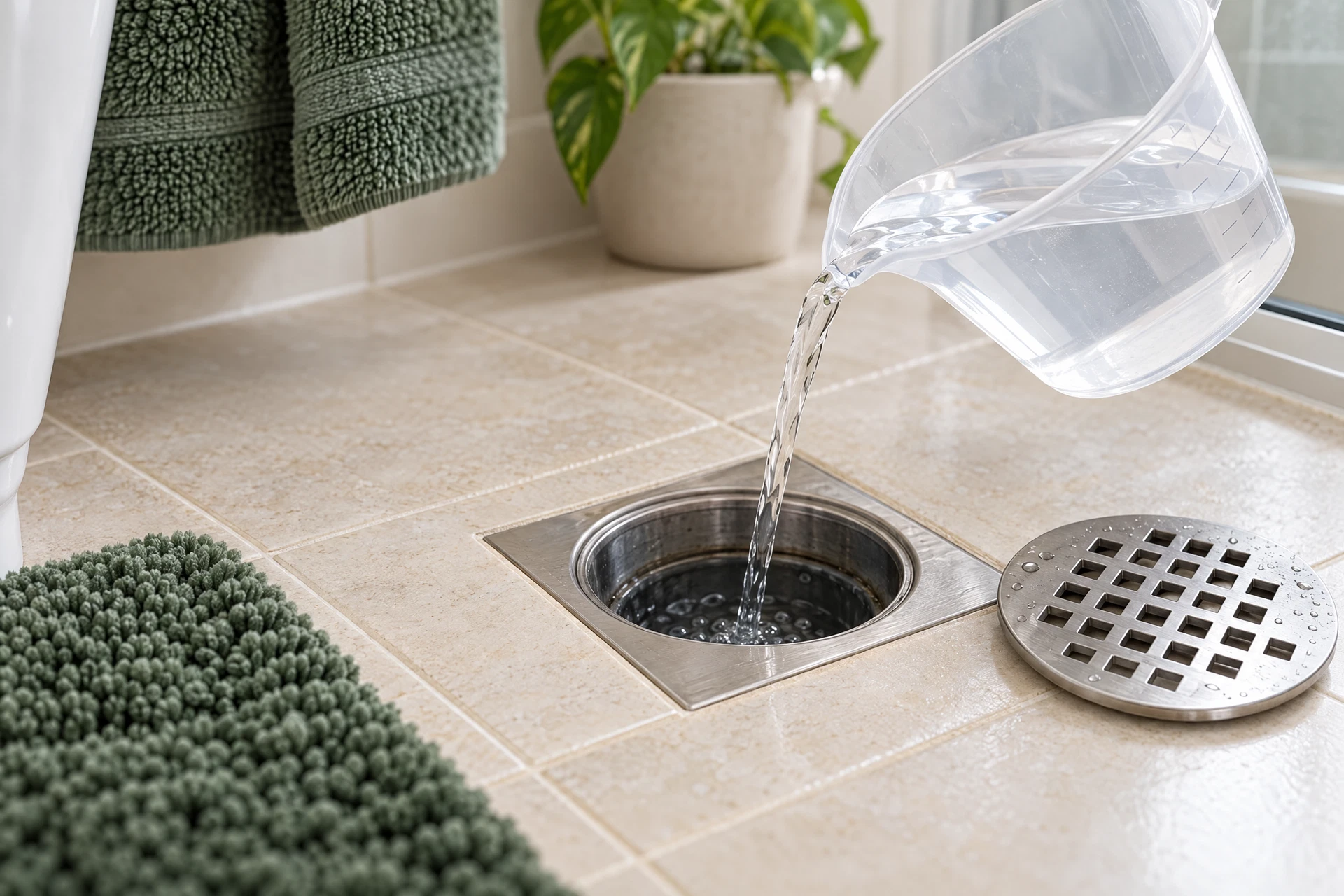
For an accessible, rarely used drain, slowly add water and see whether the odor improves. If the smell returns quickly, the trap does not hold water, or the fixture is difficult to access, the issue may need a plumbing inspection rather than more water.
- Run water periodically in infrequently used fixtures.
- Never ignore an odor that persists after a trap is refilled.
Inspect visible connections and cleanouts
A loose drain connection, damaged seal, or cleanout cap that is not seated correctly can provide another path for sewer gas. Without forcing anything, look around exposed piping, the basement or crawlspace access area, and reachable cleanouts for dampness, residue, a missing cap, or a connection that appears out of place.
Do not enter a confined space to investigate an odor. A strong or spreading smell, headache, dizziness, nausea, or breathing discomfort is a reason to leave the area, get fresh air, and seek appropriate help.
- Ventilate the room if you can do so safely.
- Avoid flames and do not use electrical equipment in a visibly unsafe, wet area.
When to call Northwest Plumbing Services
If you cannot locate the source, the odor keeps returning, or several drains are involved, Northwest Plumbing Services can help evaluate the plumbing and discuss repair options. The family-owned company has served the area since 1991 and handles plumbing repairs, water and drain lines, repiping, fixtures, and related residential, remodel, new-construction, and commercial plumbing work.
Call the Oregon office at (503) 366-1323 or email office@nwplumbingservices.com with the fixture affected, when the smell began, and any drainage changes. Ask about current availability and whether your situation is best handled as a drain, sewer-line, or plumbing-repair visit. For a closer look at a sewer-line concern, review our Sewer Camera Inspection guidance.
Questions about this topic
Why does my bathroom smell like sewer gas?
Common possibilities include a dry P-trap, a drain that is backing up, or a loose connection or cleanout cap. If the odor persists or affects several fixtures, have the plumbing evaluated.
Can I fix a sewer smell by pouring water down the drain?
Water may restore the barrier in a dry, seldom-used trap. If the smell does not improve, returns quickly, or comes with slow drainage, there may be another plumbing issue that needs professional attention.
Who should I contact in Oregon for help finding the odor?
Contact Northwest Plumbing Services at (503) 366-1323 or office@nwplumbingservices.com. Describe the affected fixtures and ask the office about current availability and next steps.