
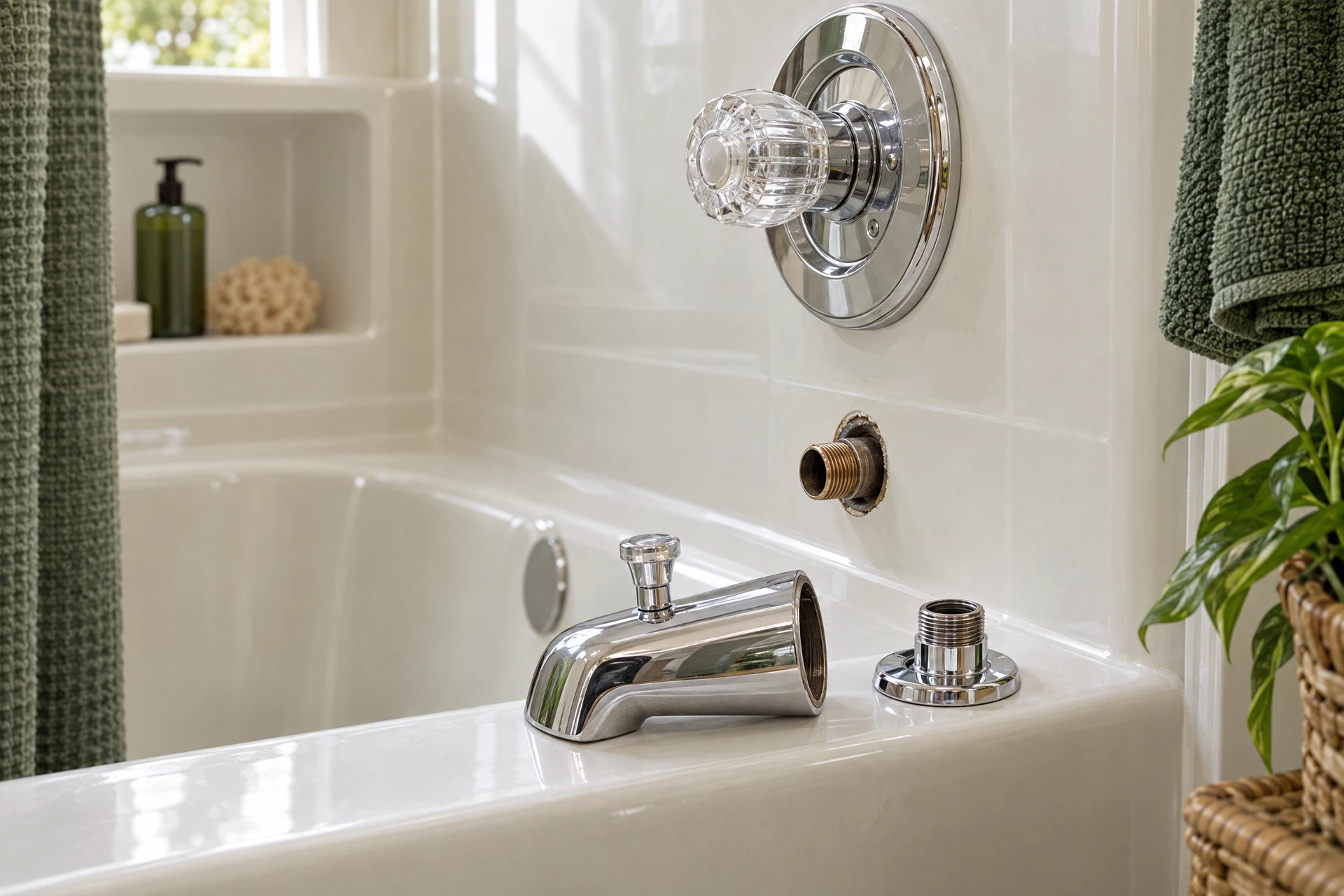
In a tub-and-shower combination, a small control decides whether water fills the tub or rises to the showerhead: the diverter. It may be a pull-up knob on the tub spout, a lever between the hot and cold handles, or part of a single-handle valve. When it works properly, changing from bath to shower is simple. When it sticks, leaks, or only partly closes, you may see water coming from both outlets and lose pressure at the showerhead. For Columbia County homeowners, knowing the basics helps you describe the problem and plan the next step.
How a shower diverter directs water
In many tub-and-shower layouts, the supply line serves the tub spout and continues toward the showerhead. With the diverter open, water takes the easier path into the tub. Moving the control changes the flow path and builds enough pressure to send water upward. Move the control gently; forcing it can damage the trim or valve. For shower fixture and connection context, review our Shower Plumbing guidance.
Common diverter styles
The visible control varies by faucet design. Its location helps a plumber identify the repair, but parts are not universal. A diverter may be built into the tub spout, positioned between separate hot and cold handles, or integrated with a single control. The repair depends on the faucet brand, valve configuration, and internal condition.
- Tub-spout diverter: a tab or knob on the spout changes the flow to the showerhead.
- Two- or three-valve arrangement: a separate control works alongside the hot and cold handles.
- Single-handle system: the diverter may be part of the shared temperature-and-flow valve.
Signs the diverter needs attention
Water from the tub spout and showerhead at the same time often means the diverter is worn, obstructed, or no longer sealing. Mineral buildup and normal wear can make the control hard to move. A weak shower stream may also have another cause, such as the showerhead or supply piping. Avoid opening a wall or pulling a valve apart on guesswork, especially if a leak is present.
- Turn off the water before attempting any removable trim or tub-spout work.
- Note the faucet type, where water appears, and whether the problem changes with the handle position.
- If water is escaping behind the wall, stop using the fixture and arrange an inspection.
Planning a repair or bathroom update
A diverter problem may be resolved with cleaning, a replacement spout, a service part, or a larger valve repair. During a bathroom remodel, the diverter and shower controls should be selected as a compatible set rather than mixed by appearance alone. Northwest Plumbing Services can discuss fixture plumbing, remodel work, and accessible low-threshold Bestbath shower options. Call (503) 366-1323 or email office@nwplumbingservices.com with the symptoms and ask what information to have ready. For shower or tub drain symptoms, review our Shower & Tub Drains guidance.
Questions about this topic
Can I keep using a shower diverter that sends water from both outlets?
A small amount of flow from the tub spout can occur in some designs, but persistent or increasing flow can waste water and signal a worn seal or obstruction. Have the fixture assessed, particularly if there is a leak or a drop in shower pressure.
Should I replace the whole faucet when the diverter fails?
Not always. Some diverters are serviceable or built into a replaceable tub spout, while others are part of the valve body. Identify the faucet and valve before ordering parts.