Sewer trouble rarely announces itself all at once. In an Oregon home, a drain that takes longer to clear, an unexplained odor, or a wet patch outside can be an early clue that wastewater is not moving through the main line as it should. A single clogged sink may be a local fixture issue, but symptoms that return or appear in several parts of the house deserve closer attention. Northwest Plumbing Services can help you sort out what you are seeing and plan an appropriate repair, replacement, or other plumbing solution rather than guessing at the cause.
Watch for repeated backups and slow drains
When more than one drain slows down, or a toilet bubbles when a nearby fixture runs, the restriction may be farther along the drainage system. Repeated backups after plunging can also signal that the main sewer line needs professional evaluation. Keep children and pets away from wastewater, and avoid pouring chemical drain cleaner into a backed-up line; it can create a hazard for anyone who later opens the pipe. For sewer-line repair planning context, review our Sewer Repair Planning guidance.
- Several fixtures drain slowly at the same time.
- A toilet gurgles or backs up when a sink, tub, or washer drains.
Pay attention to odors and damp indoor areas
A persistent sewage-like smell near a drain, crawlspace, or cleanout is not something to mask with air freshener. It may come from a trap or vent, but it can also point to a damaged connection or leaking sewer pipe. Dampness, staining, or mold-like growth on a wall or ceiling outside a normally wet area deserves prompt attention, especially if the moisture has no obvious plumbing source.
- Unusual foul odors persist around drains or outside access points.
- Moisture or staining appears near a bathroom, basement, or crawlspace.
Look for changes outdoors
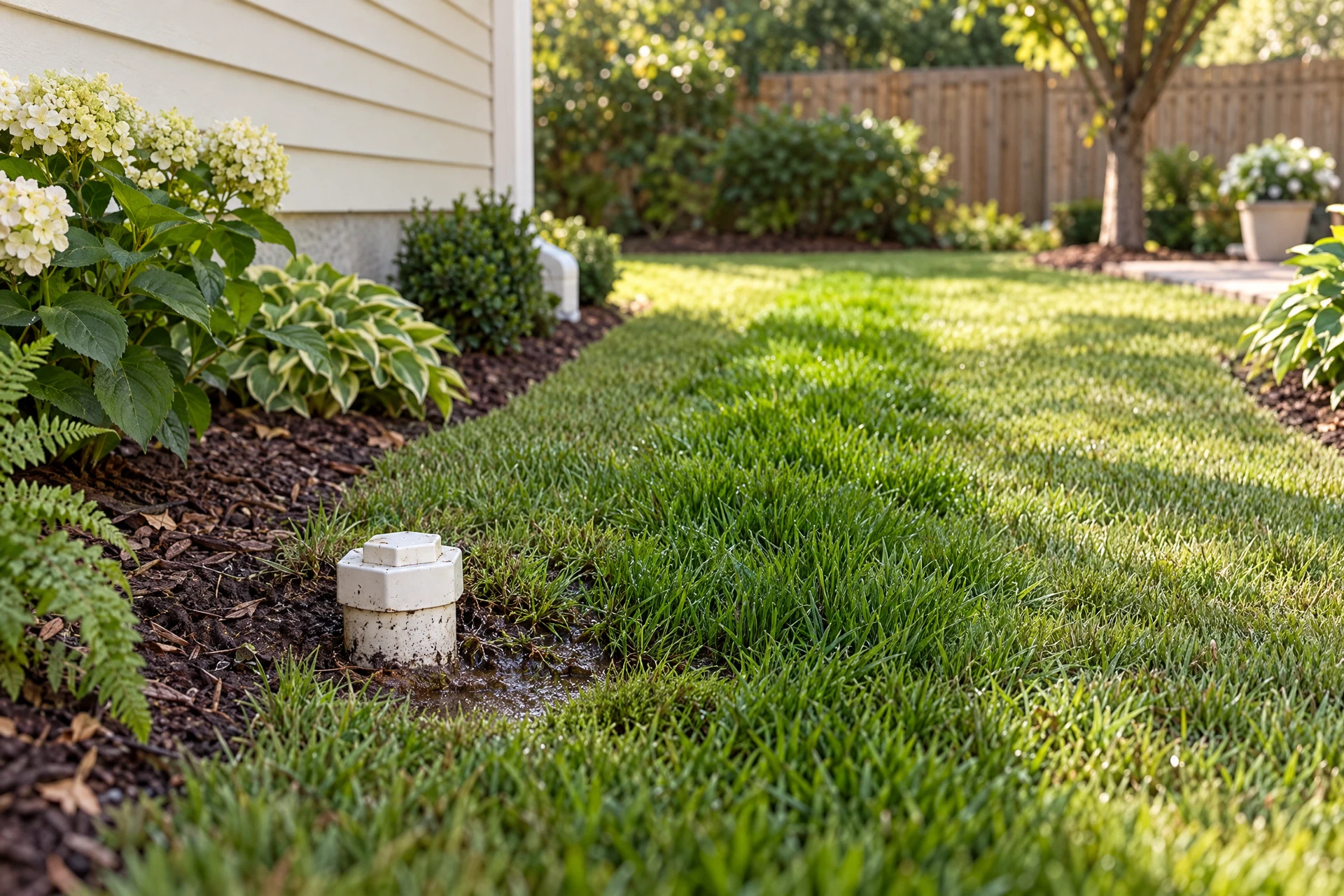
A sewer leak below ground can change the soil and vegetation above it. An unusually lush strip of grass, a soggy spot that stays wet, sunken soil, or a sewage odor in the yard may be worth reporting. Outdoor clues are not proof of a sewer-line failure—stormwater, irrigation, and broken water lines can look similar—so treat them as reasons to investigate, not as a diagnosis.
- A bright-green or fast-growing patch appears along a likely line path.
- Ground stays wet when irrigation and recent rain do not explain it.
Choose the next step
If symptoms are recurring, affecting multiple fixtures, or accompanied by wastewater, contact Northwest Plumbing Services at (503) 366-1323 or office@nwplumbingservices.com. Share the timing, affected fixtures, odors, indoor moisture, and outdoor changes. The office can discuss what information is useful before arranging plumbing service and can explain whether repair, repiping, or another approach may fit the situation. For urgent active backups, keep people away from the affected area and mention the condition when you call.
Northwest Plumbing Services is family-owned by David and Mindy Sass and has been established since 1991. Contact our Oregon office for showroom directions or mailing details. For a closer look at a sewer-line concern, review our Sewer Camera Inspection guidance.
- Stop using water if continued use is causing sewage to rise.
- Photograph safe-to-access signs and record when they occur.
- Ask the office what inspection and repair options are appropriate for your property.
Questions about this topic
Does one slow drain mean the sewer line needs repair?
Not necessarily. A single slow drain may have a local obstruction, while several affected fixtures or recurring backups make a main-line problem more likely. Northwest Plumbing Services can help identify the next step.