
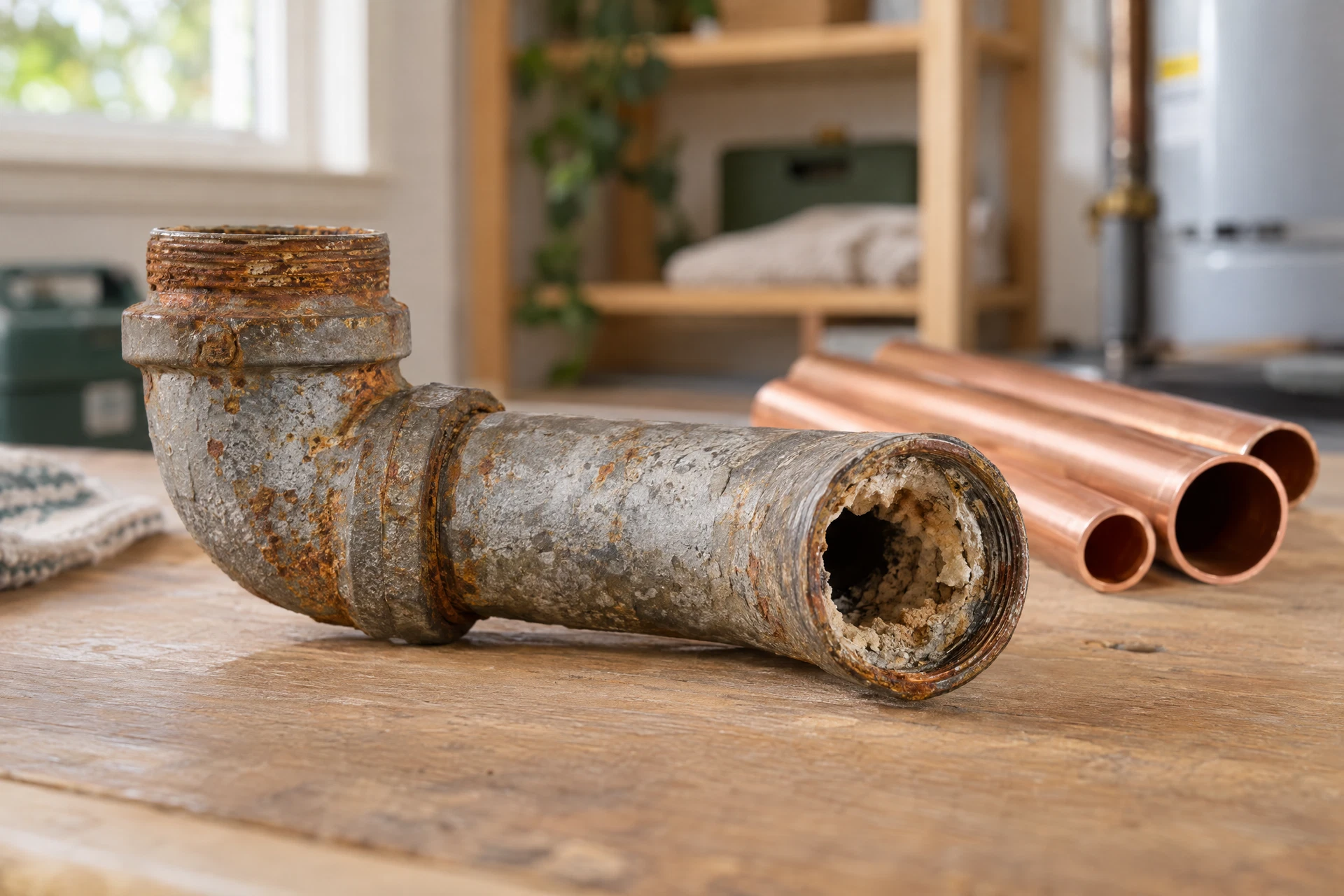
A small drip under the sink or a slow-filling toilet is not always a sign that an entire plumbing system needs replacement. But when problems keep appearing in different rooms, the pattern deserves a closer look. Older homes throughout Columbia County may have pipes that have narrowed from buildup, corroded, or simply reached the point where individual repairs are no longer a dependable long-term answer. Repiping is a larger project, so the right first step is a practical evaluation of the home’s existing water lines, fixtures, and repair history. Northwest Plumbing Services can help you understand what is happening and discuss repair or repiping options for your property.
Repeated leaks can be a system-wide warning
One failed connection can often be repaired. Leaks that recur in separate areas, however, may signal deterioration beyond a single fixture. Water can travel behind walls or below floors before it becomes visible, so a ceiling stain or a musty smell should not be ignored. Keep a simple list of leak locations and dates; that history helps a plumber distinguish an isolated repair from a broader pattern. When system-wide pipe work is being considered, review our Repiping Services guidance.
- New water marks, peeling paint, or damp drywall
- Musty odors or unexplained moisture near plumbing walls
- Several repairs involving different sections of the home
Low pressure at several fixtures needs attention
A clogged aerator can make one faucet seem weak. When the shower, sinks, and other fixtures all deliver less water than they used to, buildup or corrosion inside older pipes may be restricting flow. Check whether the change affects hot water, cold water, or both, and note whether it occurs throughout the house. That information can guide the inspection and prevent a simple fixture issue from being confused with a repiping decision.
Discolored water may reflect pipe corrosion
Brown, yellow, or rusty-looking water can come from corrosion in aging plumbing, particularly when water has been sitting in the lines. It may also stain sinks and tubs. If exposed piping shows flaking, scaling, surface cracks, or unusual green buildup, take a photo and arrange an evaluation. Do not open walls or remove insulation to search for hidden pipe problems yourself.
Plan an evaluation before damage grows
Repiping is not automatically the answer to every leak or pressure complaint. A professional can review the symptoms, inspect accessible piping, and explain whether targeted repairs, a partial replacement, or broader repiping makes sense for the home. Early planning may help you address water damage before it spreads and make choices based on the plumbing system’s condition rather than an emergency. For pipe-material and condition context, review our Pipe Repair, Replacement & Repiping guidance.
- Gather recent repair invoices or notes before the appointment
- Identify which fixtures show low flow or discoloration
- Ask about the proposed scope, access points, materials, and next steps
Questions about this topic
Does one leak mean my Oregon home needs repiping?
Not necessarily. A single leak may be an isolated repair. Repeated leaks in different locations, combined with low pressure or visible corrosion, are stronger reasons to request a whole-system evaluation.
What should I do if my water suddenly looks rusty?
Pause and note which fixtures are affected, whether the discoloration clears, and whether exposed pipes show corrosion. Contact the office for guidance and an inspection rather than assuming repiping is required.