A sink does more than give water a place to drain. It affects how much counter space you have, how easy cleanup feels, and how well a kitchen or bathroom works day after day. If you are planning a remodel in Columbia County, start by matching the sink style to the room, the countertop, and the plumbing already in place. Northwest Plumbing Services can help you think through the practical side of the choice, from faucet and drain connections to fixture changes during a remodel. Here is a straightforward look at five common sink styles.
Overmount sinks: flexible and familiar
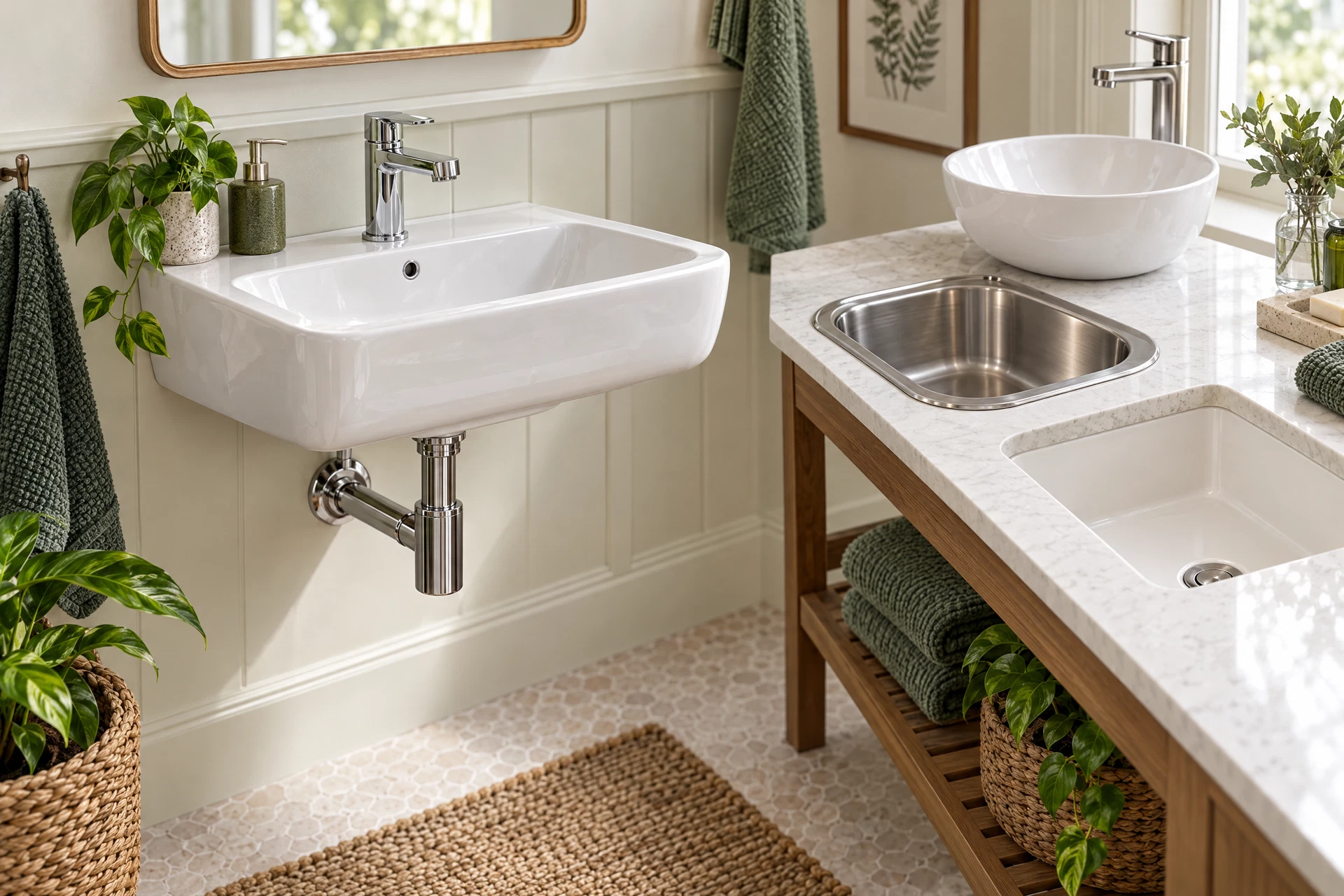
An overmount, also called a self-rimming sink, sits on top of the counter with a visible lip. That rim supports the basin and helps cover the countertop cutout, so this style can work with many counter materials. It is often a sensible option when you want a simpler replacement or need to keep countertop changes limited. Before ordering, measure the existing opening and confirm the cabinet has room for the basin and plumbing. For sink-specific planning or repair context, review our Sink Plumbing guidance.
Wall-hung and pedestal sinks: useful when floor space matters
A wall-hung basin attaches to the wall and leaves the floor below open. It can make a compact bathroom feel less crowded, but the wall must be able to support the sink and the supply and drain lines need careful planning inside the wall. A pedestal sink also avoids a full vanity. Its column supports the basin and provides a classic look, though it leaves less room for storage than a cabinet-mounted sink.
- Check where the shutoff valves and drain are located before selecting a wall-hung model.
- Plan towel storage and everyday bathroom items when choosing a sink without a cabinet.
Undermount sinks: clean lines with countertop requirements
An undermount sink is secured below the counter, creating a smooth edge that makes wiping crumbs and water into the basin easier. The countertop edge remains visible, so the counter material must be cut, finished, and supported for that installation. Stone and other solid-surface counters are common pairings. Confirm the sink, faucet holes, cabinet clearance, and support details together before fabrication.
Vessel sinks: a visible design feature
A vessel sink rests above the countertop and can bring distinctive shape, color, or texture to a bathroom. Its raised rim changes the finished height, so compare the basin with the vanity and faucet before buying. You will also want to check splash protection, drain compatibility, and how the counter will be supported. A sketch or product specification can prevent an awkward fit. For fixture planning and repair context, review our Plumbing Fixture Services guidance.
Questions about this topic
Which sink style is easiest to replace?
An overmount sink is often the most forgiving replacement because its rim covers the counter opening. The new basin still needs to match the cutout, cabinet clearance, faucet layout, and drain connection.
What should I do before ordering a new sink?
Measure the opening, cabinet interior, counter thickness, faucet location, and drain position. Share the model specifications with a plumbing professional when the project involves new connections, a wall change, or a broader remodel.