Autumn weather in Columbia County can turn a small drainage problem into standing water near a foundation, a soggy driveway, or water at a garage threshold. Before the wet season settles in, walk your property and check places that collect leaves, needles, silt, and nesting material. Work from the ground whenever possible, use a stable ladder only when safe, and call Northwest Plumbing Services at (503) 366-1323 if a drain or water line still does not function normally.
Clear catch basins and storm-drain grates
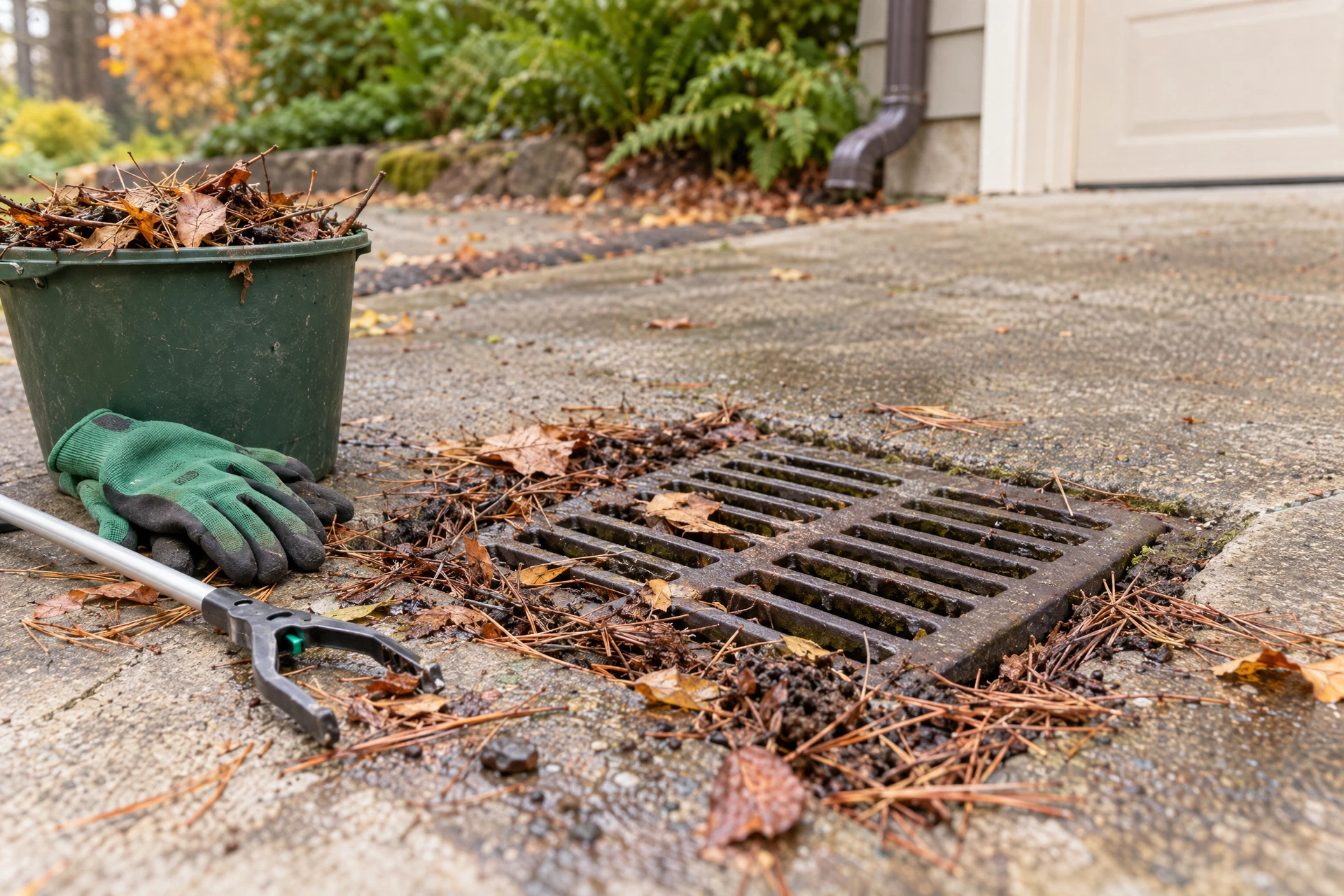
Start at driveway catch basins, yard drains, and other grates that collect runoff. Remove leaves, weeds, sticks, and loose sediment from the grate and nearby surface. Do not reach blindly into a drain; use gloves and a tool for surface debris, and stop if you find a damaged cover, deep buildup, or standing water that will not move. For recurring drain symptoms, review our Drain Cleaning guidance before choosing a next step.
If a basin appears blocked below the grate, note its location and contact the appropriate property manager, public agency, or plumbing professional before attempting deeper cleaning.
- Check the drain with a light hose flow, not during a downpour.
Inspect gutters and downspouts
Leaves and small animals can restrict a downspout over the summer. From a safe position, look for packed debris, separated joints, sagging gutter sections, and exterior water stains. Clean only what you can safely reach. Confirm that each downspout discharges away from the foundation without eroding soil or sending water toward a doorway.
A screen may reduce future debris, but it is not a substitute for seasonal inspection. If water backs up after visible debris is removed, the blockage may be farther along the line and may need professional evaluation.
- Never direct roof runoff toward a foundation, basement entry, or neighboring property.
Test driveway, garage, and floor drains
Properties on a slope may rely on a driveway or garage-floor drain to intercept runoff. Clear the grate, then pour a modest amount of water and watch where it goes. Water should drain steadily rather than pool at the garage door or foundation. Check interior floor drains too, but never pour chemical drain cleaner into an unknown or repeatedly slow drain.
Puddles, sewer odors, gurgling, repeated backups, or returning water are useful details to share with the office. Northwest Plumbing Services handles plumbing repairs and water and drain lines; call to discuss whether your situation is a fit.
- Keep vehicles, stored items, and leaves from covering a garage drain.
- Photograph recurring puddles so their location can be compared after rain.
Plan the next step before the first storm
If a drain is slow, damaged, or not directing water away from the home, do not wait for a major storm. Have the address and symptoms ready when you contact Northwest Plumbing Services. The family-owned company has served customers since 1991 from its Oregon office. Ask about current scheduling and whether an exterior drainage concern falls within the requested service. When the cause is unclear, review our Drain Camera Inspection guidance before deciding on repair.
- Call (503) 366-1323 or email office@nwplumbingservices.com.
- Contact our Oregon office for showroom directions or mailing details.
Questions about this topic
How often should I check outdoor drains in Oregon?
Check them before autumn rains, after major leaf fall, and after unusually heavy weather. A drain that repeatedly slows or backs up deserves closer evaluation.
Can Northwest Plumbing Services inspect a driveway or storm drain?
Call (503) 366-1323 and describe the location and symptoms. The office can confirm whether the concern fits its plumbing and water/drain-line services.