A toilet should be dependable, but an aging or damaged fixture can turn into a steady source of clogs, leaks, and repair calls. If yours is showing warning signs, replacement may be a better long-term choice than continuing to patch the same problem. Start by looking at the fixture’s condition, flushing performance, and water use. Then consider how your household uses the bathroom and which toilet style fits the room. Northwest Plumbing Services is family-owned by David and Mindy Sass and has served local plumbing needs since 1991. Our team can help homeowners throughout Columbia County think through a repair or replacement, including related fixture work.
Signs your toilet may be ready for replacement
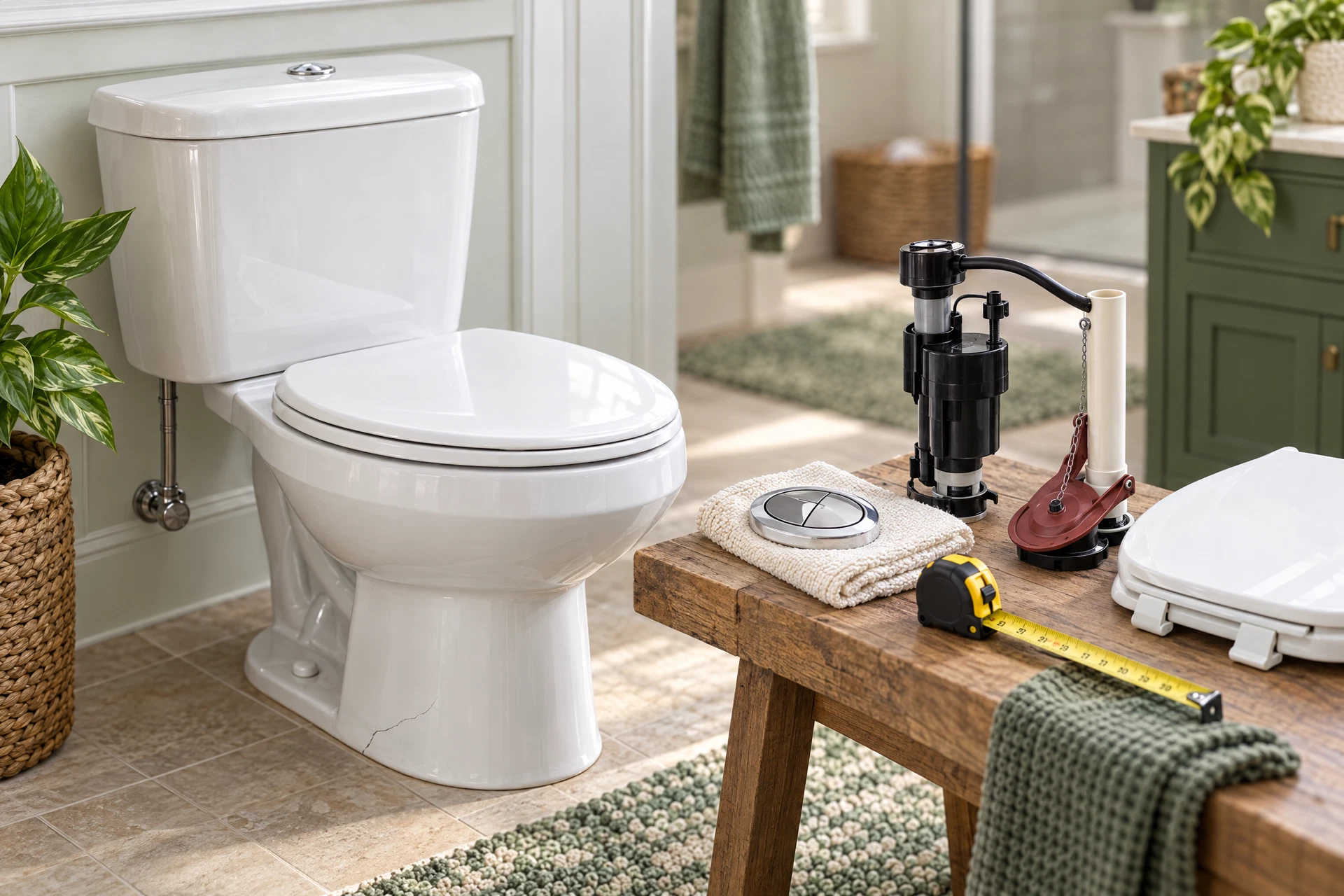
A hairline crack, chip, or damp area around the base deserves attention. Porcelain damage can allow water to escape, and a small leak can gradually affect flooring or the bathroom below. Stop using a visibly cracked bowl or tank until a plumber can assess it. For toilet repair or replacement context, review our Toilet Plumber guidance.
Repeated clogs and recurring repairs are another useful signal. A single blockage may be a straightforward fix, but frequent plunging, weak flushes, or ongoing problems can point to an older or poorly matched fixture. Toilets installed before modern water-efficiency standards may also use more water per flush than newer models.
- Cracks, chips, rocking, or moisture around the base
- Clogs that keep returning after ordinary clearing
- A weak or incomplete flush, or a toilet that runs often
- Repair needs that are becoming more frequent or costly
Compare the main toilet styles
Gravity-feed toilets are the familiar choice for many homes. Water moves from the tank into the bowl using gravity, which makes the design straightforward and widely serviceable. Pressure-assisted models use compressed air to produce a stronger, often louder flush and may suit bathrooms that see heavy use.
Dual-flush toilets offer separate flush choices for liquid and solid waste, which can help reduce water use when used properly. Waterless systems are a specialized option for settings such as worksites or remote locations, not usually the first choice for a standard residential bathroom. Ask about clearances, supply connections, rough-in measurement, seat height, and noise before selecting a model.
- Choose gravity-feed for a familiar, practical residential setup.
- Consider pressure-assisted when strong flushing matters and added noise is acceptable.
- Look at dual-flush when water-conscious operation is a priority.
- Treat waterless toilets as a specialized application rather than a default replacement.
Plan the replacement before the old toilet comes out
Measure the existing rough-in and check the room’s available space, door swing, and supply-line position. Decide whether you need a standard or taller bowl, and confirm that the new fixture works with the floor and flange condition. A replacement is also a good time to ask about shutoff valves, the wax or sealing connection, and any signs of moisture damage.
Call Northwest Plumbing Services at (503) 366-1323 or office@nwplumbingservices.com to discuss a toilet repair or replacement. Contact our Oregon office for showroom directions or mailing details. Northwest Plumbing Services is Oregon CCB#77141. For a toilet drain concern, review our Toilet Drain Service guidance.
Questions about this topic
Should I repair a toilet or replace it?
Repair can make sense for an isolated, inexpensive part failure. Replacement is worth discussing when the toilet is cracked, repeatedly clogged, inefficient for your needs, or requiring frequent service. A plumber can inspect the fixture and the connection before you decide.
What should I ask before choosing a new toilet?
Ask about the rough-in measurement, bowl height, flush style, water use, noise, available space, and whether the existing flange and shutoff valve are sound. These details help prevent a model that does not fit or perform as expected.