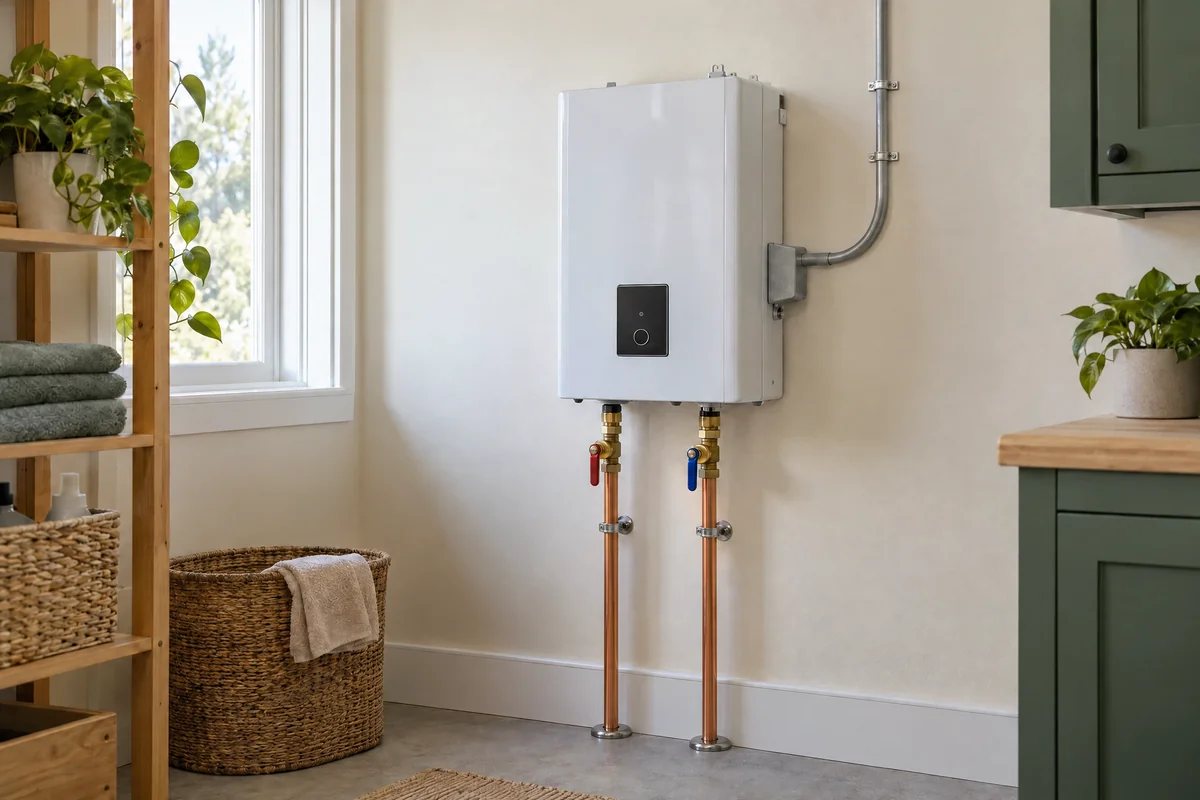
Tankless water heaters can be a smart fit for some homes in Columbia County, but they are not a magic fix for every hot-water concern. A tankless unit heats water when a fixture calls for it instead of storing a full tank at all times. That difference can affect space, energy use, installation requirements, and the way your household experiences hot water. Before replacing a working system, it helps to separate useful features from common assumptions. Northwest Plumbing Services can talk through your home, existing plumbing, and goals so you can compare tank and tankless options with practical expectations.
Myth: Tankless means hot water instantly
A tankless heater starts heating on demand, but the water still has to travel through the supply line to the faucet or shower. The wait can depend on the distance, pipe layout, fixture, and how much water is already in the line. If faster delivery matters, ask about the plumbing layout and whether a recirculation approach is appropriate for your home. That is a separate design question, not an automatic feature of every tankless unit. For tankless system considerations, review our Tankless Water Heaters guidance.
Myth: Every tankless heater needs natural gas
Tankless models may use electricity, natural gas, or propane, depending on the equipment and the home. The right comparison includes available utility service, electrical capacity, venting, water demand, and installation location. Do not choose by fuel type alone. A professional review can identify what your current setup can support and what changes a proposed installation would require.
Myth: Tankless always costs less
A tankless system may reduce standby heating because it does not continually keep a storage tank hot. It can also take up less floor space. Those benefits do not make every installation cheaper. Equipment, venting or electrical work, gas-line changes, water-line adjustments, and local installation conditions all affect the project total. Compare the full installation and ownership picture with a replacement tank, rather than relying on a quick price claim.
- Ask how household demand, simultaneous showers, and appliance use affect sizing.
- Plan for routine manufacturer-recommended maintenance and access to the unit.
- Confirm warranty, service, and installation details for the specific model being considered.
A practical next step for your home
Start with your current heater’s age, fuel source, available space, and the times your household runs short of hot water. Note whether the concern is capacity, delivery time, operating cost, or a leaking or failing unit. Northwest Plumbing Services handles tank and tankless water heaters along with plumbing repairs, water lines, repiping, remodels, and new construction. Call the Oregon office at (503) 366-1323 or email office@nwplumbingservices.com to discuss an evaluation and confirm current options for your property. For water-heater maintenance and planning context, review our Water Heater Service guidance.
Questions about this topic
Can a tankless water heater serve a whole house?
It can, but the unit must be sized for your peak demand, incoming water temperature, and the number of fixtures that may run together. A plumbing evaluation is the safest way to compare capacity and installation needs.
Is tankless automatically the best choice for an older Oregon home?
Not automatically. Existing gas, electrical, venting, water lines, space, and household usage all matter. Compare a tankless replacement with a tank system after reviewing the home’s actual conditions.
Who can I contact about tankless water heater options?
Contact Northwest Plumbing Services at (503) 366-1323 or office@nwplumbingservices.com. The office can discuss your project and confirm available services and current options.