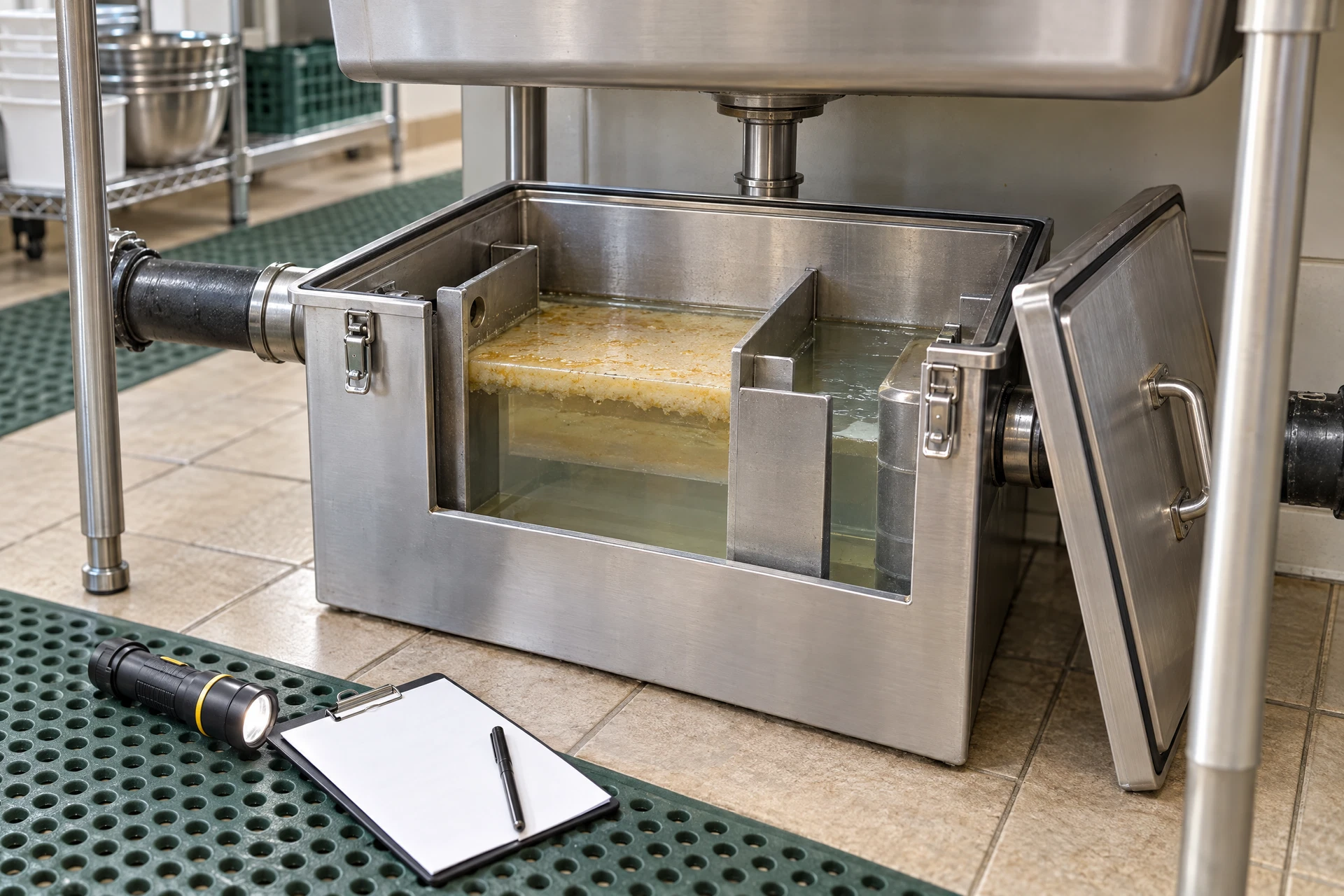
Restaurants, cafés, commercial kitchens, and other food businesses across Columbia County have to keep fat, oil, and grease (FOG) out of the drainage system. A grease trap or interceptor gives that material a place to separate and collect before wastewater continues toward the sewer. The equipment only helps when it is used correctly and serviced on a sensible schedule. FOG can cool, harden, and cling to pipe walls, so a neglected trap may contribute to slow drains, odors, backups, or a difficult cleanup. Good kitchen habits, clear staff instructions, and a maintenance plan can reduce avoidable trouble . Northwest Plumbing Services has served local customers since 1991; call the Oregon office to discuss your commercial plumbing situation and confirm whether grease-trap inspection, cleaning, repair, or related work fits the current scope of service.
Keep FOG out of the drain
A trap is not a substitute for daily kitchen practices. Collect used cooking oil and cooled grease in a designated container for proper disposal instead of rinsing it into a sink. Scrape plates, pans, and prep surfaces before washing, and make the rule part of new-employee training. These small steps limit the load entering the trap and help the equipment do its job. For a business-side plumbing project, review our Commercial Plumbing for New Construction guidance.
Do not add hot water, detergents, enzymes, or other products to force grease through the system unless the responsible local authority and your plumbing professional say that approach is permitted for your setup. Requirements can vary, and moving FOG downstream may simply shift the problem to building or public sewer lines.
- Use drain screens where appropriate and empty them into solid waste.
- Post a simple no-grease reminder near food-preparation sinks.
- Keep service records so recurring buildup or odor patterns are easier to spot.
Recognize warning signs early
A strong odor near the trap, standing water, repeated slow drainage, gurgling, or grease surfacing around an access point deserves attention. A backup during service can interrupt food preparation and create a sanitation concern. Do not open a full or overflowing trap without the right equipment; keep staff away from spills and contact a qualified professional.
When planning service, share the kitchen layout, fixture locations, operating hours, recent drain history, and any local requirements that apply. That information helps the contractor understand access and recommend a practical inspection or maintenance approach rather than waiting for an emergency.
Plan service around your operation
There is no single schedule that fits every business. The right interval depends on trap design, kitchen volume, menu, FOG load, and applicable rules. Ask the office what information is needed to review your situation, and retain service notes with your facility records. If a remodel or equipment change is coming up, bring the drainage plan into the conversation early.
Northwest Plumbing Services also handles commercial plumbing, water and drain lines, repiping, fixtures, and related repairs. Those verified services may be relevant when grease affects connected drains, but grease-trap cleaning or specialized compliance work should be confirmed before scheduling.
Talk through the next step
For a Columbia County food business, start with a quick call to the local office. Describe the symptoms, the type of kitchen, and whether you need planning for inspection, repair, or routine maintenance. Northwest Plumbing Services can clarify the current scope, access needs, and any questions you should take to your local authority or waste-service provider. Call (503) 366-1323 or email office@nwplumbingservices.com. For recurring drain symptoms, review our Drain Cleaning guidance before choosing a next step.
Questions about this topic
How often should a business service its grease trap?
There is no universal interval. Ask about a schedule based on trap size, kitchen volume, FOG production, equipment, and applicable local requirements. Keep records and adjust when buildup or odors return sooner than expected.
Can I pour hot water or cleaning products down the drain to move grease along?
Do not assume that is acceptable. Products or hot water can move FOG into downstream pipes, and rules vary by location and system. Confirm the practice with the responsible local authority and a plumbing professional before using it.
Who should I call about grease-trap concerns in Oregon?
Contact Northwest Plumbing Services at (503) 366-1323 or office@nwplumbingservices.com and explain your commercial plumbing needs. Ask the office to confirm whether the specific grease-trap inspection, cleaning, repair, or compliance work you need is currently offered.