A dishwasher that leaves standing water can turn a convenient chore into a soggy kitchen cleanup. Small food scraps, labels, and bits of plastic may collect in the drain path, but the blockage is not always inside the tub. In many homes around Columbia County, three practical places to inspect are the sink air gap, the dishwasher drain hose, and the filter beneath the spray arm. You can often make a safe first check with your owner’s manual and a few basic tools. Protect yourself from electrical and water hazards, and stop if a connection is stuck, leaking, or difficult to identify.
1. Check the sink air gap
If your dishwasher has an air gap, it is the small fitting on the sink deck near the faucet. This fitting helps keep sink wastewater from flowing backward into the dishwasher. A blocked air gap may cause slow draining or water to spill around the fitting. For kitchen-side drain symptoms, review our Kitchen Drain Services guidance.
With the dishwasher off, remove the outer cover and the inner cap according to the design of your unit. Use a small air-gap brush or bottlebrush to loosen debris around the hose opening. Do not pry hard on the fitting or put your fingers into an unseen opening. Reassemble the caps securely, then test the drain cycle while watching for leaks.
2. Inspect the dishwasher drain hose
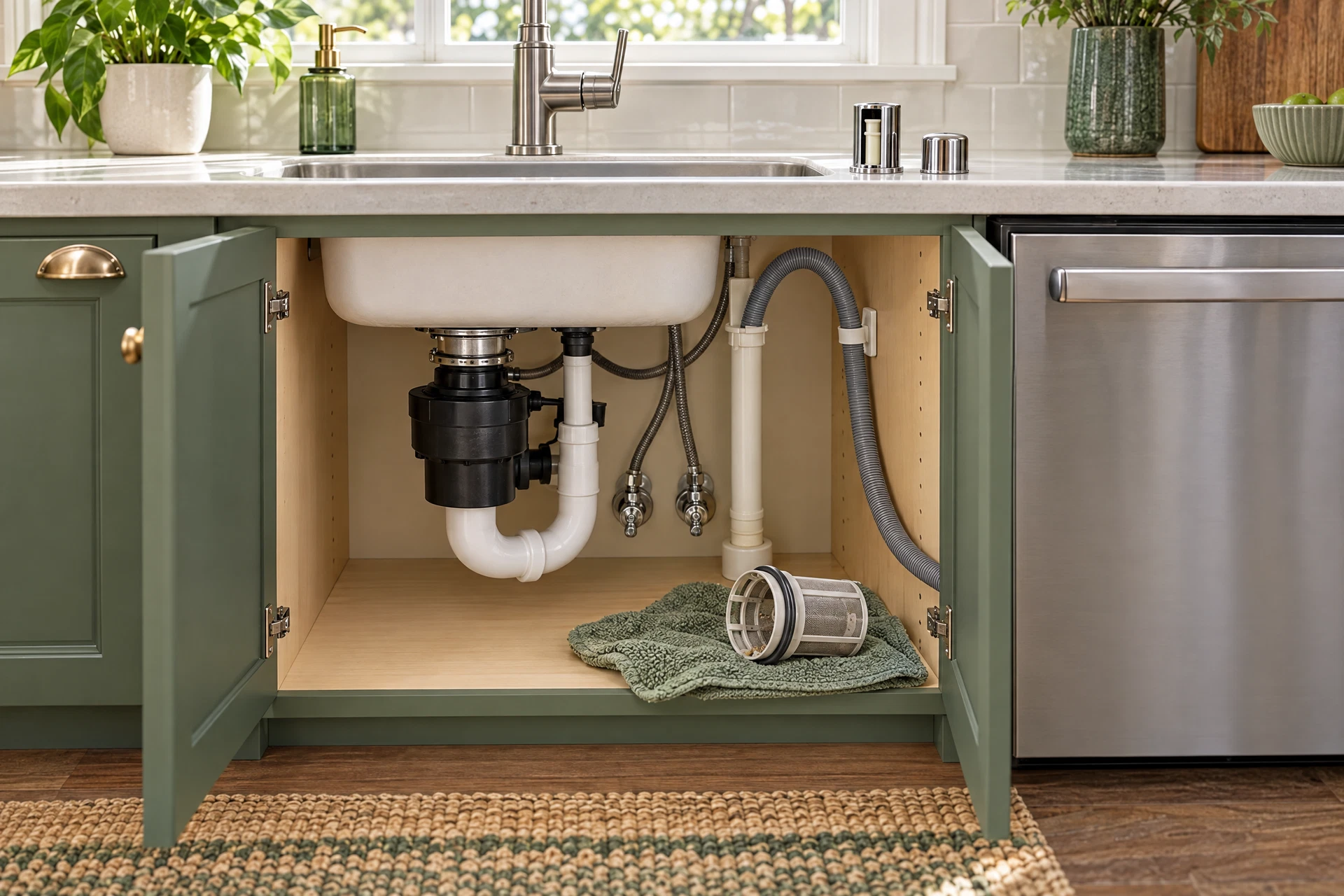
The drain hose runs from the dishwasher to the sink drain, garbage disposal, or air gap. A kink, loose connection, or buildup inside the hose can keep water from leaving the appliance. Before moving anything under the sink, switch off power at the breaker and close the dishwasher’s water supply. If a disposal is involved, follow the same power-safety precautions.
Place a shallow pan and towel under the connections. Use the appliance manual to identify the hose ends before disconnecting them. Clean only what you can reach without damaging the fittings, and flush the hose with water in a controlled area. Reconnect both ends, restore utilities, and run a short drain cycle. Stop immediately if water appears at a connection.
- Photograph the hose routing before disconnecting it.
- Keep clamps and fittings together so the hose can be reinstalled in its original position.
3. Clean the dishwasher filter
Many modern dishwashers have a removable filter below the lower spray arm. The filter catches food particles, but it is not meant to handle labels, plastic, glass, or other non-food debris. A dirty filter can contribute to slow drainage, odors, or particles left on dishes.
Check the owner’s manual before removing the spray arm or filter because designs vary. Rinse the filter over a sink, use a soft brush for stuck-on residue, and inspect the filter well for visible debris. Avoid sharp tools that can puncture the screen. Make sure every part locks back into place before operating the dishwasher.
When to call Northwest Plumbing Services
If the dishwasher still will not drain after these basic checks, the obstruction may be farther downstream in the disposal connection, drain line, or another part of the plumbing. Repeated backups, standing water that returns, leaks under the sink, or an unfamiliar installation are good reasons to stop troubleshooting and request professional help. Do not use chemical drain opener in a dishwasher or mix cleaning products.
Northwest Plumbing Services is a family-owned business established in 1991 by David and Mindy Sass. The office can discuss plumbing repairs, water and drain lines, disposals, and related fixture concerns for your situation. Call (503) 366-1323 or email office@nwplumbingservices.com to describe what you are seeing and ask about next steps. For disposal-related care, review our Garbage Disposal Services guidance.
Questions about this topic
Why is my dishwasher still full of water after cleaning the filter?
The air gap, drain hose, disposal connection, or downstream drain may still be restricted. Check only the accessible areas described in your manual, then contact Northwest Plumbing Services if water remains or returns.
Can I disconnect a dishwasher drain hose myself?
Some homeowners can handle this basic maintenance, but first turn off power and the water supply, place a pan under the sink, and follow the appliance manual. Stop if the hose or fittings are hard to identify, stuck, or leaking.
What should I do if the dishwasher backs up into the sink?
Pause the dishwasher and avoid running more water through the affected drain. Check the air gap if your sink has one, and call the office if the backup continues or you notice a leak.