A bathtub waste and overflow assembly is easy to overlook until the stopper will not hold water, the tub drains slowly, or water appears around the overflow cover. This compact fixture system lets you fill and empty the tub while providing a planned path for water that rises too high. Understanding its visible parts can help homeowners across Columbia County describe a problem clearly and decide when professional help is sensible. Northwest Plumbing Services is a family-owned local business established in 1991; our office can discuss plumbing repairs and fixture work for your home, remodel, or new construction project.
What the waste and overflow controls
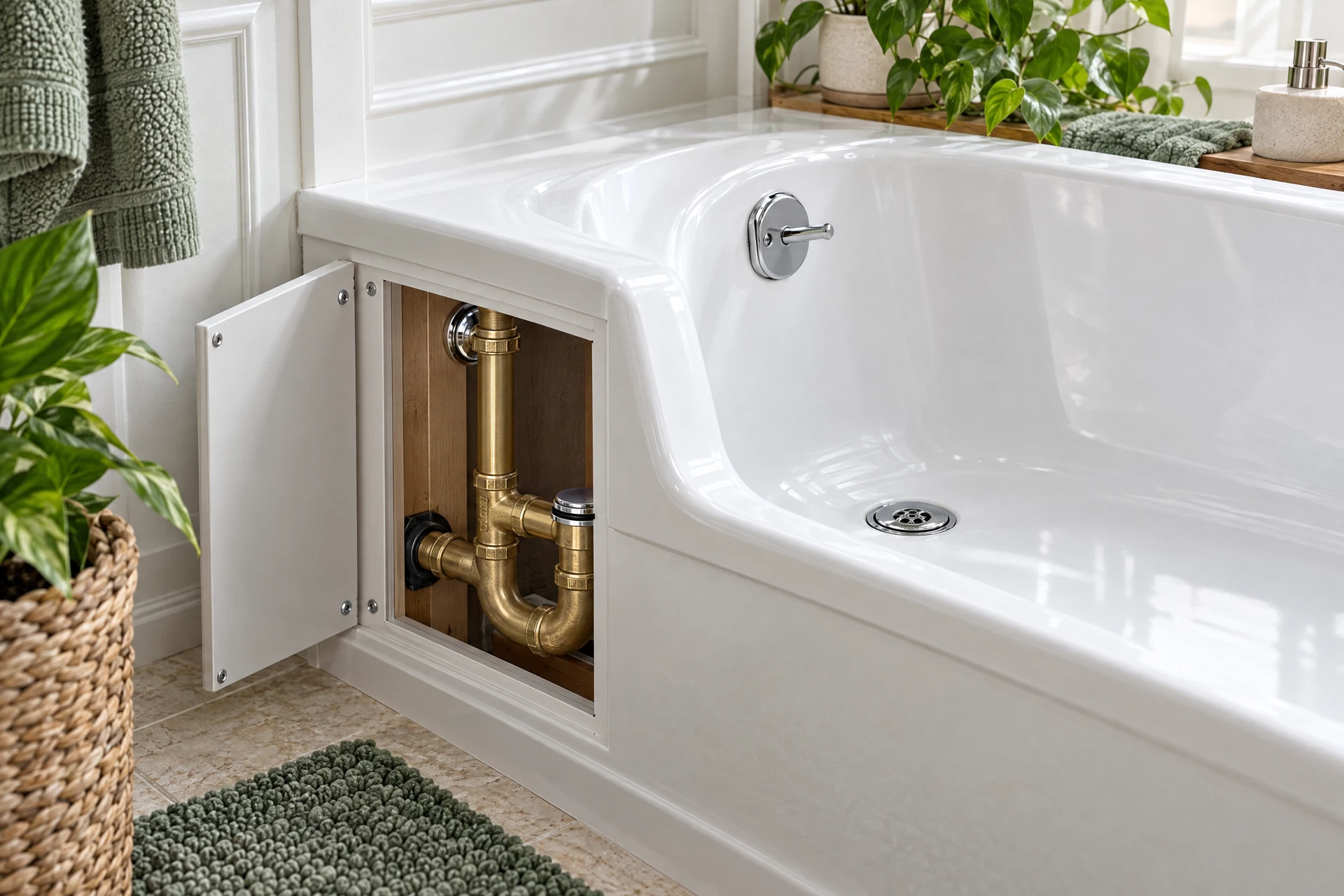
The waste portion is the drain at the bottom of the tub. Depending on the style, a stopper or trip-lever linkage opens and closes that drain so the tub can hold water for a bath or empty after use. The overflow opening sits higher on the tub wall. If the water level reaches it, water can enter the overflow passage instead of continuing up the side of the tub. For shower fixture and connection context, review our Shower Plumbing guidance.
That overflow route is a safeguard, not permission to leave a filling tub unattended. A blocked drain, a loose connection, or water entering faster than the assembly can carry it may still lead to a spill.
- Bottom drain: carries used bathwater away.
- Stopper or trip lever: controls whether the drain is open or closed.
- Overflow cover and passage: provide a higher-level drainage path.
What is behind the tub wall
Many waste and overflow assemblies form an L-shaped arrangement. The tub drain connects to a short branch, while the overflow opening connects from above; the two paths join before entering the drain line. You may see the cover, lever, and drain opening, but the connecting tee, gaskets, and piping are often enclosed behind the tub or in an adjacent access area.
Because a hidden seal can leak into framing or flooring, avoid forcing a stuck lever or repeatedly tightening trim as a long-term fix. A plumber can check the linkage, connections, and surrounding area without turning a small fixture issue into concealed water damage.
Signs it is time to ask for help
Notice whether the tub loses water while the stopper is closed, drains unusually slowly, gurgles, or leaves moisture near the overflow cover. A lever that feels loose or no longer changes the water level may point to a worn linkage or stopper. If water shows up below the tub, stop using it until the source is checked, especially if the ceiling or floor below is affected.
For a remodel, replacement tub, or new bathroom, plan the waste and overflow location and access before walls are closed. Matching the drain, tub, finish, and existing piping helps prevent an awkward repair later.
A practical next step in regional Oregon
Take a photo of the tub drain and overflow cover, note when the symptom occurs, and contact Northwest Plumbing Services at (503) 366-1323 or office@nwplumbingservices.com. The team can discuss your plumbing repair, fixture, remodel, or new-construction needs and explain what information will help plan the visit. Contact our Oregon office for showroom directions or mailing details. Ask the office about current availability and whether your particular waste and overflow repair or replacement is a fit. For shower or tub drain symptoms, review our Shower & Tub Drains guidance.
Questions about this topic
Can I replace a bathtub waste and overflow myself?
The visible trim may look simple, but the assembly includes concealed seals and connections. If access is limited, the tub is surrounded by finished surfaces, or there is any sign of leakage, ask a qualified plumber to assess it before removing parts.
Does the overflow prevent every bathtub spill?
No. It provides a drainage path when water reaches the opening, but a blocked or damaged assembly, a leaking seal, or an unattended filling tub can still cause water damage.