Columbia County winters can make a dependable supply of hot water especially important. Before colder weather settles in, take a few minutes to look over your water heater and the nearby pipes. Simple maintenance can help you spot a leak, unusual pressure problem, or reduced performance before it becomes a larger disruption. Northwest Plumbing Services is a family-owned Oregon company owned by David and Mindy Sass and established in 1991. We can help homeowners plan maintenance, repairs, or a tank or tankless water-heater upgrade when a check reveals a problem.
Start with a safe visual check
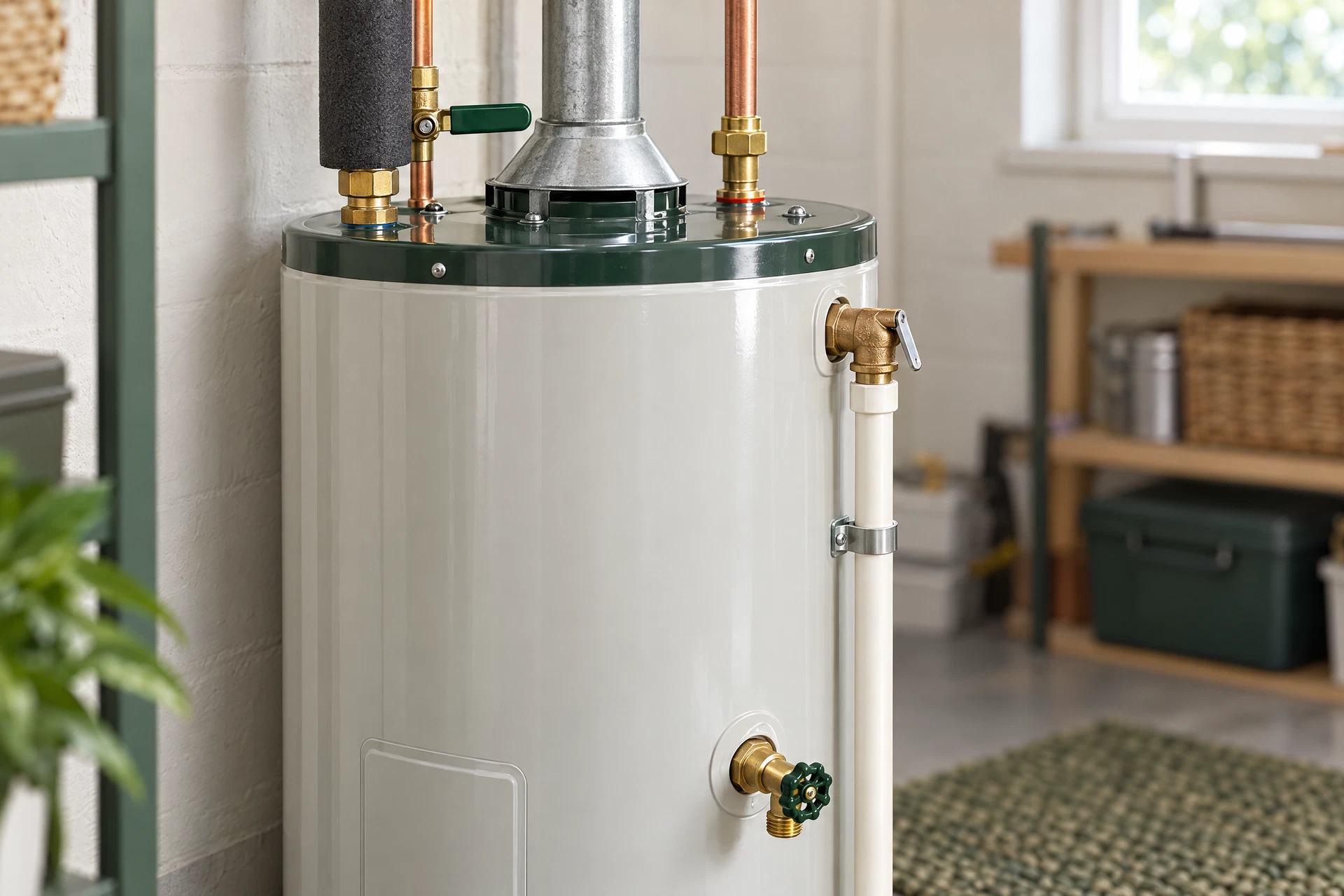
Look around the tank, connections, drain valve, and floor for water, rust, dampness, or a relief pipe that is continually discharging. Never remove panels or work around gas, electrical, or hot-water components if you are not comfortable doing so. A temperature-pressure relief (TPR) valve is a safety device, and testing it can release very hot water. Keep children clear and stop if the valve leaks afterward; contact a plumber rather than forcing a repair. For water-heater maintenance and planning context, review our Water Heater Service guidance.
- Check that the access area is dry and unobstructed.
- Notice changes in hot-water quantity, recovery, noise, or color.
- If you smell gas or see an active leak, leave the area as appropriate and contact the relevant utility or a qualified professional.
Reduce sediment and corrosion
Minerals and sediment can collect in a storage tank, making it noisier and less efficient. Flushing a tank may improve performance, but the water can be scalding and the correct procedure depends on the equipment. Anode-rod inspection also requires opening the tank and is best handled by a qualified plumber, particularly when the rod is heavily worn or the heater is older. Ask Northwest Plumbing Services whether maintenance is appropriate for your tank before attempting it yourself.
Review temperature and insulation
Use your manufacturer’s guidance when checking the temperature setting. A setting near 120°F is commonly used to balance everyday hot-water needs with scald protection, but households with special needs should ask a professional about the right choice. Insulate exposed hot-water pipes where suitable, keeping insulation away from controls, vents, and safety components. Do not cover the top or venting area of a gas-fired unit, and do not add a jacket unless it is approved for your model.
- Keep pipe insulation fitted without covering valves or controls.
- Do not use a blanket or jacket that conflicts with the manufacturer’s instructions.
- Consider a service check if winter demand exposes weak recovery or inconsistent hot water.
Plan service before a small issue grows
Maintenance is a good time to discuss repair versus replacement, especially if the heater is leaking, repeatedly trips a safety device, or no longer meets household demand. Northwest Plumbing Services offers tank and tankless water-heater work along with plumbing repairs, water and drain lines, repiping, remodels, and new-construction or commercial plumbing. Call the office to describe your equipment and symptoms; the team can confirm the appropriate next step and current availability for your address. For a unit showing trouble signs, review our Water Heater Repair guidance.
Questions about this topic
Can I flush my water heater myself before winter?
It may be possible for some equipment, but the water can be dangerously hot and an incorrect procedure can cause leaks or damage. Ask Northwest Plumbing Services to confirm whether DIY flushing is suitable for your model.
When should I call Northwest Plumbing Services?
Call when you see leaking, persistent discharge from a relief pipe, unusual tank noise, reduced hot water, or a temperature or safety concern. Contact the office at (503) 366-1323 or office@nwplumbingservices.com to discuss the issue and confirm service details.