
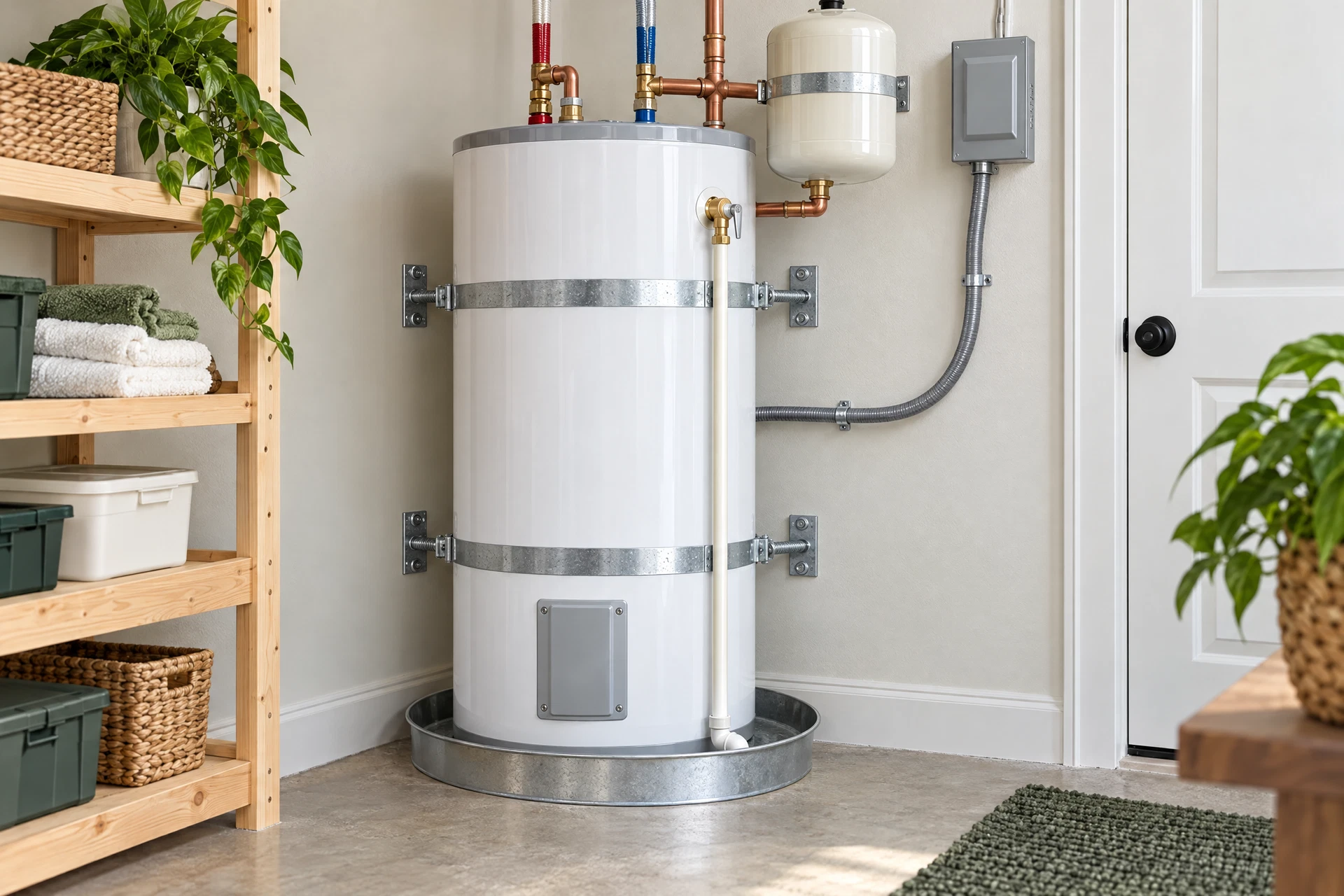
Replacing an electric water heater is not always a simple matter of disconnecting the old tank and setting a new one in its place. The condition and location of the existing setup can affect the work, along with the home’s plumbing, electrical service, drainage, and applicable Oregon requirements. A careful installation plan helps protect your home, your family, and the new equipment. Before choosing a unit, have the current connection points and surrounding area evaluated so necessary updates are identified before installation begins.
Safety components to review
A new electric tank may need several supporting components. Seismic strapping can help keep the heater secure during an earthquake and reduce strain on connected piping. A thermal expansion tank may also be appropriate where the plumbing system needs room for heated water to expand. Its size and installation should match the system and manufacturer guidance. For electric-unit considerations, review our Electric Water Heaters guidance.
A temperature-and-pressure relief valve is another important safety device. Its discharge pipe must be installed correctly and kept open; it should never be capped, plugged, or blocked. A thermostatic mixing valve may be considered to help manage delivered hot-water temperature and reduce scald risk when it is properly sized and adjusted.
- Approved seismic straps suited to the installation
- A correctly sized expansion tank when the system calls for one
- An unobstructed relief-valve discharge arrangement
- Temperature control equipment when appropriate for the home
Plan for leaks and drainage
A drain pan beneath the water heater can help collect a leak before it spreads into the surrounding floor or structure. Where a pan is needed, it should be sized for the unit and connected to an approved drainage location. The heater’s room, floor level, and existing drain layout all matter. Drainage should not simply end in a crawlspace.
The old installation may need updates
An older tank may have worked for years while still leaving parts of the installation ready for improvement. During replacement, a plumber can review the water and drain connections, the heater location, existing safety devices, and the electrical requirements for the new unit. Local plumbing and building requirements can also affect the scope. The right answer depends on what is present in your home, not only on the tank model.
What to do before scheduling
Do not remove covers, alter wiring, cap a relief discharge, or attempt to bypass a safety component. Gather the current heater’s age and model information, note any leaking or inconsistent hot water, and make the area accessible for an evaluation. Northwest Plumbing Services can discuss tank and tankless water-heater work and help identify whether plumbing or safety updates should be part of the plan. Call the Oregon office at (503) 366-1323 or email office@nwplumbingservices.com to ask about your setup. For replacement-planning context, review our Water Heater Replacement guidance.
Questions about this topic
Can a new electric water heater be installed without upgrades?
Sometimes. If the existing plumbing, drainage, safety components, and electrical setup are suitable and meet applicable requirements, fewer changes may be needed. An evaluation is the safest way to determine the actual scope.
Does every electric water heater need the same installation parts?
No. The home’s location, plumbing configuration, drainage, existing components, equipment instructions, and applicable local requirements can change what is needed. Ask the office to review your specific installation.