A burst supply line, overflowing toilet, or sudden loss of water control can make a normal day feel chaotic. The safest first move is to slow things down: keep people away from standing water, identify where the water is coming from, and stop the flow only when you can do so safely. These steps can help limit damage in a Columbia County home while you arrange professional advice. Northwest Plumbing Services is a family-owned local company led by David and Mindy Sass, serving Oregon since 1991. Call the office at (503) 366-1323 and explain what you see so the team can help you decide on the next step.
1. Check the situation before touching anything
Look for immediate hazards before moving through the area. Keep children and pets away from wet floors, and do not enter water near outlets, appliances, or a damaged electrical panel. If water is spreading quickly, move valuables and furniture only if you can do it without injury. A photo or short description of the leak, overflow, or loss of pressure will be useful when you call. For a concern that cannot safely wait, review our Emergency Plumbing Service guidance.
If you smell gas, hear hissing near a gas appliance, or suspect a dangerous electrical condition, leave the area and contact the appropriate emergency or utility service from a safe location. Do not operate switches or attempt a repair in a hazardous space.
2. Shut off water at the nearest safe valve
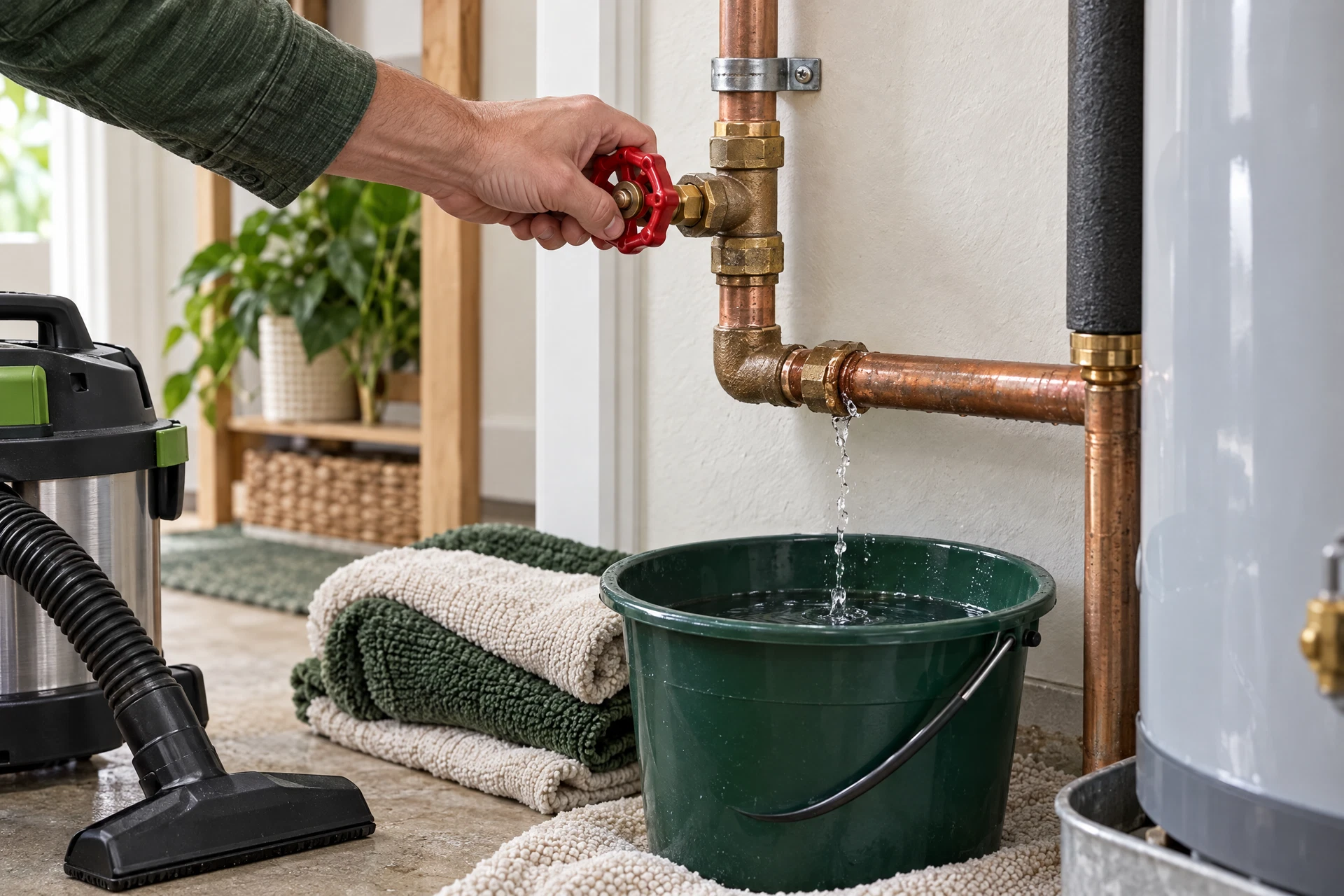
For a toilet, close the small valve on the wall or floor behind it. For a faucet or appliance, look for the supply valve underneath or nearby and turn it clockwise until the flow stops. If the leak is on a larger line or a local valve will not stop it, use the home's main water shutoff if you know where it is and can reach it safely.
- Do not force a corroded valve or climb into an unsafe area to reach it.
- If you cannot find or operate the shutoff, tell the plumber exactly where water is entering the home.
3. Limit additional damage
Once the supply is off, open a nearby faucet briefly to relieve pressure and let trapped water drain. Use buckets, towels, and a wet vacuum if available to keep water away from cabinets and flooring. Note what was affected for your own records. Do not remove walls, flooring, or fixtures just to investigate; hidden moisture and structural damage are better assessed with professional guidance.
If a water heater is involved, follow the manufacturer's shutoff instructions only if the controls are accessible and you are comfortable doing so. Never work around a gas appliance when you smell gas or see signs of damage.
4. Call Northwest Plumbing Services for guidance
Contact Northwest Plumbing Services at (503) 366-1323 and share the fixture or pipe involved, whether the water is still moving, what valve you closed, and any safety concern. The office can discuss the situation and explain the next step based on current availability; do not assume emergency or after-hours service is offered. Northwest Plumbing Services handles plumbing repairs involving pipes, faucets, toilets, disposals, water and drain lines, repiping, and water heaters, along with larger residential, commercial, remodel, and new-construction work.
Contact our Oregon office for showroom directions or mailing details. You can also reach the office at office@nwplumbingservices.com. Oregon CCB#77141. For isolation and preparation context, review our Whole-Home Water Shut-Off Help guidance.
Questions about this topic
Should I turn off the main water supply for every plumbing emergency?
No. If the issue is limited to one toilet, faucet, or appliance, its nearby supply valve may be enough. Use the main shutoff when the leak is larger, the local valve does not work, or you cannot identify the source, provided you can reach it safely.
What information should I have ready when I call?
Share the location and type of problem, when it started, whether water is still flowing, which valves you closed, and any electrical, gas, or access concern. Clear details help the office discuss an appropriate next step.