A toilet that runs, rocks, clogs, or leaves water where it should not can be more than a small annoyance. It may be a worn part, a fixture that no longer suits your household, or a drainage issue that needs a closer look. The right response depends on where the trouble starts and whether it keeps returning. Here are five practical warning signs for homeowners across Columbia County, Oregon, plus sensible steps to take before a repair becomes water damage.
1–2. Cracks, age, or declining performance
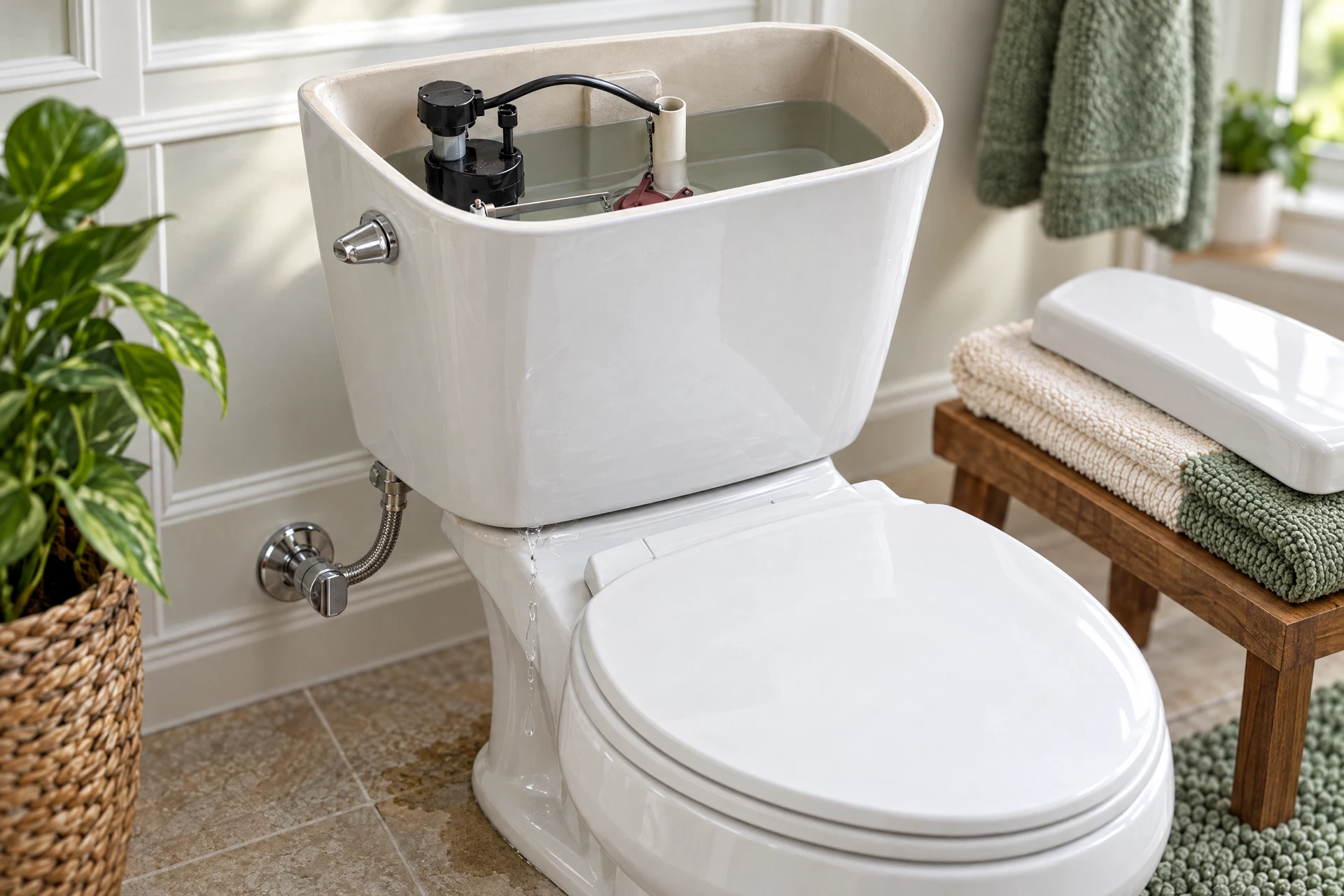
Porcelain cracks can spread without much warning. A crack in a tank or bowl may allow a slow leak to reach the floor, while a damaged water-holding surface can become unsafe to rely on. Do not try to tighten fittings against cracked porcelain. If water is escaping, turn off the toilet’s supply valve, dry the area, and arrange an inspection. Depending on the location and condition, replacement may be more dependable than a patch. For toilet repair or replacement context, review our Toilet Plumber guidance.
Age alone does not make a toilet defective, but an older fixture can use more water and may need repeated repairs. Frequent running, weak flushing, or hard-to-find replacement parts can make an otherwise familiar toilet frustrating and costly to maintain. During a replacement conversation, compare flush performance, bowl height, available space, and water use rather than choosing by appearance alone.
- Keep the toilet’s rough-in and room clearance in mind before ordering a new unit.
- Ask whether a repair, a new toilet, or a related supply-line correction best fits the problem.
3. Clogs keep coming back
An occasional clog may respond to a plunger used with steady, controlled pressure. Repeated clogs deserve more attention, especially when several fixtures drain slowly, the bowl gurgles, or plunging only provides a short-lived improvement. Avoid chemical drain products in a toilet; they can splash, damage components, and complicate hands-on service. A plumber can help distinguish a fixture problem from a blockage farther along the drain line.
4. The bowl or tank water level looks wrong
A low bowl level can follow an incomplete flush, a partial blockage, or a venting or drain concern. A low tank level may point to the fill valve, water supply, or adjustment. Check that the shutoff valve is fully open and look for an obvious leak, but do not force a stuck valve. Note when the level changes and whether other drains are affected; those details can make diagnosis more efficient.
5. The toilet leaks repeatedly
Water around the base, a damp supply connection, or a toilet that keeps running should not be ignored. Some leaks come from a replaceable seal or valve, while movement at the floor can signal a connection that needs professional attention. Shut off the supply if the leak is active, protect the flooring, and contact Northwest Plumbing Services for help deciding whether repair or replacement is the sensible next step. For a toilet drain concern, review our Toilet Drain Service guidance.
Questions about this topic
Should I replace a toilet that clogs more than once?
Not automatically. Repeated clogs may come from the toilet, the drain line, or how the fixture is being used. A plumbing assessment can help identify the cause before you spend money on a replacement.
What should I do first if my toilet is leaking?
Turn the toilet’s shutoff valve clockwise if it moves safely, wipe up standing water, and avoid using the fixture until the source is clear. Call Northwest Plumbing Services at (503) 366-1323 or office@nwplumbingservices.com to discuss next steps.