If a sink, shower, or tub in your Oregon home keeps slowing down, the plunger may be treating the symptom rather than the cause. A recurring clog can form when hair, soap, grease, food particles, or mineral deposits narrow the inside of a pipe. It can also signal a stuck object, a damaged section of drain line, or a blockage farther from the fixture. The pattern matters: one stubborn fixture calls for a different conversation than several drains that slow down together. Northwest Plumbing Services has helped local homeowners since 1991. Use the clues below to decide what you can safely check and when to call the office.
What commonly causes a repeat clog
Bathroom drains often collect hair and soap residue over time. In the kitchen, grease can cool against the pipe and hold food debris, even when the water appears to disappear at first. A small object can also catch material and recreate the blockage soon after a basic clearing. Older plumbing may have mineral buildup or a rough, damaged interior that gives debris more places to collect. For recurring drain symptoms, review our Drain Cleaning guidance before choosing a next step.
- A slow shower or bathroom sink often points to hair and soap accumulation.
- A kitchen sink that repeatedly backs up may have grease and food buildup in the drain line.
- A clog that returns quickly may be farther down the pipe or caused by an object or damaged section.
Pay attention to the pattern
Notice whether the trouble is limited to one fixture or appears in several places. Gurgling, unpleasant odors, water rising in another fixture, or backup through a low drain can indicate a larger drain-line problem. In a home with older underground piping, roots entering through a crack or loose joint are one possibility, but symptoms alone cannot confirm the cause.
- Write down which fixtures are affected and how soon the clog returns.
- Pause water use if wastewater is backing up elsewhere in the home.
- Do not reach into an unknown blockage or mix drain chemicals.
Safe steps before you call
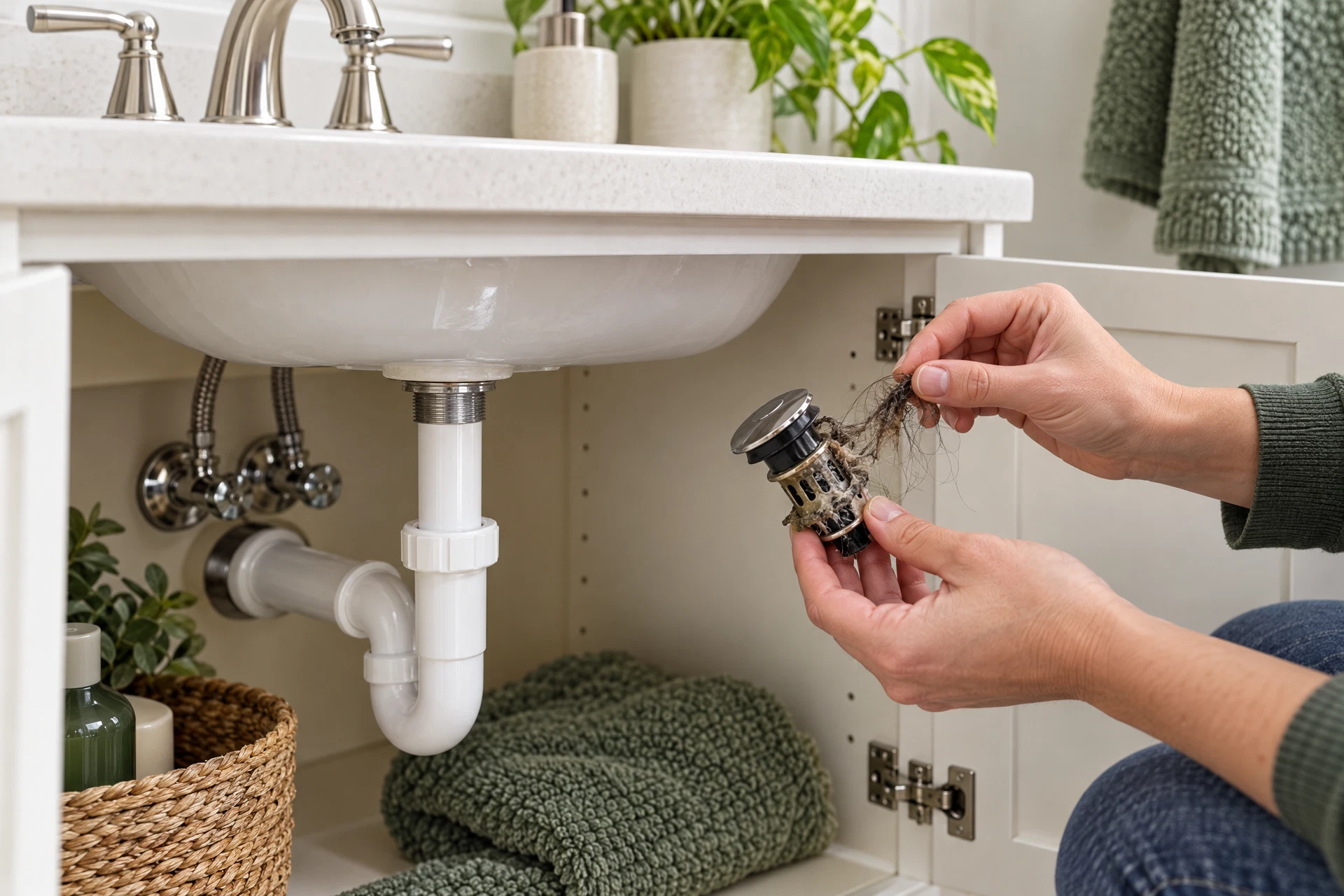
Remove visible hair or debris from a stopper when it is easy to reach, and use a properly fitted plunger with steady pressure. Avoid repeated chemical treatments; they may not remove a deeper obstruction and can leave hazardous liquid in the pipe for anyone who works on it. Do not pour cooking grease into the sink. Collect it for disposal instead, and use a strainer to keep food scraps out of the drain.
- Try one careful, appropriate clearing method rather than stacking products.
- Keep grease, wipes, and other non-dissolving materials out of household drains.
- If the same drain clogs again, note what you tried and share that information with the plumber.
When to contact Northwest Plumbing Services
Call the Oregon office when a drain repeatedly clogs, several fixtures are affected, or you see a backup, odor, or persistent standing water. The right next step may be a repair, work on the drain line, or further evaluation; the office can discuss the situation and help determine what is appropriate. Northwest Plumbing Services also handles plumbing repairs, pipes, faucets, toilets, disposals, repiping, water heaters, remodels, new construction, commercial plumbing, and accessible low-threshold Bestbath showers. When the cause is unclear, review our Drain Camera Inspection guidance before deciding on repair.
- Have the affected fixture, symptoms, and timing ready when you call.
- Contact Northwest Plumbing Services at (503) 366-1323 or office@nwplumbingservices.com.
- Contact our Oregon office for showroom directions or mailing details.
Questions about this topic
Why does my drain clog again after I clear it?
The blockage may only be partly cleared, may sit farther down the line, or may be forming around buildup, a foreign object, mineral deposits, or pipe damage. A recurring pattern deserves evaluation instead of repeated chemical treatment.
What does it mean when several drains slow down at once?
Several affected fixtures can point to a restriction farther along the shared drain system. Limit water use if there is backup, and call Northwest Plumbing Services to discuss the symptoms.
Should I use chemical drain cleaner for a recurring clog?
Repeated chemical treatments are not a reliable way to find or remove a deeper problem and can create a safety hazard. Use only careful, appropriate mechanical steps and ask a plumber for guidance when the clog returns.