A drain that takes longer and longer to empty is easy to dismiss, especially when the water still goes down. In an Oregon home, though, repeated slowdowns can signal buildup or an obstruction in the drain line. Grease, soap residue, hair and small objects can narrow the passage over time, while roots or other line problems may need a professional assessment. Acting while the symptom is manageable can help you avoid a sudden backup and gives you more options for deciding what the plumbing needs next.
Small warning signs are worth noticing
Pay attention when a kitchen sink, shower or bathroom basin drains slowly more than once. Gurgling, an unpleasant odor, water rising in a nearby fixture, or standing water around an appliance can suggest that the problem is not limited to one stopper. If several fixtures begin acting up around the same time, note which ones are affected and whether the issue changes when other water is running. That information can help a plumber narrow down the location and severity of the obstruction. For recurring drain symptoms, review our Drain Cleaning guidance before choosing a next step.
- A single slow drain may have a local clog near the fixture.
- Several slow or backing-up drains can indicate a larger drain-line concern.
- Water backing up through a floor drain or appliance connection deserves prompt attention.
Choose a cautious first step
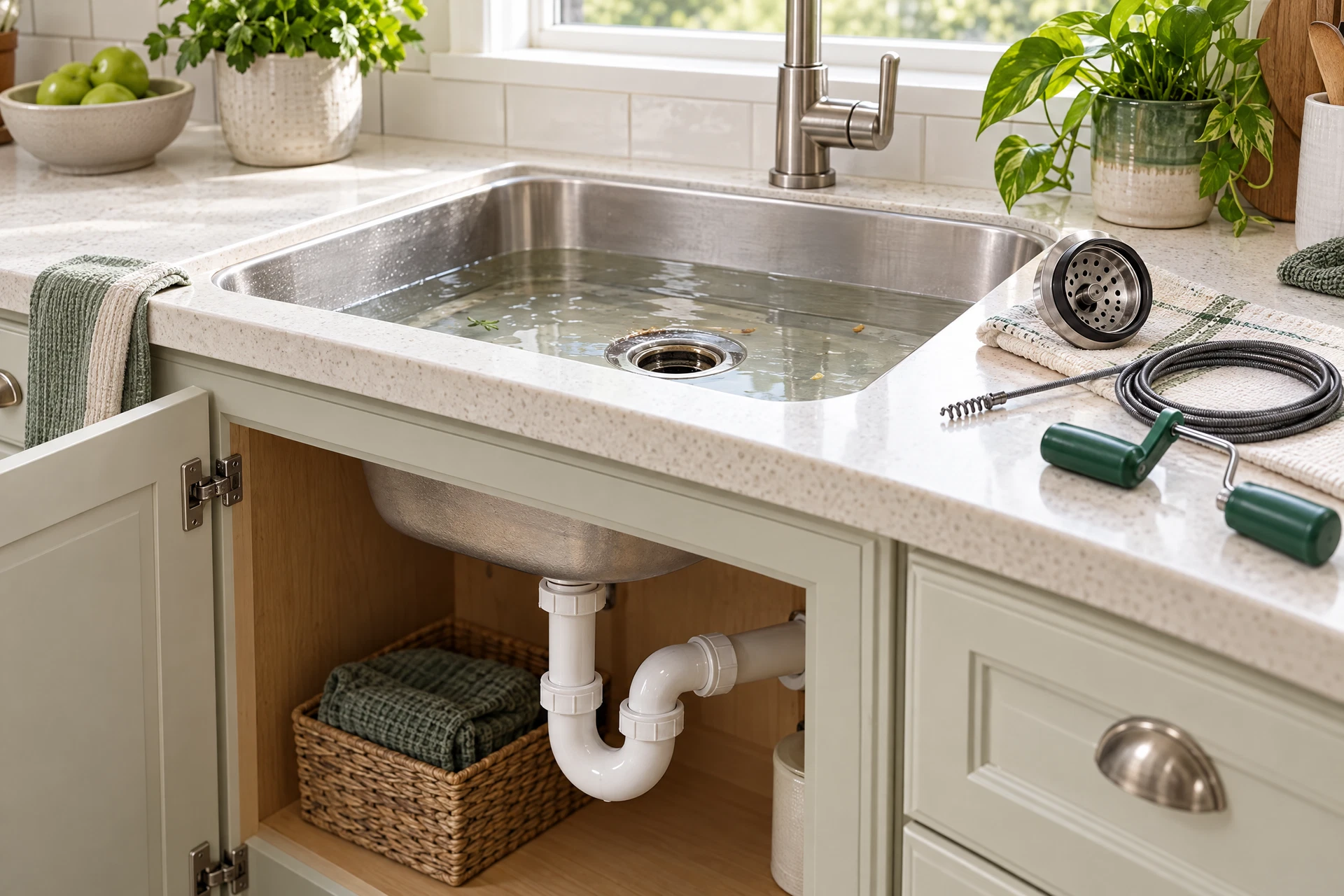
For a minor sink or shower slowdown, remove and clean the strainer and, if appropriate for the fixture, try a small hand snake according to its instructions. Avoid mixing products or repeatedly pouring caustic liquid drain cleaners into a stubborn line. Chemicals may not clear the obstruction and can create a safety hazard for anyone who later opens the trap or works on the pipe. Never reach into a drain or disposal while it is connected to power.
- Stop using the affected fixture if water is rising or a backup is spreading.
- Keep children away from standing wastewater and clean only with suitable protective gear.
- Do not assume a quick chemical reaction has solved a recurring blockage.
When to call for plumbing help
Call Northwest Plumbing Services when a blockage returns, affects multiple fixtures, involves a toilet or appliance connection, or leaves you unsure where the water is going. The team handles plumbing repairs and water and drain line work for homes and businesses in Oregon. A plumber can assess the symptoms, explain the practical options and determine whether the issue is a fixture-level clog or a concern farther along the line.
- Have the fixture locations and timing of the slowdown ready to share.
- Mention any recent remodeling, landscaping or unusual items that may have entered a drain.
- Contact the Oregon office at (503) 366-1323 to discuss the situation and next steps.
A simple plan can prevent a rushed decision
Do not wait for a complete blockage before asking for guidance. Write down which drains are slow, limit water use if a backup is possible, and ask the office what information or access the plumber will need. Northwest Plumbing Services has served the area since 1991 from its Oregon showroom, and the office can confirm current availability and whether the requested work fits your situation. When the cause is unclear, review our Drain Camera Inspection guidance before deciding on repair.
Questions about this topic
Is a slow drain always an emergency?
Not always, but a recurring slowdown, multiple affected fixtures, rising water or wastewater backing up should be addressed promptly. Reduce water use at the affected fixtures and call the office for guidance.
Should I use liquid drain cleaner before calling?
Avoid relying on harsh chemical cleaners, especially if the cause is unknown or the line is already backing up. A plumber can help identify a safer next step.
How do I contact Northwest Plumbing Services about a drain problem?
Call (503) 366-1323 or email office@nwplumbingservices.com. Contact our Oregon office for showroom directions or mailing details.