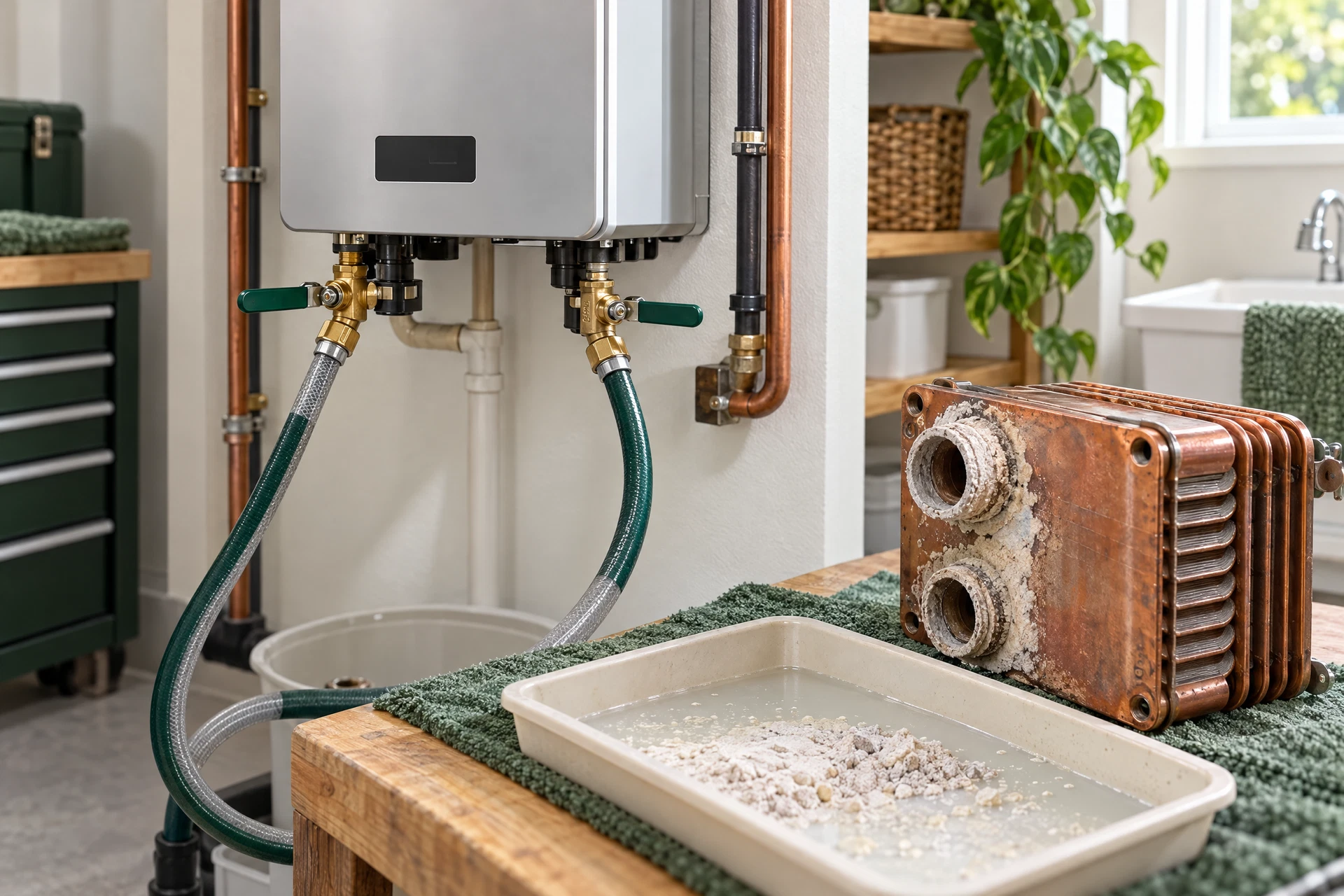
Minerals left behind as water is heated can collect inside a water heater over time. In a tank, that buildup is usually called sediment; in a tankless unit, mineral scale can coat the heat exchanger and restrict performance. Either way, neglect can mean noisier operation, slower hot-water delivery, reduced efficiency, or a service problem at an inconvenient time. For homeowners in and around Columbia County, a maintenance plan starts with identifying the type of heater you have, following its manufacturer instructions, and arranging professional help when the work involves hot water, gas, electricity, or a unit without service valves.
Scale and sediment are not the same job
A storage-tank heater is generally maintained by draining and flushing the tank to move loose sediment out through the drain valve. A tankless heater does not store a tankful of water; it may instead need a circulation pump, hoses, isolation valves, and an approved descaling solution to clean the heat exchanger. The right procedure depends on the model, fuel, installation, and condition of the equipment. For water-heater maintenance and planning context, review our Water Heater Service guidance.
Annual flushing is common guidance for tank models, while the interval for a tankless system should follow its manual and the water conditions in your home. A plumber can help set a practical schedule rather than guessing from a calendar alone.
- Rumbling or popping from a tank can point to sediment, though other faults are possible.
- Reduced hot-water flow or longer recovery can justify an inspection, not an automatic diagnosis.
- A leak, corrosion, or a blocked drain valve is a reason to stop and call for service.
Safe preparation for homeowner maintenance
Read the owner’s manual first. Water from a heater can scald, and restarting an electric or gas unit before it is properly full can cause damage. Before a tank flush, plan where the discharge will go, let the water cool, shut off the energy source, and keep children and pets away. Never improvise with an unapproved chemical.
If you cannot identify the shutoffs, drain path, or service valves, leave the work to a qualified professional. An older heater may have a brittle valve or connection that does not tolerate a rushed DIY attempt.
- Use the manufacturer’s instructions for your model.
- Treat every discharge as hot until it has cooled completely.
- Do not open fittings or remove panels when you are unsure whether gas or electricity is isolated.
Signs it is time to plan service
Call when maintenance has been skipped, the heater makes new noises, hot water is inconsistent, or you see moisture around the unit. A professional can distinguish sediment or scale from a failing valve, heating component, connection, or tank. Descaling may restore tankless flow, but it cannot reverse a tank already leaking through corrosion.
Northwest Plumbing Services works with tank and tankless water heaters. We can discuss whether cleaning, repair, repiping, or replacement makes sense for your home or project.
A practical next step for regional homeowners
Check the label or manual for your heater’s type, model, fuel, and recommended maintenance. Note any noise, leak, flow change, or age information before you call. Northwest Plumbing Services is family-owned by David and Mindy Sass and has served plumbing needs since 1991 from Oregon. Contact the office to talk through the unit and confirm the right service for your situation. For a unit showing trouble signs, review our Water Heater Repair guidance.
Questions about this topic
How often should a water heater be descaled or flushed?
Many tank heaters are flushed about once a year, while tankless descaling intervals vary by model and water conditions. Check your manual and ask a plumber to recommend a schedule for your installation.
Can I descale my tankless water heater myself?
Some systems can be serviced by a homeowner, but the job requires isolation valves, hoses, a pump, and an approved solution. If you cannot verify the setup or safely isolate the unit, call a professional.
What should I do if my water heater is leaking?
Stop the work, keep clear of hot water, and contact a plumber. If safe to do so, shut off the water supply and the heater’s energy source according to the manual; a leak may indicate a problem that cleaning cannot solve.