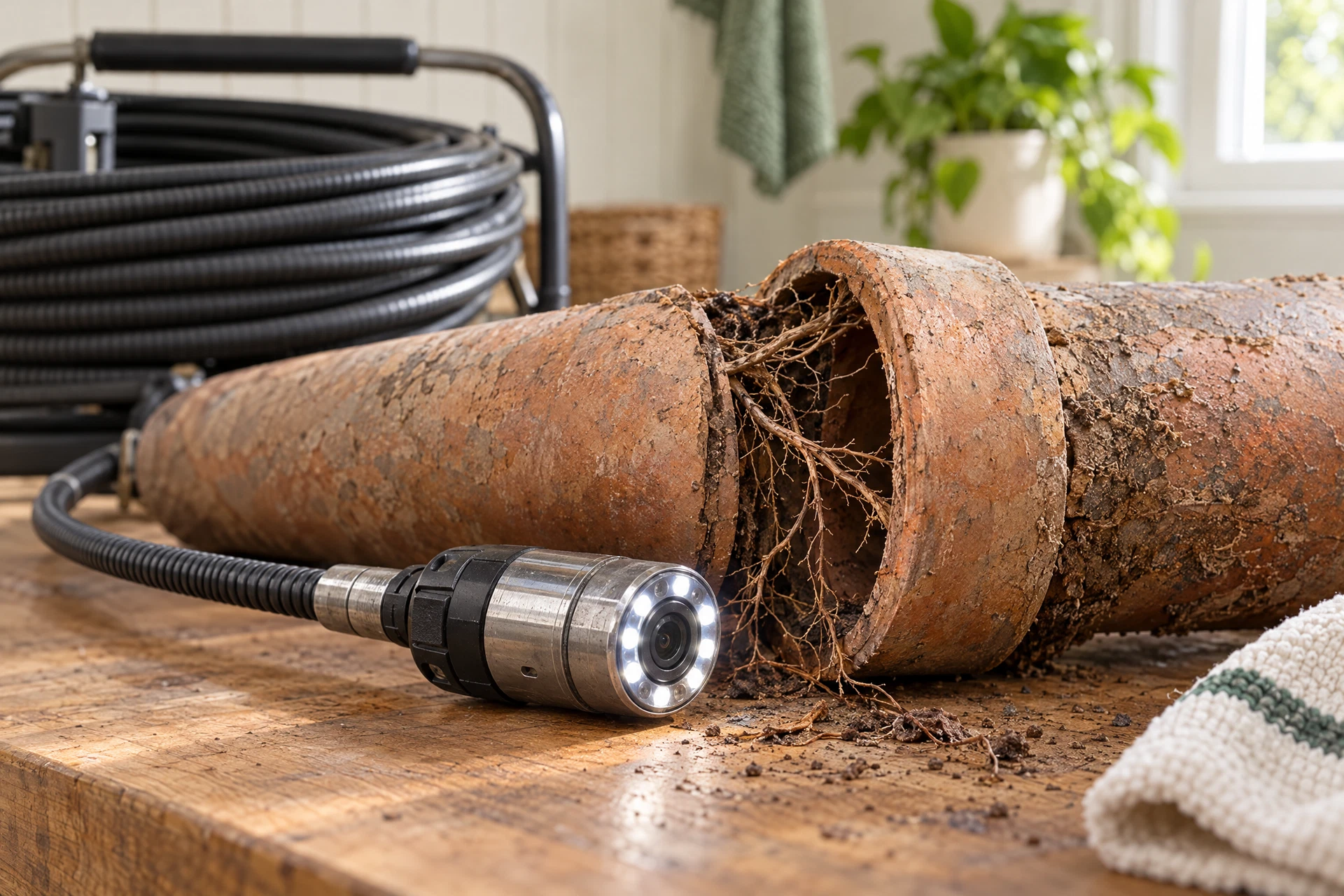
Oregon has no shortage of trees, shrubs, and older homes, so it is worth knowing how roots can affect an underground sewer line. Roots do not need a visible opening in your yard to become a plumbing concern. They can follow moisture toward a pipe and work into a joint, crack, or weakened section. At first, the result may be a slow drain or a toilet that gurgles. Over time, roots can catch paper and other debris, restrict flow, and contribute to a backup or damaged pipe. A timely inspection can replace guesswork with a clearer view of what is happening below ground and help you plan practical repairs.
How roots get into a sewer line
A tree’s root system can extend well beyond the canopy. Fine feeder roots seek water and nutrients, and a small gap at a pipe joint can give them an entry point. Older clay or other aging pipe materials may be more vulnerable, while newer plastic piping is not immune when a joint is loose or a line has been damaged. Once inside, a root mass can slow the passage of wastewater and collect debris. For a closer look at a sewer-line concern, review our Sewer Camera Inspection guidance.
The plant itself does not have to be directly above the line. That is why distance from a large tree is not a reliable way to rule out root intrusion in an Oregon yard.
Warning signs worth taking seriously
One isolated slow drain may have a simple fixture-level cause. Repeated problems, especially across several fixtures, deserve more attention. Pay attention to patterns rather than waiting for wastewater to appear indoors.
- Recurring backups or slow drainage in more than one fixture
- A toilet that bubbles or gurgles when a sink, tub, or washing machine drains
- Sewage odors near a cleanout, basement, crawl space, or yard area
- A problem that returns after the line has been cleared
Why a camera inspection can help
Clearing roots may restore flow for a while, but cutting away the growth does not by itself show whether the pipe wall or joint is compromised. A sewer camera can help locate an intrusion and reveal whether the line has a crack, offset joint, heavy buildup, or another condition that needs a different plan. The findings can also help you discuss repair or replacement timing before an emergency makes the decision for you.
Do not dig up the yard based only on a hunch. Ask a plumbing professional what inspection and line-clearing options are appropriate for your property, and confirm the likely scope before work begins.
A practical next step for homeowners
If your drains are repeatedly acting up, note which fixtures are affected, when the symptoms began, and whether a recent clearing provided only temporary relief. Keep that information ready when you call Northwest Plumbing Services. The family-owned company has served customers since 1991 and can discuss plumbing repairs and water or drain line concerns. Ask the office whether a sewer-line inspection or related service is the right fit for your situation and request current details before scheduling. For sewer-line repair planning context, review our Sewer Repair Planning guidance.
Questions about this topic
Can roots enter a sewer line even when there are no trees directly above it?
Yes. Roots can extend sideways from trees or shrubs and follow moisture toward a pipe. A camera inspection is a better way to check the line than judging only by what is planted above it.
Does clearing roots permanently solve the problem?
Not necessarily. Clearing can remove an obstruction, but recurring intrusion may point to a damaged or separated joint. Ask for the condition of the pipe to be evaluated so you can plan the next step.
Who should I contact about a possible sewer-line root problem?
Contact Northwest Plumbing Services at (503) 366-1323 or office@nwplumbingservices.com. Contact our Oregon office for showroom directions or mailing details. Confirm current inspection and drain-line options when you call.