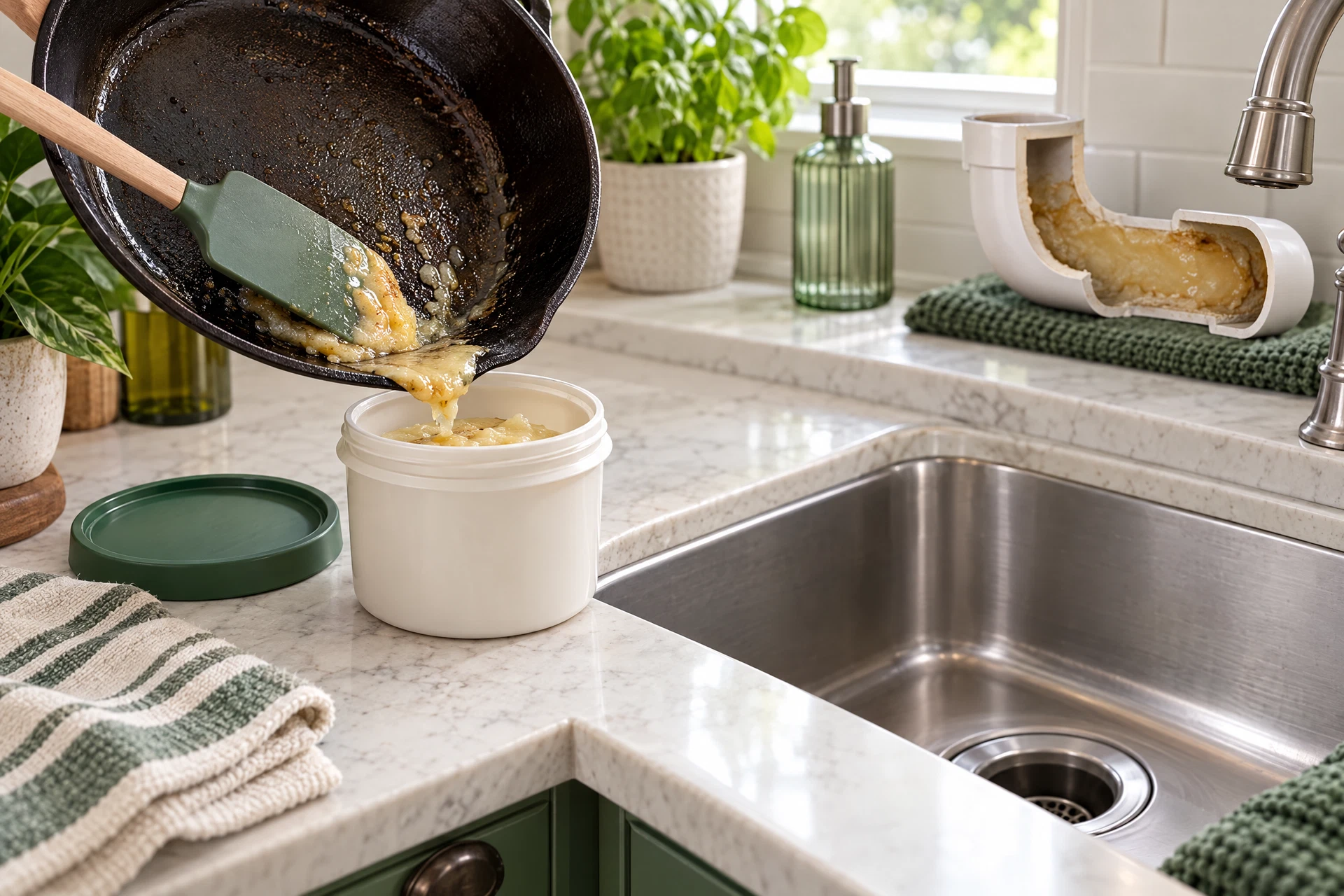
Pouring a pan of bacon fat or cooking oil into the kitchen sink can feel like the quickest cleanup, especially when the grease is still warm and liquid. But a drain is not a disposal route for fats, oils, and grease. As grease cools, it can cling to the inside of pipes and combine with food residue, narrowing the passage until water drains slowly or stops. In a home connected to a larger sewer system, repeated grease disposal can also contribute to blockages beyond your property. For homeowners in and around Columbia County, a few simple kitchen habits can protect your plumbing and help you avoid an unpleasant drain problem.
What happens after grease enters a drain
Grease may travel through the trap while it is hot, but that does not mean it is gone. Cooling turns liquid fat into a sticky coating inside the drain and connected piping. Food scraps, coffee grounds, soap residue, and other debris can catch on that coating. The result may be a sluggish sink, recurring backups, or wastewater that cannot move freely. For kitchen-side drain symptoms, review our Kitchen Drain Services guidance.
A blockage can affect more than one fixture. If warning signs appear in the kitchen, bathroom, or cleanout area, do not assume a second round of hot water will solve the underlying buildup. A plumbing professional can assess the drain and recommend the appropriate repair or cleaning approach.
A better way to handle cooking grease
Let the pan cool enough to handle safely, then scrape or wipe the remaining grease into a sealed, non-recyclable container. A jar, takeout container, or other leak-resistant vessel can work; check local waste guidance for the disposal method in your area. Use a paper towel to remove the film from pans and plates before washing them. Keep grease, oil, and fat out of the sink, toilet, garbage disposal, and storm drains.
- Keep a small container or lined can nearby when cooking foods that release fat.
- Use a sink strainer to catch food scraps, but remember that a strainer does not make grease safe for the drain.
- Never mix cooking grease with chemicals or pour it into a street or storm drain.
Already poured grease down the sink?
Do not keep flushing the drain with more grease, harsh chemicals, or very hot water. If the sink is draining normally, wipe away any remaining residue and change the disposal habit going forward. If you notice slow drainage, gurgling, unpleasant odors, standing water, or a backup, stop using the affected fixture as much as possible and contact Northwest Plumbing Services for guidance. Prompt attention can help distinguish a surface problem from buildup deeper in the water or drain line.
Need help with a stubborn drain?
Northwest Plumbing Services has served the area since 1991 and handles water and drain line work, along with plumbing repairs for homes, remodels, new construction, and commercial properties. Call (503) 366-1323 or email office@nwplumbingservices.com to discuss your symptoms and arrange the next step. The office can also confirm current service availability and whether your situation needs an on-site assessment. For recurring drain symptoms, review our Drain Cleaning guidance before choosing a next step.
Questions about this topic
Can I pour grease down the drain if I run hot water and dish soap?
No. Hot water and soap may move grease temporarily, but the grease can cool and cling to piping farther along the line. Collect it in a sealed container instead.
What should I do if my kitchen sink is already slow after a grease spill?
Avoid adding more grease or harsh drain chemicals. Limit use of the fixture and call Northwest Plumbing Services at (503) 366-1323 so the office can help determine the appropriate next step.